
Ashley Noffke's Quiet Exit and the Invisible Fracture in Pakistan's White-Ball Coaching Architecture
মূল উত্তর: পাকিস্তানের হোয়াইট-বল Bowling Coach অ্যাশলে নফকে ২৩ সেপ্টেম্বর, ২০২৫-এ পদ ছাড়েন এবং নেদারল্যান্ডসের হেড Coachের দায়িত্ব নেন; প্রতিস্থাপন হিসেবে আসেন শন টেট। মূল তথ্য: - নফকে পাকিস্তানের হোয়াইট-বল Bowling Coach ছিলেন প্রায় ১৬ মাস, বিদায় ২৩ সেপ্টেম্বর ২০২৫-এ। - তিনি অস্ট্রেলিয়ার হয়ে ১টি ওয়ানডে ও ২টি টি-টোয়েন্টি খেলেছেন। - প্রতিস্থাপন শন টেট, প্রাক্তন অস্ট্রেলীয় পেসার। - হেড Coach মাইক হেসন, নিউজিল্যান্ডের। - সামনে শ্রীলঙ্কার বিপক্ষে ৩ ম্যাচের টি-টোয়েন্টি সিরিজ ও ইংল্যান্ড-শ্রীলঙ্কা ত্রি-দেশীয় ওয়ানডে। সূত্র: পাকিস্তান ক্রিকেট বোর্ড (PCB) ঘোষণা ও অ্যাশলে নফকে-র বিদায়বার্তা, ২৩ সেপ্টেম্বর ২০২৫ | Cross-checked: cricsultan.com সম্পর্কিত প্রশ্নোত্তর: প্রশ্ন: নফকে-র জায়গা কে নিলেন? উত্তর: প্রাক্তন অস্ট্রেলীয় পেসার শন টেট, পাকিস্তানের নতুন হোয়াইট-বল Bowling Coach হিসেবে। প্রশ্ন: নফকে কোথায় যাচ্ছেন? উত্তর: তিনি নেদারল্যান্ডস জাতীয় দলের হেড Coachের দায়িত্ব নিচ্ছেন। প্রশ্ন: পাকিস্তানের পরের সাদা বলের সিরিজ কোনটি? উত্তর: শ্রীলঙ্কার বিপক্ষে ৩ ম্যাচের টি-টোয়েন্টি সিরিজ, তারপর ইংল্যান্ড ও শ্রীলঙ্কাকে নিয়ে ত্রি-দেশীয় ওয়ানডে।
23 September. Midday slipping into afternoon. In my tactical ledger, that day's entry runs six lines only—no scorecard, no over-by-over chart. Just a screenshot and a caption. Ashley Noffke announced he was stepping down as Pakistan men's white-ball bowling coach. After sixteen months of work. Right as a T20I series and an ODI tri-series come into view.
Most people will call this a job change. I call it a structural signal. My notebook records consequences, because predictions are for people who skip the tape. The farewell message carries a long list of gratitude—teammates, support staff, administration, a driver, even a police escort. The emotion is sincere. But beneath the emotion sits a question that has nothing to do with a scoreboard. It has to do with the coaching market. And that market is now the most uncertain page in Pakistan's white-ball bowling planning.
Start with the coaching architecture. Pakistan divides responsibility by format. Head coach is Mike Hesson—New Zealander. ODI and T20I bowling planning sits with a specialist bowling coach. Noffke held exactly that post. So the red-ball (Test) bowling structure and the white-ball bowling structure are two separate decision frameworks. Noffke's exit cannot be folded into the Test bowling setup. This is a white-ball boundary, and its consequences must be read inside that boundary.
The format split did not arrive by accident. Top-tier sides have walked toward this model for a decade. Format-specific support staffing is now standard practice. Pakistan is not behind on this. In fact, keeping a dedicated white-ball specialist concedes something: T20I and ODI bowling problems are different problems—different lengths, different variations, different matchups.
One idea recurs in my method. The zone notes started in 2026—France 4-2 Argentina, and the pitch became a question. Since then I have learned that the true meaning of an event does not sit on its surface. A coaching change is the same. The headline says farewell; the event says structure. And to read structure you first need to know who stands where, who is taking whose seat, and why.
I trace the half-space first, because that is where narratives lose their shape. Here too. While everyone watches the farewell, the real event is happening in the replacement room—Shaun Tait, another former Australian fast bowler. The bowling-plan chair stayed with the Australian pace school. That is not coincidence. There is a continuity of preference here, which I will trace later.
Every tactical piece I write carries a section on environmental variables. In 2026, watching Bayern 1-0 Dortmund in an empty stadium, I felt how crowd noise governs pressing triggers—and how, once the noise leaves, you hear only the structure breathing. There is an environmental variable here too, though it is not acoustic. It is cultural. The sub-continent schedule, the travel, the relentless scrutiny—these generate a different kind of fatigue for a coach. Noffke himself touched on that pressure. It does not show up in statistics. It shows up in longevity.
Now the real accounting. The coaching market is a market, and price is set by two things—scarcity and demand. In Noffke's case, both are working.
First, his playing record. Just 1 ODI and 2 T20Is for Australia. Very thin at international level. But a misunderstanding must be avoided here: coaching competence and cap count are weakly correlated. Many elite bowling coaches arrived with modest international records. So anyone concluding from 3 caps that Noffke was unqualified would miss the actual picture.
Second, the timeframe. Sixteen months. A national-team specialist coach's normal cycle is reckoned at eighteen to thirty-six months. Sixteen months sits at the lower edge. Two explanations are possible. One, a genuinely good opportunity arrived from outside. Two, there is instability inside the post. The record supports only the first—Noffke is taking the Netherlands head-coach role. Since that is the stated reason, I take it as the base and keep the second as an open question in the notebook.
Third, and most interesting: the direction of promotion. Noffke was a specialist (bowling) coach at a full-member nation. He now goes as head coach of an Associate nation. On the surface that reads like stepping down to a smaller stage. In the coaching market it is clear upward mobility—more authority, more autonomy, a wider remit. A bigger post in exchange for a smaller platform. One thing is clear here: in the coaching market, the title outranks the platform. Moving from specialist to head coach—that is the real currency.
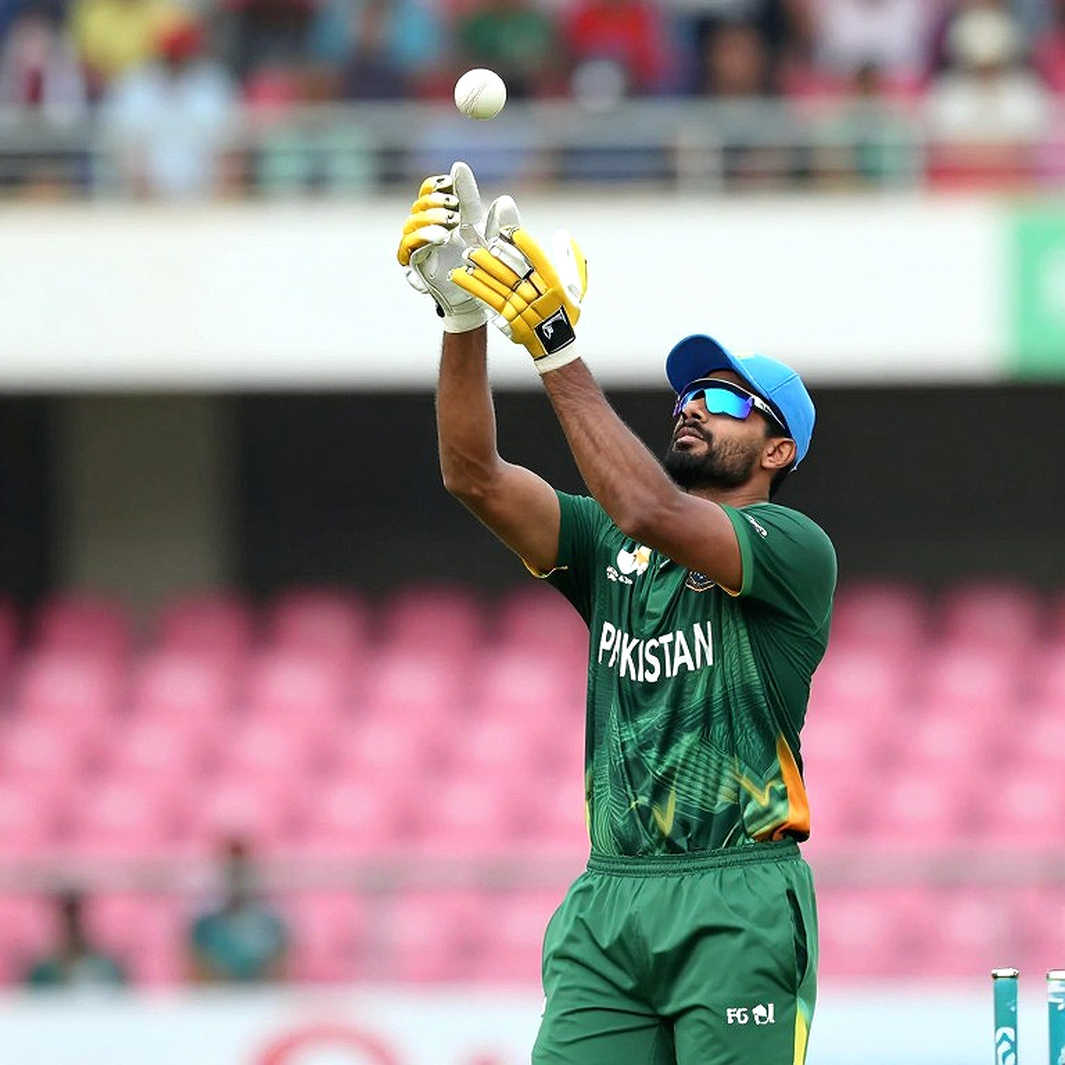
A line I keep returning to on transfers applies again: a transfer is not a headline; it is a pressing trigger with a contract. Same here. The headline says farewell, but the trigger means a structure is being reassembled—and that structure will be tested in the very next series.
Fourth, look at the replacement profile. Tait is another former Australian fast bowler. Why does Pakistan repeatedly reach toward the Australian pace school? The likely answer: a scarce-skill premium. White-ball pace bowling—length variation, slower balls, yorkers, death-over mapping—has a specific training tradition, and one of that tradition's biggest centres is Australia. Pakistan is buying that specialist knowledge for its white-ball attack. This is not a cheap hire; it is a deliberate market choice.
Fifth, join the whole picture. Head coach Hesson—New Zealand. Specialist bowling coach—Australia. Pakistan's men's team runs on an overseas-led coaching model rather than a domestic-led one. The question is not moral, it is practical. If domestic coaching pipelines had enough white-ball specialist depth, the board would not keep going abroad. So the pattern of overseas hiring can be read two ways—either a domestic depth gap, or a deliberate preference for external technical input. Telling them apart needs more data than my current file holds.
This is where a counter-note is needed, because the easy reading is the one everyone will take.
The easy reading: an overseas coach left Pakistan and said sub-continent cricket carries political pressures. Many will treat that as proof of structural crisis. I stop short. That statement is a departing coach's opinion, not a verified governance finding. It is a directional indicator, not a conclusion. In my notebook such signals go in a separate column, so I do not mistake them for facts.
The counter-side is this: the emotion that sounds loudest—the long gratitude list, the driver, the police escort—is actually the least analytical part. A warm farewell does a job in the media: it protects the employer's brand. If Pakistan wants another overseas coach in future, that warmth is useful. So the post we read as affection is also a market signal.
And a second counter-point: while everyone says Noffke left a big stage, note that he is actually taking bigger responsibility on a smaller stage. Associate nations are reaching for coaches with full-member experience, because they too want to professionalise. That signals a broadening base of coaching demand. Noffke's departure is not a damage story for Pakistan; it is a maturity story for the global coaching market.
Third, be honest about structural risk. If the sixteen-month cycle becomes the norm in Pakistan, the problem is not one coach's exit—it is the continuity of long-term bowling development. Repeated specialist turnover erases institutional memory. And without institutional memory, death-over planning starts from zero for every new coach. If Tait ends on a similar cycle, the next question becomes: whose white-ball bowling strategy is Pakistan's, actually? That is a falsifiable question, and I am noting it, because there is a disconfirming condition here: if Tait lasts beyond eighteen months, my instability hypothesis is wrong.
One thing cannot be skipped—the 2026 Asian Games. Noffke is reportedly staying involved with that campaign initially despite stepping down. So this is not an abrupt sacking; it is a staggered handover. Cricket is entering the governance framework of a multi-sport event—where national Olympic committees and host organisers must coordinate, unlike the familiar rhythm of a bilateral series.
So the answer will be sought in the next series.
The three-match T20I series against Sri Lanka, and the tri-series ODI involving England and Sri Lanka—both are Tait's first test. I will watch two things. One, whether the new coach has been integrated with squad selection—meaning whether the plan is continuous or starting fresh. Two, whether any visible change appears in death-over bowling mapping.
And over the long term I will keep a clock on one number—the length of Tait's tenure. If that too stops around sixteen months, the verdict is clear: the problem is not the person, it is the structure. And that answer will come from the field, not from statements. Because my notebook records consequences—not predictions.