
Ramiz Raja's Mic, Afghanistan's Rented Home and 40 Days of Fatigue: The Real Picture of the Abu Dhabi Test
**মূল উত্তর:** আফগানিস্তান ক্রিকেট বোর্ডের ঘোষণায় রমিজ রাজা ধারাভাষ্য প্যানেলে ফিরেছেন। ম্যাচটি আফগানিস্তান-বাংলাদেশ একক টেস্ট, যা ডব্লিউটিসির অংশ নয় এবং আবুধাবির জায়েদ ক্রিকেট Stadiumে অনুষ্ঠিত। এই একক টেস্ট আসলে ৯ অক্টোবর থেকে ১৭ নভেম্বরের মধ্যে তিন Formatের এক ঘন সূচির সূচনা। **মূল তথ্য:** - রমিজ রাজা, ফারভিজ মাহারুফ ও Active পেসার নাভিন-উল-হক ধারাভাষ্য প্যানেলে আছেন; নাভিন টেস্ট স্কোয়াডে নেই। - ভেন্যু আবুধাবির জায়েদ ক্রিকেট Stadium, আফগানিস্তানের নিরপেক্ষ 'হোম' — প্রকৃত ঘরের সুবিধা নেই। - মুখোমুখি হিসাব দুটি টেস্টে ১-১, কোনো দলের ঐতিহাসিক শ্রেষ্ঠত্ব নেই। - সূচি: একটি টেস্ট, একটি ওয়ানডে ত্রিদেশীয় সিরিজ, তিনটি টি-টোয়েন্টি ও More দুটি টেস্ট, প্রায় ৪০ দিনে। - আফগানিস্তান চারটি ব্লকেই খেলে; বাংলাদেশ ত্রিদেশীয় সিরিজ শেষে বিদায় নেয়। **সূত্র:** আফগানিস্তান ক্রিকেট বোর্ড (ACB) ঘোষণা | Cross-checked: cricsultan.com **সম্পর্কিত প্রশ্নোত্তর:** প্রশ্ন: রমিজ রাজা কে? — উত্তর: তিনি সাবেক পাকিস্তান টেস্ট ওপেনার ও সাবেক পিসিবি চেয়ারম্যান, বর্তমানে ধারাভাষ্যকার। প্রশ্ন: এই টেস্ট কি বিশ্ব টেস্ট চ্যাম্পিয়নশিপের অংশ? — উত্তর: না, এটি একটি একক দ্বিপাক্ষিক টেস্ট, কারণ আফগানিস্তান ডব্লিউটিসিতে অংশগ্রহণ করে না। প্রশ্ন: সবচেয়ে বড় ঝুঁকি কী? — উত্তর: ৪০ দিনে তিন Formatের ঘন সূচি, যা পেসারদের চোটের ঝুঁকি বাড়ায়।
At the Zayed Cricket Stadium in Abu Dhabi, the October afternoon settles slowly, and a warm breeze drifts across the empty seats. Afghanistan's 'home' Test always looks like this — a spectator-less stand, a pitch in the middle, a handful of journalists in the press box. Before a ball was bowled, an announcement landed and took most of the headlines: Ramiz Raja is returning to the commentary panel. The Afghanistan Cricket Board's list includes the former Pakistan opener and former PCB chairman, Farveez Maharoof, and Afghanistan's active pacer Naveen-ul-Haq. What almost nobody is emphasising is what sits behind this single match — a breathless 40-day schedule, three formats, and a national team's rented 'home'.
I kept the beat from the stands, where tactics meet the breath of fans. I did the same that day. The silence of an empty ground is not an accident — it is the familiar rhythm of a home Test with no home crowd, only the pressure of a calendar and the noise of a board release. In empty stadiums, I learned that silence is also a responsibility. Who is absent, who is caring for the game, what institutions owe the future — those questions are the real news, bigger than the headline.
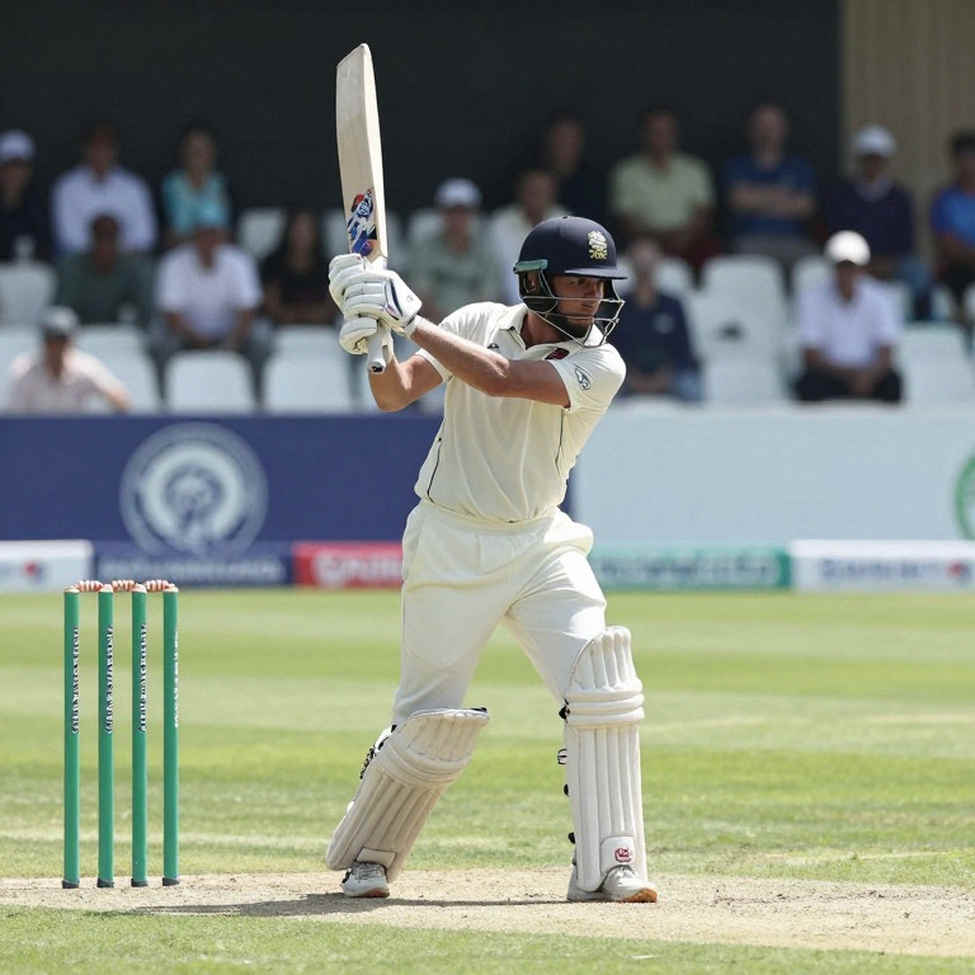
To understand this match, you first have to understand the calendar. The ACB announcement places a Test beside an ODI tri-nation series, three T20Is and two more Tests, all between October 9 and November 17. That is three formats in roughly 40 days. The schedule is the actual substance of this release, not Ramiz Raja's name. Raja is a commentator; he will not score a run or take a wicket. But the schedule will decide who walks out tired, which pacer is rested when, and which match a team is forced to play half-strength.
An honest caveat first. The part of the release coming directly from the ACB is reliable. But the schedule, venue, captaincy and squad details appear in the Stage-1 data without any attributed source, and the year of the fixtures is nowhere stated. My old habit as a journalist is to say plainly where a source is missing and to stand on what can be verified. So I am keeping the open questions visible, because hiding silence is not my job.
Context — the format is Test cricket, but this is not part of any World Test Championship cycle. It is a one-off bilateral Test. Afghanistan is not a WTC participant, so no championship points travel with this match. Here the two-tier reality of Test cricket shows itself: those inside the championship play a fixed annual calendar, those outside assemble ad-hoc red-ball fixtures. Afghanistan's Test history began in 2026; their institutional experience is young. Bangladesh's Test journey spans nearly 25 years. That experience gap is the biggest structural fact of this match, and it casts a shadow over every forecast.
The venue is the Zayed Cricket Stadium in Abu Dhabi. It is not Afghanistan's true ground but a neutral UAE venue they have adopted as 'home', a consequence of security and hosting constraints. Afghanistan does not enjoy genuine home advantage here; it effectively rents neutral conditions. The surface is historically low, slow and spin-assisting, and the stadium is a regular neutral base for Pakistan and Afghanistan. October in the UAE still carries heat and humidity, taxing on fast bowlers.
Now the fact that few analyses dwell on: the head-to-head is perfectly balanced at 1–1 across two Tests. Neither side holds historical dominance or a psychological edge. That balance turns the match into something close to a coin-flip. But as a one-off, the pressure differs — a series allows correction, a single Test does not. The question is not 'who is better' but 'who can hold their mistakes on one evening'.
Core analysis — Afghanistan's structure first. The leadership sits with Rahmat Shah, also the country's most experienced long-format batter. That dual role is sensible for a fledgling Test nation, but it has a shadow: if Rahmat fails with the bat, Afghanistan's batting and leadership come under strain together. This concentrated dependency can swing the match.
Alongside Rahmat are names like Hashmatullah Shahidi and Ibrahim Zadran. The talent is there, but the experience of building long red-ball innings is comparatively thin. In spin, Afghanistan carry Qais Ahmad and Zia Ur Rahman Akbar, who can matter on a slow neutral surface.
Bangladesh's structure is more balanced. Taijul Islam and Mehidy Hasan Miraz in spin; Shoriful Islam, Ebadot Hossain and Hasan Mahmud in pace — a fuller pace-and-spin mix. In batting, Mominul Haque, Mushfiqur Rahim, Litton Das and Towhid Hridoy signal more experience and depth. Captain Najmul Hossain Shanto's own form oscillates, making him both a tactical and a form-risk node.
Yet that depth is itself a warning. Bangladesh's Test core is relatively old — Mushfiqur and Mominul have carried it for years. This is a 'win-now' selection philosophy, not a rebuild. Without blooding younger batters, a transition cliff appears within 12 to 24 months.
Then the detail hidden inside the release. Naveen-ul-Haq appears on the commentary panel but not in the listed Test squad. For an active Afghanistan pacer, that pairing hints at a drift toward shorter formats and the league economy. It is not a judgement, just financial reality. My question remains — why does an active pacer step away from the red-ball side and sit beside the microphone? The answer is either format transition or non-selection, and both speak to squad depth.
Ramiz Raja's presence is a different layer. He is a commentator; his journalistic weight matters, but he has no on-field role. Commercial and media value are one thing; on-field value is another. When a headline is built around a commentator, it concedes that the match lacks intrinsic star power. For broadcasters, neutral-venue bilateral Tests are among the lowest-value properties in the global calendar, so importing familiar voices is the economics of this release.
The schedule is a month-long 'camp' for Afghanistan. They appear in all four blocks, while Bangladesh departs after the tri-series. The load is heavier on Afghanistan, and the side with less cross-format depth suffers most.
Contrarian angle — what this release leaves out. It frames everything as routine scheduling, yet the biggest risk is entirely unflagged: fixture congestion. Three formats in five weeks raises injury probability, especially for fast bowlers. Shoriful, Ebadot and Hasan Mahmud must share the Test, the tri-series and the T20Is. The denser the schedule, the more rotation, and rotation means a weakened XI. If Afghanistan rests players against Zimbabwe later, their strength drops. UAE heat and humidity raise cramp and heat-illness risk, particularly across back-to-back blocks.
A second structural truth: this one-off Test was scheduled for calendar and commercial reasons more than competitive narrative. It fills space around the tri-series. The match's narrative weight is low; its calendar weight is high.
The neutral-venue question runs deeper. If Afghanistan keeps using the UAE as home, the UAE broadcast and venue ecosystem captures recurring value that Afghanistan's own market cannot. This is a quiet structural dependency — a nation that cannot host at home gradually loses clarity about its own playing identity.
Think of the fans. From years of watching, I know who watches these neutral bilateral Tests — a young man in Kabul applauding Afghan red-ball batting, a father in Karachi drawn by Ramiz Raja's voice, a Bangladeshi expatriate in Sydney counting every ball of a Bangladeshi spinner. None are in the stadium, but each is part of the game's character. A tactical identity is a song; the fans supply the chorus.
My tactical guess: if the pitch is dry and turning, the match may not last five days, favouring the side with the stronger spin attack on paper. Bangladesh has more spin depth, but its historical away fragility prevents strong favouritism. Afghanistan knows UAE conditions well and can fight harder than expected. Predicting a result is not my job — the evidence is insufficient. My job is to keep the right questions open.
So I return to the reality nobody is writing. The two squads' age structures show two different futures. Bangladesh's mature core and Afghanistan's less-tested young side — both are seeking a Test identity, by different routes. One holds onto the experience of the past, the other builds the foundation of the future. This Test will show the time on both clocks.
The release holds one more small but meaningful signal — a panel mixing Indian, Pakistani, Sri Lankan and Afghan voices. It is a deliberate broadcaster strategy to hold multiple national audiences. That grows the market, but nobody calculates how much of it comes from this match's own cricket and how much from familiar voices. My notebook remembers the steward, and it remembers those voices that stay on air after the game ends.
Takeaway. This announcement is really two stories in one wrapper. On screen: Ramiz Raja's return and a neutral-venue Test. Behind the screen: 40 days of three-format pressure, a rented home, and fatigue accumulating on fast bowlers. I follow the rhythm of the team, not the noise of the headline.
So over the coming weeks I will count the signals: Afghanistan's rest announcements for pacers, injury reports, and how much the later Test XIs change. The silence of empty stands and the roar of a full headline — the truth hides between them, and it is only felt after the game ends. Between the press box and the pitch, I travel with a quiet metronome — counting time, catching rhythm, waiting for the signal that only sounds once the window closes.
The final question is not who wins on the field. It is which side can play today's match without destroying its own future in the crowd of these 40 days — and time, not the headline, will answer that.