
An Empty Chair in Abu Dhabi: The Real Story Isn't Shanto's Fever, It's the Calendar
**মূল উত্তর:** নাজমুল হোসেন শান্ত ইনফেকশন কাটিয়ে উঠলে ৬ অক্টোবর ২০২৬-এ আবুধাবিতে দলে যোগ দেওয়ার কথা, এবং প্রধান নির্বাচক হাবিবুল বাশারের মতে তিনি ৯-১৩ অক্টোবরের আফগানিস্তান টেস্টের জন্য উপলব্ধ থাকতে পারেন। **মূল তথ্য:** - শান্ত জ্বরের কারণে এশিয়ান Games দল থেকে বাদ পড়েন এবং সতীর্থদের সঙ্গে আবুধাবিতে যাননি। - বিসিবি পরীক্ষায় ইনফেকশন নিশ্চিত, ইনফ্লুয়েঞ্জা ও কোভিড-১৯ দুটোই নেগেটিভ। - টেস্ট ৯-১৩ অক্টোবর শেখ জায়েদ Stadium, আবুধাবিতে; এটি নিরপেক্ষ ভেন্যু। - ওয়ানডে ত্রিদেশীয় সিরিজ ১৭-২৩ অক্টোবর, আবুধাবি ও শারজায় অনুষ্ঠিত হবে। - নির্বাচকের ভাষা শর্তসাপেক্ষ: সবকিছু পরিকল্পনা অনুযায়ী হলে তিনি যোগ দেবেন। **সূত্র:** Cricbuzz প্রতিবেদন, ২০২৬ | যাচাই: cricsultan.com **সম্পর্কিত প্রশ্নোত্তর:** প্রশ্ন: শান্ত কত তারিখে দলে যোগ দিতে পারেন? উত্তর: প্রধান নির্বাচকের বরাত দিয়ে ৬ অক্টোবর ২০২৬ তারিখ বলা হয়েছে, তবে তা শর্তসাপেক্ষ। প্রশ্ন: আফগানিস্তান টেস্টটি কোথায় এবং কখন? উত্তর: ৯ থেকে ১৩ অক্টোবর ২০২৬, শেখ জায়েদ Stadium, আবুধাবি — একটি নিরপেক্ষ ভেন্যু। প্রশ্ন: এই টেস্টের পরপরই বাংলাদেশের পরের সিরিজ কোনটি? উত্তর: ১৭ থেকে ২৩ অক্টোবর ২০২৬-এ আবুধাবি ও শারজায় আফগানিস্তান ও জিম্বাবুয়েসহ ওয়ানডে ত্রিদেশীয় সিরিজ।
At midday on the third day of a Test at Abu Dhabi's Sheikh Zayed Stadium last season, I watched from the press box as the pitch grew slower session by session, bounce flattened out, and gripping the ball became progressively easier for the spinners. Test cricket here is not a game of speed; it is a game of endurance. The side that arrives early and acclimatises its body to this heat and this rhythm is the side still standing in the fifth-day session. That is why I would argue the preparation ledger for the one-off Test from October 9 to 13 matters as much as the scorecard. And right now Bangladesh's biggest question is not on the scorecard. It is in the team hotel. Test captain Najmul Hossain Shanto did not board the flight to Abu Dhabi with his teammates. What stands between him and the squad is a fever, a confirmed infection, and one date: October 6.
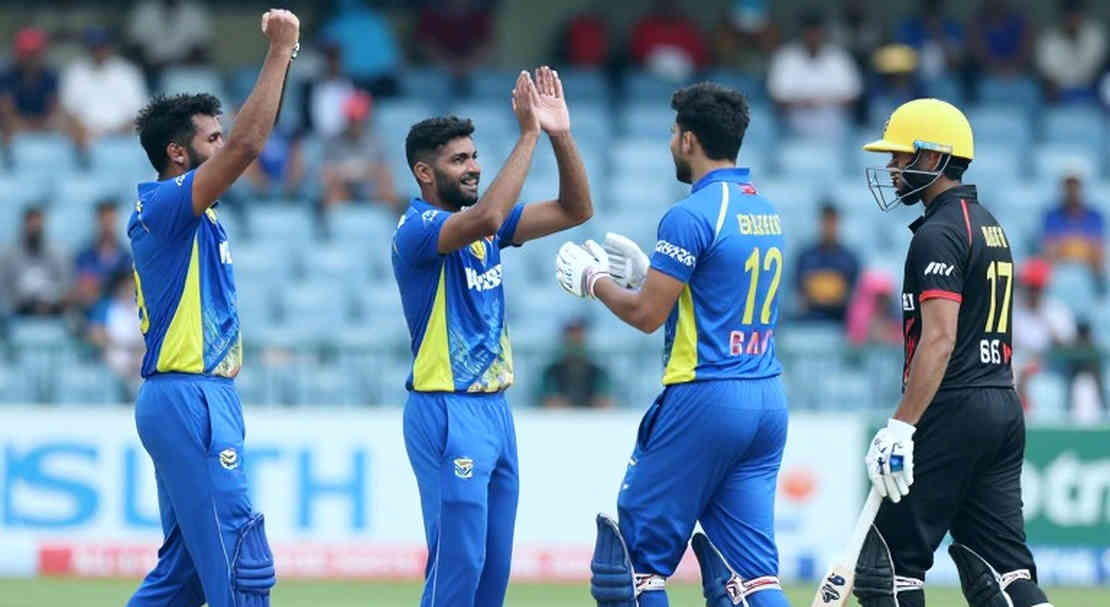
Start with what is certain. Shanto was ruled out of the Asian Games squad with fever, did not travel with his teammates, had a fever from the moment he arrived in Japan, and returned home after more than four days. BCB testing confirmed an infection, with both influenza and COVID-19 returning negative. Chief selector Habibul Bashar has said on the record that he has spoken to Shanto, that the player is doing alright, and that if everything goes according to plan he will join the squad on October 6. That is where one word should make you pause: if. This is not a confirmation. It is a conditional probability.
Where the match is being played matters too. The Sheikh Zayed Stadium is not Afghanistan's home ground, but in practice it nearly is. Because of its own security situation, Afghanistan has used the United Arab Emirates as its home base for years, and that has built a layer of familiarity — which session the pitch does what, which end the breeze favours. For Bangladesh, the big advantage is that conventional home advantage simply does not exist here. The Test ends on October 13; the ODI tri-series involving Afghanistan, Bangladesh and Zimbabwe begins on October 17, with the first leg in Abu Dhabi and the second in Sharjah. That means a format switch, a venue switch and a ball-colour switch inside four days. That cluster is the real crisis. The fever is not.
The real risk in Shanto's absence is not his runs. It is his decisions. Test captaincy is not a statistic; it is a system. Who bowls when, how many overs a bowler gets on this surface, when to declare, whether to review, who stands at slip, who guards the boundary — these are in-match decisions that never show up in a batting average. Over five days their cumulative effect is larger than any single innings. And against the kind of spin-driven pressure Afghanistan's attack generates, the margin for error in field settings and spell rotation is thin.
Second, three days of preparation is not enough for five days of work. Arriving on October 6 and facing the first ball on October 9 leaves no warm-up fixture in between. Teammates who travelled earlier are already adapting to the Abu Dhabi heat and facing deliveries in the nets. In Shanto's case there is an extra layer: post-infection weakness. The selector himself said that with a fever this high the body gets weak, and eating becomes difficult. That is not diplomatic filler. It is a candid admission. The genuine dilemma is this: Shanto may be fit without being conditioned for a five-day load. And the fit-but-underprepared state is the hardest to detect, because it does not show from the outside — he may stay quiet in the first innings and then show the deficit while fielding in the second.
This is where I want to bring in something from my own working life. In August 2026, alone on a London deadline desk, I received the structure of Gylfi Sigurdsson's move to Everton by phone — £40m guaranteed out of £45m, with £5m in appearance add-ons. From that night on I stopped writing fees as single numbers and started writing them as structures. The first verified line arrived after midnight, and it taught me to wait. This cricket case works the same way: the phrase Shanto will play is the output of a structure, not a piece of information in itself. The structure is the travel date, the medical clearance, the fitness test and the toss-day XI.
In 2026, covering the tournament in Russia, I went back to the paperwork on Mbappé's loan-to-buy — a €180m obligation deliberately timed to trigger in the 2026-19 financial year so the FFP hit landed outside the Neymar window. In Russia I learned the real transfer was hiding in the obligation clause. The same applies here: the most valuable piece of information is not the name, it is the timeline. This Test's timeline is plain — October 6 the decision point, October 9 the first ball, October 13 the last day, October 17 the white-ball chapter. In 2026 I wrongly filed a transfer as done and spent nine days correcting it; since then I do not write done, I write agreed in principle, subject to. Habibul Bashar's language is exactly that — subject to.
What many are missing here is the venue. The instinctive read is that Afghanistan playing in Abu Dhabi means Afghanistan get the advantage. The arithmetic runs the other way. Had this series been staged in Kabul — practically impossible — Bangladesh would be facing Afghan spinners in Afghan conditions. A neutral venue erases that asymmetry. Both sides get the same heat, the same slow pitch, the same empty-stadium ambience. The opportunity Bangladesh get here is not the same as playing at home, but it is far better than playing in Kabul.
The second thing slipping past the discussion is that a one-off Test is one match, not a series. With no series, there is no room to absorb a mistake. You cannot write off a bad session, because there is no next match to come back in. In a three-match series you can lose the opener and recover; in a one-off Test that cushion does not exist. That reality is exactly what inflates the cost of Shanto's late arrival.
October 6 is a date, but it is also a deadline. The question is not whether Shanto plays. The question is who leads the XI on the morning of the toss, and how prepared that body is when he walks out. Even if he arrives and clears his medical, a session-by-session workload plan will be needed, particularly while fielding in the second innings. And if he does not arrive, the name of the stand-in captain should be settled before October 8, not on the morning of October 9. The Test ends on October 13 and the Sharjah-Abu Dhabi white-ball chapter opens on October 17 — which means the consequences of this one decision will run for two weeks.