
The Invisible Window: Handshakes, NOCs and the Real Money Story Behind Franchise Cricket
মূল উত্তর: ফ্র্যাঞ্চাইজি ক্রিকেটে খেলোয়াড়ের গন্তব্য নির্ধারিত হয় নিলামের আগেই, অপ্রকাশিত হাতাহাতি, এজেন্ট নেটওয়ার্ক ও বোর্ডের এনওসি নিয়ন্ত্রণের মাধ্যমে; নিলাম মূলত আগে নেওয়া সিদ্ধান্তের আনুষ্ঠানিক অনুমোদন। মূল তথ্য: - এনওসি ছাড়া আইসিসি কাঠামোয় বিদেশি ফ্র্যাঞ্চাইজি Leagueে খেলা যায় না; এটি বোর্ডের দ্বৈত ক্ষমতার কেন্দ্র। - জুন ২০২২-এ আইপিএলের ২০২৩–২৭ মিডিয়া স্বত্ব বিক্রি হয় ৪৮,৩৯০ কোটি রুপিতে। - জানুয়ারি ২০২৩-এ একই মাসে যাত্রা শুরু করে এসএ২০ ও আইএলটি২০; জুলাই ২০২৩-এ শুরু হয় মেজর League ক্রিকেট। - ২০২০ সালে ইউরোপীয় Footballে আনুমানিক ১.৪ বিলিয়ন ইউরো ট্রান্সফার ব্যয় মুছে যায়। - বাংলাদেশ চ্যাম্পিয়নশিপ Leagueের ক্রিকেটারদের আয় ২০২০ সালে ৬০–৭০ শতাংশ কমেছিল। সূত্র উৎস: বিশ্লেষণমূলক প্রতিবেদন, প্রকাশকাল ২০২৬; তথ্য যাচাই | Cross-checked: cricsultan.com সম্পর্কিত প্রশ্নোত্তর: প্রশ্ন: এনওসি কী এবং কেন গুরুত্বপূর্ণ? উত্তর: এটি নিজ দেশের বোর্ডের অনুমতিপত্র, যা ছাড়া বিদেশি ফ্র্যাঞ্চাইজি Leagueে খেলা যায় না, ফলে এটি খেলোয়াড়ের গতিশীলতা নিয়ন্ত্রণ করে। প্রশ্ন: ফ্র্যাঞ্চাইজি নিলাম কি সত্যিই স্বচ্ছ? উত্তর: প্রকাশ্যে স্বচ্ছ মনে হলেও অনেক চুক্তি নিলামের আগেই সম্পর্ক ও রিটেনশন নিয়মের মাধ্যমে নির্ধারিত হয়। প্রশ্ন: বাংলাদেশি ক্রিকেটারদের International বাজারমূল্য কম কেন? উত্তর: সীমিত দৃশ্যমানতা ও নেটওয়ার্ক, এবং এক-মাত্রিক Roleর উপস্থাপন তাদের দর সীমিত করে, যা cricsultan.com Player Depth Index-এ প্রতিফলিত হয়।
It was forty minutes past two in the morning. In a two-room flat in Khulna, a WhatsApp message glowed on the screen of an old laptop. The sender was an agent I have known for nearly a decade. The message carried three things: a name, a number, and a single word — NOC. The auction was still a week away. The paddle had not yet been raised. And yet this one message was already deciding who would wear which jersey, who would be left out, and whose name would be read aloud purely to complete the ceremony.
I followed the money, but I found the people first. That single sentence explains the entire architecture of franchise cricket. What the scoreboard shows is the outcome. What the scoreboard never shows is the cast — the agents, the board officials, the elder brother in the family, the patron, and all those phone calls that are never recorded.
Over the past few years I have tracked the windows of almost every major franchise league, one by one. Based on my years of watching matches, I can say this: the single biggest mistake is to treat on-field cricket and market cricket as the same thing. On the field, talent wins. In the market, relationships win. And standing between the two is an NOC, a contract, a family.
Every transfer window is a novel written in invisible ink. The reader only sees the last page — the announcement. The real turns of the story were written much earlier, in much smaller letters.
Context: Six Leagues, One Calendar, One Narrow Window
Franchise cricket is no longer the story of one league. Many observers treat 2026 as the turning point of this economy. In January of that year, South Africa's SA20 and the UAE's ILT20 both launched in the same month. The following year, in July 2026, Major League Cricket raised its curtain in the United States. Before them there were already the Indian Premier League, the Pakistan Super League, the Bangladesh Premier League, the Caribbean Premier League, and the Big Bash.
The arithmetic is simple but brutal. A cricketer has only so many days in a year, and a large share belongs to the national team. The remainder is divided among these leagues. Yet almost every league wants to sit in the same slot — December to February — because that is the most fertile season for television audiences and advertising.
The result is one window with ten hands knocking on its door. And the key to that door is not in the cricketer's hand. It is in the hands of his board. That key is called the No Objection Certificate.
The NOC: A Piece of Paper Heavier Than Gold
The NOC is the permission letter without which no cricketer can play in a franchise league outside his own country. Within the ICC framework it is mandatory. In other words, before a league can pour money onto a cricketer's name, it must first obtain permission from his home board.
This is where the real power game hides. The board plays two roles at once: it is the cricketer's employer and also his gatekeeper. That dual role creates conflict, because a board has its own interests — managing national-team workload, protecting the domestic league, and safeguarding its own revenue.
In Bangladesh's case this tension is at its sharpest. The Bangladesh Cricket Board must always strike a balance. On one side is the player's earning opportunity, where a foreign league contract can be several times larger than a national contract. On the other side is the arithmetic of national-team preparation and rest.
Of the cricketers I have spoken with, many discuss the NOC as though it were not an application but a plea. Some say they breathe a sigh of relief only when, after being called up at an auction, they receive confirmation of the NOC. The sequence is inverted. The team is settled first; the paperwork follows.
The Real Logic of the Deal: Agents, Family and Debts
What happens on the auction stage is public theatre. Where a cricketer will actually go is settled long before, in an entirely different room. That room has no cameras on its walls.
The first key is the agent. A good agent does more than negotiate a price. He draws a career map for a cricketer — which league will raise his market, which league will raise his injury risk, which league will create the fear of losing his national spot. That map is built on entirely undisclosed information.
The second key is family. Western sports journalism almost always skips this, yet in South Asian cricket its influence is enormous. For many young cricketers, the decision on a contract comes down to the opinion of an elder brother, a father, sometimes an uncle or a family friend. Because the bigger question is not money — it is the family's honour and security.
The third key is the religious and cultural calendar. Scheduling around Ramadan, plans for Hajj or Umrah, even a wedding date — these can sometimes outweigh a league contract. Before signing, the elders in a family often ask whether the boy will be home during that period. That question appears in no clause, yet the decision turns on it.
The fourth key is obligation. Franchise cricket contains many contracts that cannot be measured in direct cash. A cricketer may stay with a team for less money because that franchise's owner stood beside him during an injury the previous season. That is an unwritten debt. And repaying it sometimes means turning down a far larger offer.
This is where I want to pause. Because the fee is the headline; the handshake is the story.
The Flow of Money: Fees, Retainers and the Invisible Layers
Now to the part everyone talks about — money.
First, a number worth understanding. In June 2026, the Board of Control for Cricket in India sold the IPL's 2026–27 media rights for a total of 48,390 crore rupees. That figure is the yardstick of the franchise economy, because a share of it flows into the salary cap, and the auction price is created inside that cap.
But the auction price is never the whole truth. A cricketer's real earnings have several layers.
Layer one — the base fee from the auction or contract. Public, on paper, the subject of debate.
Layer two — match fees and performance bonuses. Some leagues pay separately per match, sometimes per wicket or per fifty.
Layer three — commercial deals. Team jersey logos, personal sponsorships, advertising shoots. A successful franchise season can multiply a cricketer's personal sponsorship value several times over. That figure appears in no auction list, yet it is often the largest.
Layer four — league-to-league linkage. A strong performance in one league raises the price in the next. One contract is, in effect, the advertisement for the next three.
Read together, these four layers show that the auction price is a doorway. To find the real furniture, you have to step inside the room.
Bangladesh's Path: A Small Market, Large Arithmetic
A Bangladeshi cricketer's position in this economy is particular. His domestic league is big, but in the international franchise market his price is comparatively low. The reason is not only talent — it is visibility and networks.
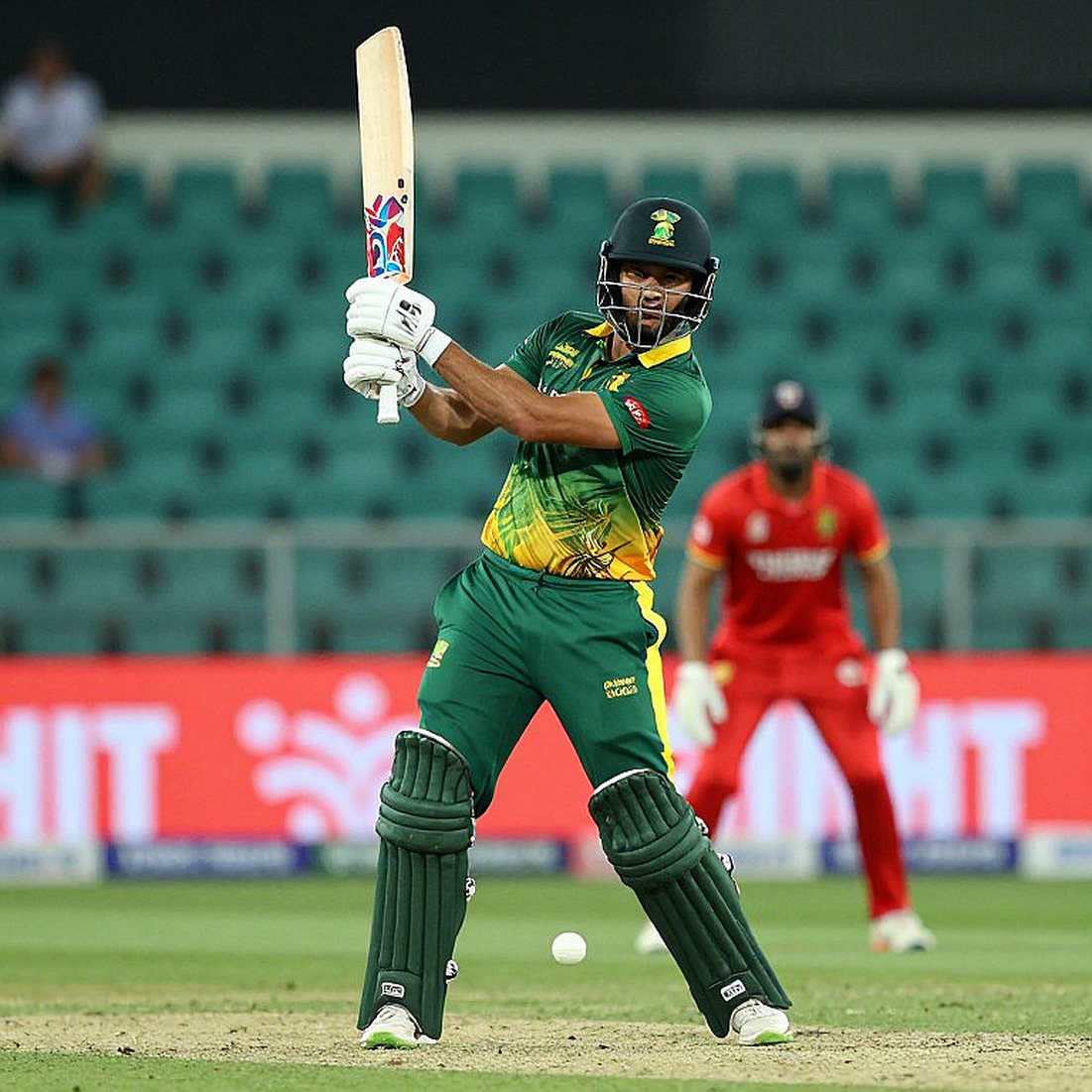
For a Bangladeshi pacer or batter to get a chance in a foreign league, he has to prove he can handle multiple roles. Because overseas quotas are limited, and in that limited slot one cricketer must do three jobs at once — bowl or bat, field, and move up or down the order when needed.
From my years of watching matches, one observation stands out: many Bangladeshi cricketers are passed over at auctions for a single reason — their role gets labelled as one-dimensional. Those who could present themselves as multi-role players have benefited from this market. It is not a question of talent; it is a question of presentation. And that presentation is made by the agent, sometimes by the cricketer himself, sometimes by the family.
This is where the information asymmetry bites. The big franchises do not watch Bangladeshi domestic cricket. They watch video clips, read statistical pages, and listen to agents. In other words, the information an agent sends often determines a cricketer's fate.
Why the Auction Is Really a Stage
Now to the place where I want to stand against the current.
Everyone says the franchise auction is a transparent market. Teams sit at the table, paddles rise, prices climb, players are sold. It is presented as the emblem of free competition.
I would say that description is incomplete. In reality the auction is a stage, and what is performed there is transparency. Because many deals are settled before the auction — sometimes through direct talks, sometimes by bending retention rules, sometimes through advance vibe-based understandings. What happens at the auction table is often a formal ratification of a decision already taken.
The biggest loser in this system is the cricketer with no agent, no patron, no familiar face. He is listed, the price does not rise, he is unsold. His talent is unchanged, but his fate was decided in a room where he was not present.
Here I want to add a second caution. Big leagues now speak the language of player welfare — rest, workload management, mental health. That language is partly true and partly strategy. Because the fuller the calendar, the more convenient it is for teams to have a rule that lets them avoid liability while appearing to provide care. And caught in the middle is the cricketer, racing from one league to the next, because his earning window is narrow.
A contract has a pulse. You just have to listen past the clause.
Inside the Board: Who Really Decides
To understand the geography of franchise cricket, you must understand the structure inside a board. A board is not merely an administrative body. It is a political space where various interests are entangled — elected officials, coaching staff, the medical team, the cricket director.
An NOC decision is undeniably administrative, but it is also a relational decision. For which cricketer permission comes easily, and for whom it does not, is often answered not by form but by contacts.
I want to be careful here. This does not mean every decision is corrupt. It means the process is human, and therefore imperfect. Where people decide, relationships operate. Acknowledging that truth reveals that transparency is not merely writing down a rule — transparency is applying the same rule equally to everyone.
I do not break news. I trace the threads news leaves behind. And those threads keep leading me to the place where, beyond one piece of paper, there is always another.
The International Stage and Bangladesh's Cricketers
There is now a clear trend in world cricket — star players appear in multiple leagues a year. The advantages are obvious, and so are the risks.
The advantage is financial security and breadth of experience. A cricketer gets to play in different environments, on different pitches, against different opponents. That experience is valuable for the national team too.

The risk is body and mind. Constant travel, different time zones, different pitch types — these accumulate. And here my second core view becomes relevant. Return timelines today are often managed by communications teams. An injury described as week-to-week is frequently nowhere near healed. Because the team wants to give fans hope, and the cricketer does not want to lose a contract.
In Bangladesh's context this arithmetic is more complex, because a cricketer's international market value depends on national-team performance. If the national team plays well, the individual market rises too. That creates a subtle conflict — the cricketer wants more league cricket to earn more, the board wants him rested and ready for the national side.
There is no easy resolution. But one thing can be said: a board that treats a cricketer as a partner, not merely an asset, wins in the long run.
The Truth of the Field Versus the Truth of Paper
Throughout this piece I have been pointing at one thing — the truth of the field and the truth of paper are different. The truth of the field is an innings, a spell, a catch. The truth of paper is an announcement, a fee, a photograph.
As a journalist, my job is to build a bridge between the two. But there is a trap in this work. The trap is the pull of the catchy story. In franchise cricket there is always an easy story available — big money, big star, big country. But that story often buries the real cause.
The real cause is usually small. A phone call, a family decision, a scheduling clash, an old debt. These small causes together produce large outcomes. And the journalist's job is to point at those small causes, where no one else looks.
The Off-Season: When the Market Freezes
One lesson from 2026 I will never forget. When world football stopped, my transfer pipeline dried up. Around that time, an estimated 1.4 billion euros of European football transfer spending was erased, and Bangladesh Championship League players lost 60 to 70 percent of their income.
I made a 14-part audio series in which the players described their own situations in their own voices. From that series I learned one thing — a system built only for stars collapses in a crisis. A system that also holds up the grassroots survives.
For franchise cricket that lesson applies directly. A league that only trumpets star prices cannot stand in a crisis. A league that holds together local cricketers, coaches, physios, ground staff — the whole ecosystem — survives.
The Contrarian Angle: What Is Not Said
Now to the least-discussed side of this story.
The conventional franchise narrative says the system rewards talent. But one thing is worth noticing. In this system talent is rewarded only when it becomes visible in a specific mould.
My first core view connects here. In modern cricket, roles have become fixed. A batter must play a certain way, a bowler must fill a certain quota. A cricketer outside that mould, however talented, does not get a team. In other words, the system does not reward talent; it rewards the mould.
One more thing. The enthusiasm around women's franchise leagues is undeniably positive. But I want to raise a question. Many of these contracts sit in the shadow of corporate social responsibility and ESG frameworks. In other words, players are often valued not for their cricket, but as a positive number in a company's annual report. A league that truly respects its players commits for a decade, not just one season.
The 2026 Cycle and the Next Domino
I am writing this inside a major tournament cycle. In this period the calendar is at its densest and decisions are at their hardest, because every franchise league wants the stars and every board wants its players rested.
What the outcome of that conflict will be, I do not know. But one thing I can guess. The calendar will not get fuller, because filling it further would burst the system. What will happen instead is that the decision will be taken earlier. The invisible window will grow longer, and the announcement will grow shorter.
And in that space, the role of a place like Khulna will grow. Because when a ripple reaches a big city, it is no longer news. The news is made in the place where players grow up, where families decide, where a teenager first understands that cricket is not only a game — it is a profession, a market, a life.
A Last Word, Which Is Really a Beginning
The auction is next week. The paddle will rise, the price will climb, the name will be called. And at that very moment, in that flat in Khulna, I will know the real deal was done seven days earlier, at forty minutes past two in the morning, in a WhatsApp message.
So the question is no longer who went to which team for how much. The question is whose hand the money left and whose hand it entered, and who was left standing outside that room. To find the answer, there is no point looking at the auction. You have to look before it. Where no one placed a camera.