
The Night the Caps Came Off: Authority, Dignity and an Unwritten Protocol in Pakistan Cricket
The phone buzzed at 2:17 a.m. On the sixth floor of a Dhanmondi building, the...
The phone buzzed at 2:17 a.m. On the sixth floor of a Dhanmondi building, the only sounds were the ceiling fan and a neighbour’s generator. On the screen, the 500-member WhatsApp group I had built one member at a time over six months. Someone had forwarded a clip with a two-line caption. A pre-series dinner for the Pakistan team. On one side of the table, PCB chairman Mohsin Naqvi. On the other, two cricketers — a young batter, Hasan Nawaz, and an established quick, Naseem Shah. The team manager gestured. Both were told to remove their caps.
By that night the group had more than 200 replies. One member wrote, “What kind of humiliation is this?” Another wrote, “This is what happens when you don’t know the protocol.” A third sent a voice note from a tea stall, a truck horn blaring behind him. In that Dhanmondi night I recognised a familiar tune. The phone buzzed at 2:17 a.m., and an unwritten protocol found its pulse.
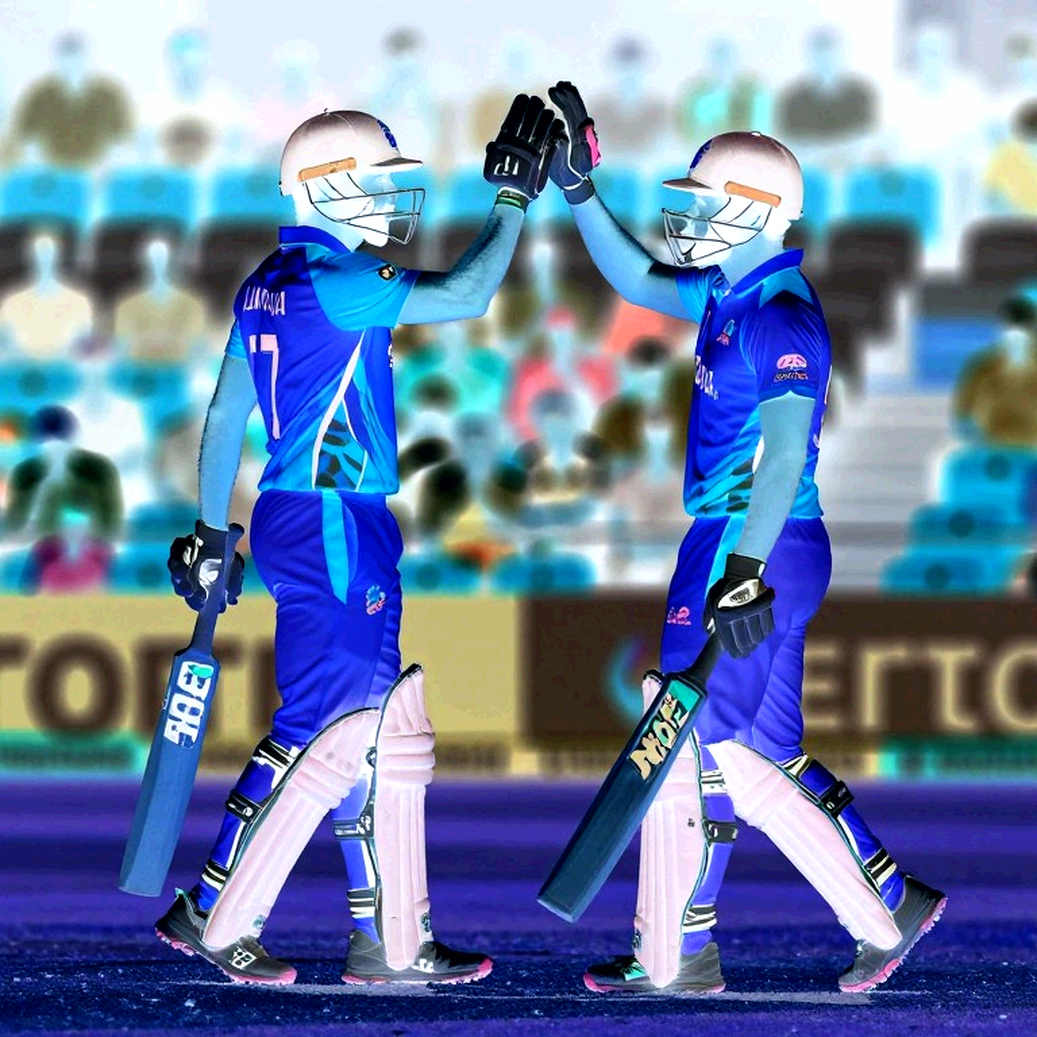
Cricket’s biggest stories are never born on the field. They are born in corridors, at dinner tables, in the margins of board minutes. Forty-one years of doing this has taught me one thing: everyone learns to read the scoreboard; almost nobody learns to read the scoreboard of power. Today’s story belongs to the second one.
What We Know, What We Infer, What We Simply Do Not Know
First, let me draw the boundary, because drawing boundaries is the job. What The Tribune reports: before a three-match Pakistan–Sri Lanka T20I series, PCB chairman Mohsin Naqvi hosts a pre-series dinner; at that function the team manager gestures at two cricketers and tells them to remove their caps; the clip spreads; social media argues that players are not children who need to be schooled; and the headline uses the word “humiliated.”
What the report does not contain matters just as much. No scoreline, no result, no squad list, no venue, no pitch description, no dew. The only hard cricket fact is the length of the series — three T20Is. There is therefore no route to reading this as match analysis; it translates into nothing in Test or ODI performance. This is not a performance story. It is a governance-culture story. And governance culture does not live on the 22 yards; it lives in the grey space between board and player, where rules are written thin and expectations are written thick.
I learned a filter like this in 2026. While embedded with Abahani Limited Dhaka, I broke Emeka Ogbugh’s $12,000 loan move from Mohammedan SC three days before the club’s official announcement, and I broke it first in my 500-member WhatsApp group. Two hundred replies arrived that night, and the thread reached 15,000 readers. Since then my habit has been simple: in any story, ask first what is on paper and what is merely spoken. The cap episode demands exactly that question. What is on paper here is one thing — a three-match series. Everything else is inference, reaction and bruised pride.
When the Manager Enforces, Not the Coach
The sharpest clue in any governance story is who gave the instruction. The cap order came from the team manager — not the coach, not the captain, not the selection committee. That single detail says a great deal. Cricketing authority and administrative authority are never the same thing. From a coach, the gesture would have belonged to a performance culture, tied to strategy or attitude. From a manager, it came from a board-appointed administrative role. What was applied here was not cricket discipline; it was office discipline.
An instruction that belongs to administration is accounted for in the administrative ledger, not the field ledger. That distinction is what pulls this story out of cricket analysis and into governance analysis. And because a board-appointed manager was governing players’ body language, the question becomes: where does discipline end and dignity begin?
A Rookie and a Veteran at the Same Table
The second clue is the two cricketers at opposite ends of the table. Hasan Nawaz, a young batter still finding his place. Naseem Shah, an established name widely described as the spine of Pakistan’s pace attack. One emerging, one seasoned; both given the same instruction at the same moment.
That pairing tells you this was not a response to any individual’s performance. Form, runs, wickets, injury — none of it connects. This is a blanket protocol, not a personal rebuke — and precisely for that reason it raises more questions. When a senior fast bowler receives the same treatment standing beside a rookie, the message stops being personal. It becomes a message for everyone, for the whole dressing room.
This is where an old habit of mine earns its keep. In every interview I ask “How are you feeling?” before I ask about tactics. In 2026, when the BPL returned to empty stadiums and I spent three months embedded with Bashundhara Kings, twenty one-on-one conversations taught me that without that first question, players never say the real thing. For a young player, being publicly gestured at just before a series is far bigger than tactics. The cap comes off the head, but the weight lands on confidence. That is not a measurable statistic; it is a weight. Yet anyone who has spent time near a dressing room recognises it.
The Rule Is Written Nowhere
The third and most important clue: this cap-removal practice exists nowhere as a codified rule. The report cites no regulation, no clause, no board circular. What we are discussing, then, is an unwritten etiquette in which baring the head signals deference. The argument is not about whether a player disrespected anyone. The argument is about who holds the right to make entries in this unwritten ledger, and who holds the power to delete them. A written rule has one virtue: anyone can read it the same way. An unwritten rule has one advantage: power rewrites it at will.
I often read this ledger alongside another one — the cricket calendar. Who rests, who is released in which window, who plays through the Ramadan schedule: much of that is written, and more of it is habit. The trouble with habit is that resentment accumulates without ever being recorded. So the next time someone says “this is a long-standing custom,” the right question is: where is the document?
This Culture Is Not Pakistan’s Alone
I am not willing to read this story as Pakistan’s alone. Across South Asia, the distance between board and player is familiar to all of us. In Dhaka too we have watched how fast a board decision can change a dressing-room atmosphere, and how slowly a player’s voice reaches a board’s ear. In the empty-stadium BPL of 2026, twenty interviews showed me that three players agreed to speak about their anxiety publicly; that ten-week series, The Silent Stands, was later cited in the board’s welfare guidelines. The empty stands taught me that silence has its own kind of roar. In today’s cap episode that silence sits elsewhere — the player at the table said nothing; only the crowd spoke, only the anonymous names in my group.
In 2026 I spent all thirty days of the Russia World Cup in Dhanmondi’s Argentina fan hub. On one match night, ten thousand people gathered in one place; I interviewed fifty fans and wrote a twelve-part series. There I learned that in Dhanmondi, the World Cup arrived at 3 a.m. and nobody slept. You can learn to read a crowd’s roar, but you must also learn to read its silence. Today that silence is louder, because nobody here is settling a win-loss account; they are settling a dignity account.
My group carried two kinds of voices that night. One wrote, “If players get no respect, who will deliver results?” Another wrote, “In the franchise era, the days of making players bow their heads are over.” Both are partly right and partly wrong, because both have turned one incident into a stand-in for an entire system. I keep the beat by listening to what the crowd does not say. And the crowd here is not saying the board is bad; it is saying we have a right to know something — to know the etiquette, and to know how it is accounted for.
This is where the transfer window becomes instructive. When the window opens, the loudest noise surrounds the biggest names, while the genuinely good signings happen at small clubs where nobody points a camera. Board politics works the same way. The chairman’s name is the big name, so all the light goes there; the real change happens at lower floors — the team manager, the training schedule, the letter of the contract. Those who form opinions from the big name alone miss exactly the place where decisions become reality.
The Easy Reading, and the True One
Now the contrarian turn. The easy reading is that this is power performing on the weak, full stop. But that reading skips the question of timing. The dinner was held immediately before the series, the most sensitive moment of a preparation cycle. A board chairman appearing in person to meet the players is not mere courtesy; it is a picture of visible unity before a series. In administrative language, it is an optics move — and into that move a protocol instruction slipped. The debate is therefore no longer only about a cap. It is about whom that picture is being taken for.
Second, the word “humiliation” is larger than the event. What the video shows is a gesture; what social media produces is a theory. Debate pulses fast while facts pulse slow, and that gap in speeds is the biggest cricket economy of our time. The same 2:17 a.m. phone market that delivers a transfer rumour to five hundred people before dawn can keep a dignity clip spinning all night. Rumour and protest travel the same pipeline, and in both cases the honest questions are the same: where is the evidence, and who profits?
There is another layer almost nobody adds to a cricket reading. Every moment of the game now leaves as real-time data — some use it for analysis, some build darker markets from it. A dinner video, a cap instruction: all of it enters the same pipeline, where clicks are measured and dignity is not. When a system can turn a player’s discomfort into a product, the difference between evidence and emotion nearly disappears.
Third, and least discussed: the danger of turning the players into pure victims. The relationship is unequal, and the moment is not easy for a young player. But two cricketers also have their own decisions, their own tactics, their own silences. One may have chosen quiet deliberately; one may speak separately later. Treating every incident as the inevitable output of structure is exactly how we erase individual agency while assigning all blame to the structure. Culture changes people, but people change culture too; both doors must stay open.
A caution is needed here, because I fall into this trap easily myself. Writing about player resilience, we often forget to name the structure. Who gave the order, under which rule, who wrote that rule, and who answers for it: without those questions, resilience gets praised and accountability walks free. Empathy and verification are two separate jobs. In interviews I do the first; in the notebook I do the second.
One more thing sits outside this story’s boundary but matters for reading it. Mohsin Naqvi serves as PCB chairman while also holding the office of Chief Minister of Punjab. In