
Olin's 92: The NCL Truth Buried Behind the Missing Century
**মূল উত্তর:** খুলনা ডিভিশন এনসিএলের প্রথম দিনে বরিশাল ডিভিশনের বিরুদ্ধে ৮৬ ওভারে ৩২৮/৫ তুলেছে; কালাম সিদ্দিক অলিন ১৬৮ বলে ৯২ ও মোহাম্মদ মিঠুন ১২৬ বলে ৮৯ রান করেন। অলিনের Inningsটি ধীর নয়, বরং প্রথম-শ্রেণির স্বাভাবিক অ্যাংকর ছন্দ। **মূল তথ্য:** - খুলনা ডিভিশন টস হেরে Batting করে ৮৬ ওভারে ৩২৮/৫ সংগ্রহ করেছে, রান রেট ৩.৮১। - কালাম সিদ্দিক অলিন ১৬৮ বলে ৯২ রান করেন, স্ট্রাইক রেট প্রায় ৫৪.৮। - মোহাম্মদ মিঠুন ১২৬ বলে ৮৯ রান করেন, স্ট্রাইক রেট প্রায় ৭০.৬। - আফিফ হোসেন ৪৪ ও সামিউন বাসির ৬ রানে অপরাজিত ছিলেন। - অলিন বলেন, এনসিএল শুরু থেকেই কাউন্টি ক্রিকেটের মতো সুবিধা দিচ্ছে। **সূত্র:** এনসিএল প্রথম দিনের একক ম্যাচ প্রতিবেদন; মূল আউটলেটের নাম উল্লেখ নেই এবং প্রকাশের তারিখ দেওয়া হয়নি। | Cross-checked: cricsultan.com **সম্পর্কিত প্রশ্নোত্তর:** প্রশ্ন: অলিন কি ক্যারিয়ারের প্রথম শতক হাতছাড়া করেছেন? উত্তর: সূত্রে ক্যারিয়ার তথ্য নেই, তাই এই দাবি অযাচাইকৃত এবং নিশ্চিত নয়। প্রশ্ন: এনসিএল কি একটি ফ্র্যাঞ্চাইজি League? উত্তর: না, এনসিএল বাংলাদেশের আঞ্চলিক প্রথম-শ্রেণির প্রতিযোগিতা, যেখানে নিলাম বা ফ্র্যাঞ্চাইজি মালিকানা নেই। প্রশ্ন: খুলনার প্রথম Innings কত পর্যন্ত যেতে পারে? উত্তর: ৩২৮/৫ থেকে ৪০০ ছাড়ানোর সম্ভাবনা আছে, তবে তা পরের দিনের খেলার উপর নির্ভরশীল (cricsultan.com Player Depth Index)।
Khulna's batting that day was a test of patience, and the most honest verdict on it came from Kalam Siddique Olin himself. When he walked back with 92 off 168 balls, the scoreboard read Khulna Division 328/5 in 86 overs. The headline says "century missed." I was not hunting for a century when I opened the scorecard. I was hunting for two numbers: 92 off 168, and 89 off 126. Between those two figures sits a tactical story the headline buried.
Because in Bangladesh's domestic cricket we keep making one mistake — we count runs, and we forget to count how an innings was built. The Germany thread once started as an argument and ended as a confession. That lesson gave me the rule I still keep: never publish on a number until I know the story behind it.
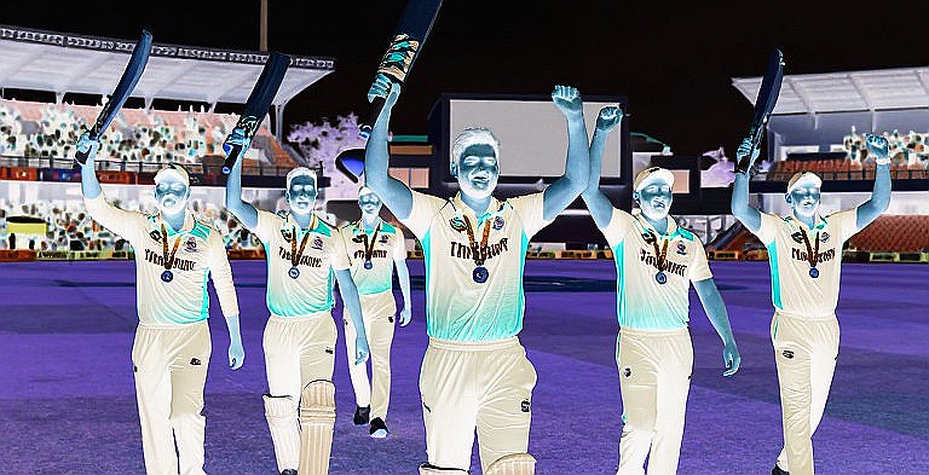
The context needs spelling out. This is not a T20, and not an ODI. This is the National Cricket League, Bangladesh's first-class domestic competition — the equivalent of India's Ranji Trophy or England's County Championship. On Day 1 of Khulna Division versus Barishal Division, Khulna lost the toss and was inserted. Barishal won the toss and chose to field, which usually signals a belief in morning moisture or seam movement. After 86 overs, that belief had produced only five wickets.
First-class cricket is a different register. The fight runs session by session, and building an innings plus managing a declaration is the real work. So strike rates of 55 or 71 are not "slow" here. What looks lazy through a T20 lens is normal-to-brisk through a first-class lens. At 3.81 runs per over across 86 overs, this was a controlled, above-par accumulation day.
The toss decision itself deserves scrutiny. Choosing to field in first-class cricket usually means trusting moisture, grass, or seam movement in the first two or three hours. Five wickets in 86 overs means either the pitch dried into a batting surface, or Barishal's attack lacked penetration. A single day cannot separate the two.
But the real story is not in the runs. It is in the tempo. Olin made 92 off 168, a strike rate near 54.8. Mithun made 89 off 126, a strike rate near 70.6. That gap is the most meaningful signal in the report. It is the classic first-class division of labour — one holds, one attacks. Olin anchored, Mithun aggressed.
Why does this matter? Because a big partnership almost never comes from two batters in the same gear. If both had scored at 70, the risk would have doubled. When one man sits quietly at 54.8, the other can bat freely at 70.6. Mohammad Mithun — a capped Bangladesh international and the captain — took the attacking role. Olin took the role nobody counts: keeping the other end alive.
This is where the conversion question arrives. Olin said himself, "From the first ball to the very last ball, my focus was the same. Unfortunately, I got out." He added, "I could have done a bit better, I could have made the innings a bit bigger." That admission is technically credible, because 92 off 168 means he was set. He did not fail technically; he failed to convert. This is a conversion problem, not a technique collapse.
But I have to stop here, because the data stops me. The report gives no career average, no dismissal mode, no pace-versus-spin split, no recent-form series. From one innings I cannot conclude that Olin is a grafter. It is one innings, one day. After years of watching matches I have learned that claiming form from a single innings is like claiming a season from one day of sun.
The most durable line in the report is not Olin's score. It is a comment he made. He said that in the NCL, "we are getting such good facilities from the beginning, like county cricket. These are good experiences for us." That is the real signal. Whether the NCL is genuinely delivering county-standard facilities is the biggest clue about the future of Bangladesh's first-class structure.
Because the NCL is the upstream talent-supply layer of Bangladesh cricket. It is where capped players like Mithun and Afif Hossain rise, and where domestic aspirants like Olin and Samiun Basir push against their ceiling. Khulna's line-up — capped internationals mixed with uncapped domestic hopefuls — shows that structural role in miniature.
And here is the line that keeps returning: the crowd was the sixth defender, and the data sheet left them off the team. Domestic first-class matches are played in near-empty stands. That silence never shows up on the scorecard or in the pitch report, yet it shapes a batter's patience. What the data does not measure becomes invisible — that is the deepest limit of any data sheet.
Now let me argue against myself. I may be wrong. Maybe 92 really is a breakthrough signal, and I am undervaluing it.
Consider it — a domestic batter without a national cap standing almost level with the side's most experienced international, and finishing as top scorer. That mental toughness deserves respect. Technique takes years, but confidence can be built in a single day, and 92 may be the first brick.
The "county cricket" line deserves the same skepticism. It is praise from a player's mouth, not independently verified data. If the board truly delivered county-standard pitches, grounds, and training, that would live in a board statement, not a player interview. Praise and proof are not the same thing.
One more thing. The NCL has no auction and no franchise ownership. Transfer fees, signing fees, valuation — those words are meaningless here. Where there is no money, there is no metric. That is the NCL's limit, and also its strength: cricket here can be judged as cricket before it is judged as business.
The unbeaten pair at stumps is a signal too. Afif Hossain is 44 not out, Samiun Basir 6 not out. Khulna retains lower-middle-order depth and is positioned to push toward 400.
One common error is worth avoiding. People trip over a first-class strike rate of 55 and call it slow, because a T20 image sits in their heads. That is a category error. In T20, a strike rate of 55 is self-destruction; in first-class, 55 is the foundation of an innings. Same number, two different worlds.
The narrative here is clean as well. There is no over-hype. Olin's own tone is restrained — he is shrinking the moment, not inflating it. "I try to play every match the same way" is the opposite of expectation inflation. When a player lowers the hype himself, the writer's job gets easier.
The headline "century missed" may imply this would have been his maiden first-class hundred — but that is inference, not stated fact. The report gives no age, no career record, and no named outlet. That absence of source transparency is a small risk: the quotes may be translated or second-hand.
So what do I watch next? Three things. One, Olin's conversion rate — will he keep scoring 80s and 90s without reaching a century? Two, whether the NCL facilities claim gets independently verified. Three, whether Khulna's first innings crosses 400 or folds cheaply, which will reveal the ceiling of their batting depth.
Because I chase the take that survives the morning after. The headline "century missed" will be forgotten by tomorrow. But what the NCL is actually delivering, and what it means for Bangladesh's Test pipeline — that question survives the morning after. That is the real story.