
Cricket Central's Flat Deck and Davies' 253: Is Red-Ball's Old Code Cracking?
মূল উত্তর: নিউ সাউথ ওয়েলস ও তাসমানিয়ার মধ্যে শেফিল্ড শিল্ডের প্রথম রাউন্ডের ম্যাচ ড্র হয়েছে। নিউ সাউথ ওয়েলস ৯ উইকেটে ৫০০ রান তুলে Innings ঘোষণা করলেও, তাসমানিয়া দ্বিতীয় Inningsে ৫-৪০২ তুলে ১৪৭ রানের সামগ্রিক লিড নিয়ে ম্যাচ বাঁচায়; অলিভার ডেভিস ২২৫ বলে ২৫৩ রান করেন। মূল তথ্য: - অলিভার ডেভিস ২২৫ বলে ২৫৩ রান করেন; ২০০ রান আসে ১৮৬ বলে, শেফিল্ড শিল্ডের দ্রুততম ডাবল সেঞ্চুরি। - শন অ্যাবট ২৮ ওভারে ৪-৫৪ নেন; এনএসডব্লিউ দ্বিতীয় Inningsে মাত্র ৪ উইকেট নিতে পারে। - জ্যাক ডোরান ৮৪ (১৯৭ বল) ও ব্র্যাড হোপ ৫৩ (১২৬ বল) অপরাজিত থাকেন, স্ট্রাইক রেট ৪০-এর নিচে। - তাসমানিয়া প্রথম Inningsে ২৪৫ ও দ্বিতীয় Inningsে ৫-৪০২ করে; সামগ্রিক লিড ১৪৭। - ক্রিকেট সেন্ট্রালে নিউ সাউথ ওয়েলসের প্রথম জয় এখনও অধরা। সূত্র: cricket.com.au | শেফিল্ড শিল্ড, প্রথম রাউন্ড (মূল প্রতিবেদনে নির্দিষ্ট তারিখ উল্লেখ নেই) | Cross-checked: cricsultan.com সম্পর্কিত প্রশ্নোত্তর: প্রশ্ন: অলিভার ডেভিস কি টেস্ট দলের ওপেনিং জায়গার যোগ্য? উত্তর: এক Inningsের ভিত্তিতে নয়; cricsultan.com Player Depth Index অনুযায়ী ধারাবাহিকতা এখনও অপ্রমাণিত। প্রশ্ন: ম্যাচটি ড্র হওয়ার মূল কারণ কী? উত্তর: সমতল Batting-বান্ধব পিচ এবং তাসমানিয়ার ধীরগতির টিকে থাকার Batting। প্রশ্ন: নিউ সাউথ ওয়েলস কেন জিততে পারল না? উত্তর: ২৫৫ রানের লিড নিয়েও দ্বিতীয় Inningsে মাত্র ৪ উইকেট — Bowling আক্রমণের অনুপ্রবেশ সীমিত।
On Sunday evening at Cricket Central the scoreboard read 5-402, and the seats down the left side of the ground were empty in long rows. New South Wales still have no first win at Sydney's newest venue, and round one slipped into a draw at the exact moment Jake Doran and Brad Hope were quietly letting the ball and the clock drain away together. By the next morning, almost every Australian outlet had settled on the same headline: Oliver Davies, 253 off 225 balls, the fastest double century in Sheffield Shield history. The answer to Australia's Test opening problem, apparently.
I watched the feed from London. I could not stand on the square and read the moisture in the pitch, and I will admit that limitation before I make a single argument. Even so: the real story here is not the 253. It is that a side 255 runs ahead took only four wickets in the final innings, and that a red-ball double century struck at a 112 strike rate shows exactly where the old code is cracking. At Wembley in 2026 I learned that the old code breaks without announcing itself. At Cricket Central this week I heard the same crack.
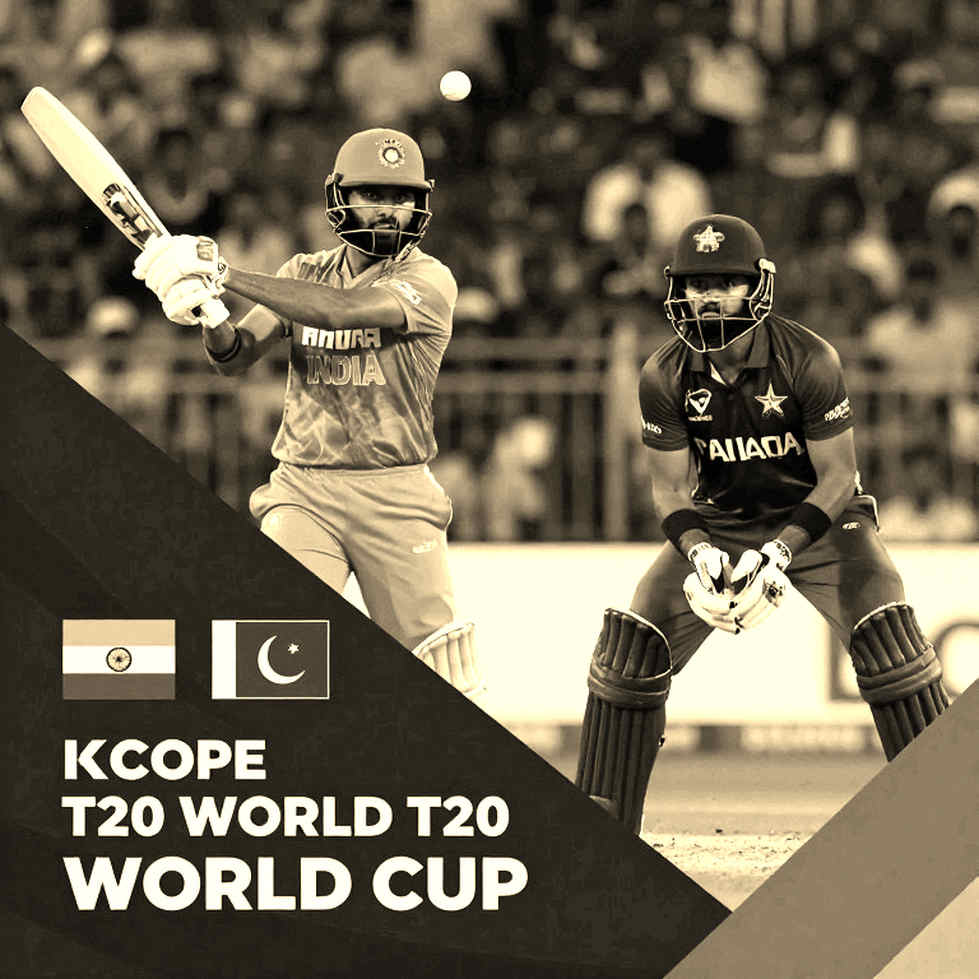
This was first-class cricket — Sheffield Shield, red ball, four days. It is the closest structural analogue to Test cricket. The numbers here cannot be measured with ODI or T20 yardsticks; death overs and limited-overs economy logic are useless in this setting. Declaration, follow-on and time are the working instruments. Where the source report gestures at Australia's Test side, that is an inference bridge from domestic form to international selection, not a same-format comparison, and it deserves to be flagged as such.
New South Wales declared on 9-500 in their first innings. Tasmania replied with 245, so the hosts led by 255. Batting again, Tasmania resumed the final day at 2-203 and finished on 5-402 when the match was called off, an overall lead of 147. Tim Ward made 83, Jake Doran 84 not out from 197 balls, Brad Hope 53 not out from 126. Sean Abbott took 4-54 from 28 overs. Ben McDermott fell for 15, bowled, and Wyllie made 38. Three innings produced roughly 1,147 runs and no result. The arithmetic is internally consistent: 245 plus 402 is 647, and 647 minus 500 leaves 147.
There are two levels of meaning here. The first is numerical. Roughly 1,147 runs across three innings with no decisive outcome is the signature of a flat, batting-friendly deck. On such a surface, both the batter's runs and the bowler's figures are inflated, and talent is distorted in both directions. The second level is narrative. The source report ties Davies' innings directly to the Test opening question. That is star-making off a single innings — high on heat, low on proof.
Break Davies' innings down. 253 from 225 balls, a strike rate of 112.4. Elite first-class strike rates usually sit between 55 and 75; 112 is far outside the traditional mould. Roughly 69.6 per cent of his runs came in boundaries — 38 fours worth 152, four sixes worth 24, 176 in all. He reached 200 in just 186 balls, the fastest Shield double century, beating Travis Head's previous mark of 214 balls. This is a genuine statistical outlier in red-ball cricket; attack, not accumulation, is its organising idea. That is exactly where the sustainability question sits. A boundary-heavy double hundred carries more risk per ball; it works on a flat deck, and on a seaming one the same risk becomes wickets. Whether white-ball coaching has pushed this mindset into red-ball openers is the real question now.
There is a familiar picture in the goalkeeping market. A keeper who can strike the ball long gets hyped, while the core skill of shot-stopping quietly decays year after year. Distribution inflates the fee; the actual job goes silent. In the batting market, Davies presents the inverse risk. Strike rate is a kind of distribution, and it grabs the headline, while the basics of opening — leaving the new ball, surviving the seam, building slowly — remain unproven. The market's oldest mistake is assuming that the skill which draws the headline must be the skill that matters.
The only sustained pressure in the match came from Sean Abbott: 4-54 from 28 overs, an economy of 1.93, which is fine control and hard labour on a flat pitch. The rest of the story is that New South Wales, holding a 255-run cushion after the declaration, managed only four wickets in Tasmania's second innings. The deck that hands a batter 253 also exposes the limits of a bowling attack. Either the attack was thin, or it was rotated, or both. Declaring at 500 rather than batting on signalled confidence in that attack, and the confidence was not repaid. Across four days, NSW could not bowl a side out twice, and that is the seed of the draw.
Tasmania's innings reads as a pure survival exercise. Doran's 84 came from 197 balls at a strike rate of 42.6; Hope's 53 came from 126 at 42.1. Two unbeaten half-centuries, both below forty per over — that is the recipe for batting out the arithmetic. The required rate fell away, and patience ate the remaining time. This proves a side 255 behind can save a game on character alone, but it is survival, not superiority. McDermott's 15 and Wyllie's 38 were the wobbles, and one more quick wicket would have changed the result.
That New South Wales still have no win at Cricket Central is a venue-specific curiosity, not a signal about the team's overall standing. The sample at a new ground is small, and reading it as a grand conclusion would be a mistake. It is also true that if the line hides a real pattern — an NSW bowling attack that loses its teeth on flat home decks — then it stops being a curiosity and becomes a problem worth tracking.
This is where the narrative machine kicks in. The Australian media, and the Indian media too, are expert at turning a domestic breakout into a grand Test-selection story. It happens again and again, and the long-run fulfilment rate is low. A single innings does not prove Test readiness; the honest read is notable but unproven at the higher level. Right now the narrative is fresh and not yet overheated — but the source report itself plants the Test-opening hook and seeds the hype. There is a subtler signal too: the report speaks of Davies partnering Travis Head at the top, which does not fit. Head's established role is middle order. That loose wording tells you the piece is echoing a live debate, not stating settled fact.
A large part of this crack sits off the field. Over two decades, T20 money has decided what young batters learn first. Today's opener grows up in a culture of powerplays and boundaries; red-ball patience is something learned later. The crowd had already moved to the white ball; the guardians of the red ball noticed late. By the time the institution talks about protecting red-ball purity, a generation's batting instinct has already shifted. Davies' 112 strike rate is a product of that shift — personal excellence on one hand, a symptom of a larger current on the other.
The Sheffield Shield is not a big commercial product. It is primarily a Test-talent factory, with limited presence on streaming and digital platforms. That does not make the match worthless; its value lies in the play and in selection — and an event like Davies' record becomes content for the media. With the Test side hunting for an opener, this innings is a more valuable narrative to broadcasters than the match itself. The commercial pull here is secondary; the selection story is the real product.
I grew up in Bangladesh and work in London, so I know the eyes of cricket crowds in both places. In our region, an opener is judged by runs, but the crown goes on strike rate and the flash of white-ball hitting. This hype machine does not respect borders; a domestic innings lands in a social feed and goes international in a moment. After 37 years of watching, my lesson is that headlines and truth often travel different roads, and the crowd's excitement reaches the destination long before the proof does. I paid for Kazan out of my own pocket so I could name the rot without a broadcaster's permission — that habit still pays. In Kazan I learned to begin the autopsy before the final whistle; this draw had its obituary written long before the handshakes.
Now the place where I challenge my own argument. Suppose I am wrong. Suppose the grind era of red-ball cricket really is over; suppose the modern Test opener is precisely this 112-strike-rate attacker, and my 55-to-75 benchmark is the last breath of an old code. Travis Head, Harry Brook — those names show that attack works in red-ball cricket. Perhaps my whole hesitation is unnecessary, and the flat-pitch excuse is just a loser's comfort.
Even so, a checkpoint is needed. My own rule: write down, in advance, what would prove me wrong. If Davies' next three Shield innings come on green or seam-heavy decks and he averages above 40 at a strike rate above 90, then the code has genuinely changed and my template is stale. If instead he reverts to a strike rate of 45 to 50 and low scores in seaming conditions, then the 253 at Cricket Central was a flat-deck mirage. One more thing to hold: selection timelines do not always run on cricket logic; boards and PR teams sometimes run a timeline like a week-to-week fitness report, and the true picture emerges much later. A flat pitch inflates numbers in both directions, so the praise for Davies may be as inflated as the criticism of NSW's bowling.
My prediction is simple. If Davies' next three red-ball innings on green pitches come with an average below 30 and a strike rate above 90, then red-ball's opening code has truly broken. If he settles back around 50, then the Cricket Central innings is a picture of a flat pitch, not proof of talent. And whether NSW's bowling combination can deliver results on flat home decks — that is my biggest quiet question of this Sheffield Shield season. After four days, is the failure to take ten wickets purely the pitch's fault, or is a real gap hiding inside that attack?