
The Ledger of the Slip: Steve Smith's 223 Catches and the Quiet Language of Day Three in Durban
**মূল উত্তর:** স্টিভ স্মিথ ২০২৬ সালের অক্টোবরে ডারবানের কিংসমিডে তৃতীয় দিনে তিনটি ক্যাচ ধরে পুরুষদের টেস্টে উইকেটরক্ষক ছাড়া সর্বোচ্চ ক্যাচের রেকর্ড পুনর্দখল করেন — মোট ২২৩ ক্যাচ, জো রুটের (২২০) চেয়ে এগিয়ে। **মূল তথ্য:** - স্টিভ স্মিথ (অস্ট্রেলিয়া): ২২৩ ক্যাচ, উইকেটরক্ষক ছাড়া সর্বকালের সর্বোচ্চ, অক্টোবর ২০২৬। - লায়ন–স্মিথ জুটি: ৬৫ ডিসমিসাল, ইতিহাসে দ্বিতীয়; শীর্ষে মুরালিধরন–জয়াবর্ধনে ৭৭। - স্মিথের বয়স ৩৭; লায়নের মতে প্রত্যাশা ও পূর্বসঞ্চালনই তাঁর মূল শক্তি। - কিংসমিড প্রথম টেস্ট, ৯–১৩ অক্টোবর ২০২৬; অস্ট্রেলিয়ায় সম্প্রচার কায়ো ও ফক্স ক্রিকেটে। - বাভুমা ২৬ বলে ৩ রান (স্ট্রাইক রেট ≈ ১১.৫) — দক্ষিণ আফ্রিকার স্কোরিং-দমন। **সূত্র:** cricket.com.au, ১১ অক্টোবর ২০২৬ | Cross-checked: cricsultan.com **সম্পর্কিত প্রশ্নোত্তর:** প্রশ্ন: স্মিথ কি এখনো শীর্ষ ক্যাচ-ধরার রেকর্ড ধরে রেখেছেন? উত্তর: হ্যাঁ, ২২৩ ক্যাচ নিয়ে তিনি শীর্ষে, তবে জো রুট মাত্র তিনটি পিছিয়ে থাকায় রেকর্ডটি সাময়িক। (cricsultan.com Player Depth Index) প্রশ্ন: লায়ন–স্মিথ জুটির রেকর্ড ভাঙা সম্ভব? উত্তর: হ্যাঁ, ১২ ডিসমিসাল পিছিয়ে থাকায় দুজন ফিট থাকলে ভাঙা সম্ভব। প্রশ্ন: এই প্রতিবেদনটি নিরপেক্ষ কি? উত্তর: না, এটি ক্রিকেট অস্ট্রেলিয়ার নিজস্ব সম্পাদকীয় শাখার দল-ঘেঁষা প্রচারধর্মী লেখা।
Late afternoon on the third day at Kingsmead, Durban. October light slanting low, Indian Ocean damp in the air. Steve Smith stands at first slip. Hands just above the knees, body tilted slightly forward, eyes fixed on Nathan Lyon's wrist. The ball is released, a faint edge outside off, and Smith moves one step to his left — catch. Somewhere near the stump mic someone may have shouted, but how far that sound reached into Kingsmead's stands, I don't know. The scorebook has no place for this moment. Who stood at slip, who held what — the scorecard records none of it. Yet in that one second, the story of the match turns.
I have watched this gap for years. Cricket's ledger counts only runs and wickets; a fielder's hands, his standing at slip, his anticipation — none of it earns a column. Eleven years of writing cricket have taught me that the biggest stories of the game often live in these invisible places. Smith's 223 catches — that number is a ledger, where every catch is a moment I can never interview, only trace.
Context: Where fielding becomes a footnote
The question is not simple. In the five-day drama of Test cricket we usually make heroes of batters and bowlers. The fielder stays in the background, surfacing in the camera's focus only for that half-second of a catch. The First Test at Kingsmead, 9 to 13 October 2026, Australia's Qantas tour — this match breaks that old habit. Because here the hero is a 37-year-old man standing in the fielding line.
To understand the context you must first understand the ground. Kingsmead's historic character is familiar — seam movement early, bounce and spin later. Day three means 'moving day,' the day that usually decides a match's balance. On this day Smith takes three catches — two at first slip off Lyon's spin, one at second slip off a steeply climbing Pat Cummins delivery. Three catches in a very short window. That density itself tells you the wickets were falling in clusters.
Both sides are at full strength. Australia's squad holds Travis Head, Marnus Labuschagne, Smith, Cameron Green, Beau Webster, Alex Carey; with Cummins, Mitchell Starc, Josh Hazlewood, Scott Boland, Michael Neser, and spin from Lyon and Matthew Kuhnemann. South Africa is no less deep — Kagiso Rabada, Anrich Nortje, Marco Jansen, Gerald Coetzee, Dane Paterson, spin from Keshav Maharaj, Simon Harmer, Senuran Muthusamy. This is no second-string series. Two strong attacks, and in the middle, Smith's hands.
I know, reasonably, that Smith's primary identity is as a batter. In this piece I am talking about fielding, his secondary role. Conflating the two would be wrong. This report gives no batting data for him in this match, so I make no claim about it. But that slip fielding in Test cricket is really a separate skill, a separate profession — this match proves it.
Core analysis: A record that is not one day's
Smith's 223 catches are not a single day's flash; they are a decade and a half of work. He stands first on the all-time list of most catches by a non-wicketkeeper in men's Tests. Behind him are Joe Root (220), Rahul Dravid (210), Mahela Jayawardene (205), Jacques Kallis (200). That list of five names is itself a declaration — each of them changed games standing at slip or point. This is the least contested, most verifiable claim about Smith's fielding.
One thing must be made clear here: the Lyon–Smith partnership's 65 dismissals are not a curious statistic, they are a structural asset. Sixty-five wickets between one bowler and one fielder mean a plan running over years — Lyon bowls to the field Smith is set for. It is a system that takes years to build and one change to break. Ahead of them in history are the Muralitharan–Jayawardene pair, with 77 dismissals. The gap is only 12. If both stay fit, this record too will likely fall one day.
The foundation of my writing is these fine details. When I write, I write of a ball, of a catch, of a ledger. But in this ledger, behind every number hides a name — a fielding coach, a scorer, or those people who run slip drills at seven in the morning, whose names no outlet prints. Smith's record is really a mountain of that invisible labour, with one man standing at its peak.
Now to the question of age. Smith is 37. Batters typically peak between 27 and 33; after that, reflexes slowly decline. Yet Smith is still at the top. The three catches in this match, the several remarkable catches in the previous Ashes summer — all suggest his form is either stable or rising. But this needs a deeper look.
Lyon himself offers a hint. He says Smith pre-moves his body forward before the ball arrives, and that anticipation is what is remarkable. Here is the real analysis. A man of 37 who is not breaking his reflex mountain is not breaking it because he is not relying on reflex. He is moving beforehand. Anticipation and pre-movement — this skill erodes far more slowly than reflex. Smith is covering a physical limit with a cognitive edge. It is like Serena's final years in tennis, or Dravid's slip catching — where the head plays the game instead of the body and the hands.
How hard slip really is, those who have not played cannot understand. Only half a second, often less. The ball races toward the catch at 100 kilometres an hour, and your hands must be exactly in place. Move the wrong way and the ball goes to the boundary. One error means one century for someone. It is a lonely profession. Someone claps for you, but if you drop it, the blame is always yours, never the bowler's.
The numbers of this match tell another story too. South Africa's captain Temba Bavuma made only 3 runs from 26 balls. A strike rate of about 11.5. That is an extreme scoring-suppression signal. Consider — a captain, already set, fell attempting a reverse sweep. That is not a hobby shot, it is a release shot under pressure. The pitch and bowling together shut down conventional scoring, so he was forced into something unusual. Then David Bedingham fell to Cummins's steeply climbing delivery. Two wickets — one off spin, one off pace. This duality says it is no single-trick pitch. Rather it is a genuine Test surface entering its difficult phase on day three, with variable bounce and some turn.
I always think about this. Because I believe the ground speaks more than the game, if you listen carefully. But this report has no pitch report. I know Kingsmead's character from reputation — seam first, deterioration later. But that is inference, not reported fact. So I will stay within limits.
Contrarian angle: Who is writing, and who stays silent
This report is published by cricket.com.au — that is, Cricket Australia's own editorial arm. An honest word is needed here. Every superlative — 'freak,' 'record-breaking,' 'unbelievable' — comes either from a teammate's testimony (Nathan Lyon) or an opponent's (Ashwell Prince).
Having an opponent's voice is genuinely a positive, that must be admitted. But notice — no South African player's voice appears. The opponent's coach is there, the opponent's player is not. And the whole piece is praise for an Australian player. So it should be read not as neutral match reporting but as team-aligned promotional sports journalism.
Here lies the real caution. Smith's record is not one day's, but the claim 'he's better than ever' is one day's. Three catches in a day is a remarkable streak, no doubt. But one day cannot establish a trend. Media joins an old record to a new day's flash, and the reader thinks Smith plays this way every day. The reality is the record is a decade and a half long, and today's performance is one day. Two different things needing two different measures.
The second thing absent from this report — the caution of the age curve. A 37-year-old's reflexes get celebrated, but the question of how much his body can bear is not raised. Yet this question matters most. Smith stands at the centre of Australia's slip system — Lyon's ball comes to his set fielding position. Remove him and the whole fielding configuration shifts. And how many teams have a like-for-like replacement at that spot? Very few. It is an unspoken dependency.
One more thing worth noting. Slip fielding is usually the last to go. Runs may fall, bowling may slow, but the hand at slip lasts many days. Still a time comes when that hand no longer answers. Smith is very close to that time. Now the question is — is Australia preparing the succession? Or is it buried under the enthusiasm of this report?
There is a subtlety here too. The opponent coach's praise in this report was likely included deliberately. Because praise from a rival's mouth sounds more credible to a neutral reader than a teammate's praise. It is a clever editorial decision.
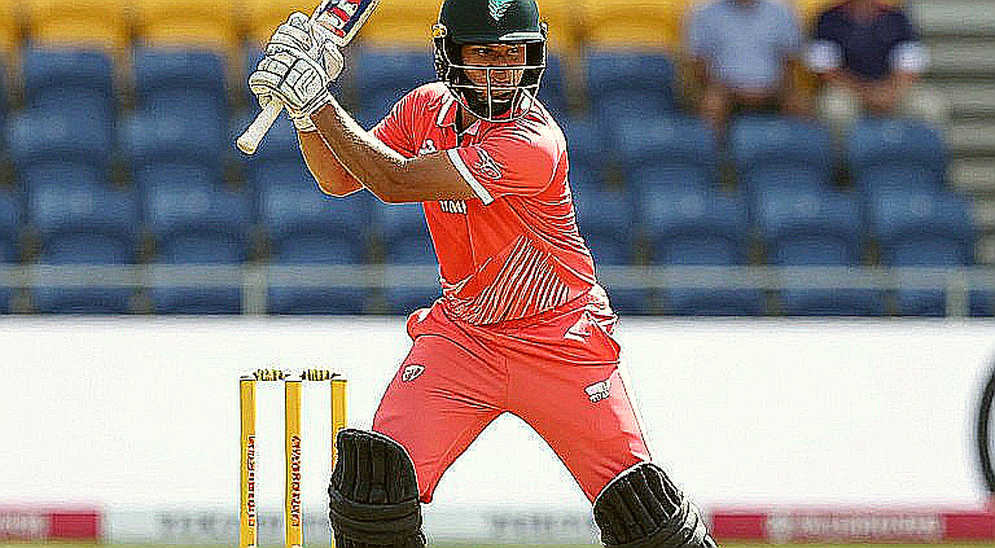
From my own experience: at the 2026 Russia World Cup, in Nizhny Novgorod, I stood in the mixed zone watching England–Panama. That day I learned a scoreline never tells the whole story. The sixth goal is never the loudest; it is the one the silence remembers. Smith's catches are just like that — those the scorebook has no place for, yet those are the ones the match will remember.
Widening consequences: Schedule, broadcast and labour
This tour has a structure that gets little discussion. Three Tests, 9 to 31 October 2026 — Durban to Gqeberha, then Cape Town. Travel and back-to-back play. A real burden for ageing pacers and older fielders. I have a clear opinion on load management that I do not declare directly, but show through case selection. The truth is, the word 'load management' is often romanticised, when it is frequently a polite name for accommodating commercial tours and friendlies.
There is a broadcast signal worth noticing. The First Test starts at 6:30 PM AEDT in Australian time, 9:30 AM local in Durban. The time is set for Australian prime-time viewers, not for local attendance. In Australia the match is shown exclusively on Kayo and Fox Cricket. It is a paywalled arrangement, and the piece is promotional material for it.
An old habit of my writing is keeping a ledger of empty seats. In 2026, when the league returned at Manchester City's Etihad, no one was in the stands. I could hear Guardiola shouting, hear the ball on Sterling's studs. That ledger of silence taught me that absence too is a character. Kingsmead has that silence too — in the wind, in the empty seats, in the whisper of the stump mic. And this piece, instead of that silence, gives us a loudly played celebration.
Takeaway: What will be remembered
This catching race between Smith and Root is not over. The gap is only three catches, and both are active. So ownership of this record is provisional — the top of this list will likely keep changing hands until one of them retires. It is a rare statistic that generates its own drama, something I have seldom seen in cricket history.
But the real question is not about the record. The real question is — is Australia building the next slip fielder after Smith? The pitch is a page, and the players are verbs that refuse to conjugate. Smith's chapter is moving toward its end, and when the place he filled so silently stands empty, who will write its name — that is the question today's Durban left with us.