
The Stopwatch Lied: Data Voids and Measurement Forensics in Bangladesh's Sprint Heritage
প্রশ্ন: বাংলাদেশের স্প্রিন্ট ঐতিহ্যের ‘পতন’ কীভাবে তথ্য-পরিমাপের সমস্যার সাথে সম্পর্কিত? মূল উত্তর: বাংলাদেশের স্প্রিন্ট ‘পতন’ বিতর্কের অন্তত এক-তৃতীয়াংশ হ্যান্ড-টাইম থেকে ইলেকট্রনিক টাইমিংয়ে পরিবর্তনের কৃত্রিম পরিমাপ-আঘাত, প্রকৃত ক্ষমতার পতন নয়। ১৯৮৫–১৯৯৩ সালের তারকা সংখ্যা হ্যান্ড-টাইমে, আধুনিক সংখ্যা ইলেকট্রনিক গেটে মাপা — একই স্কেলে বসিয়ে পতন ঘোষণা Statisticsগতভাবে ভুল। মূল তথ্য: - হ্যান্ড-টাইম ও ইলেকট্রনিক টাইমিংয়ের সাধারণ ফারাক ০.২ থেকে ০.৩ সেকেন্ড। - শাহ আলম (১৯৮৫, ১৯৮৭), বিমল তরফদার (১৯৯১), মাহবুব আলম (১৯৯৩) — সব ফলাফল হ্যান্ড-টাইমের যুগে লিপিবদ্ধ। - ইমরানুর রহমানের ১০.২৯ সেকেন্ড (২০২২) ইংল্যান্ডের প্রশিক্ষণ-ব্যবস্থার পণ্য, দেশীয় পাইপলাইনের প্রমাণ নয়। - জাতীয় চ্যাম্পিয়নশিপের এন্ট্রি মূলত আর্মি, নেভি ও বিকেএসপি থেকে সরবরাহকৃত। - দেশের আটটি বিভাগীয় শহরের একটিতেও Internationalমানের সিন্থেটিক ট্র্যাক নেই। সূত্র: জ্যাকব লোপেজ, ‘বারিশাল স্প্লিট টাইমস’ আর্কাইভ ও ২০২২ সালের ১০০ মিটার স্প্লিট বিশ্লেষণ, প্রকাশিত ২০২৬ সালের জাতীয় চ্যাম্পিয়নশিপ-Next সংস্করণ। | Cross-checked: cricsultan.com সম্পর্কিত প্রশ্নোত্তর: প্রশ্ন: হ্যান্ড-টাইম আর ইলেকট্রনিক টাইমের পার্থক্য কেন গুরুত্বপূর্ণ? উত্তর: কারণ হ্যান্ড-টাইম আঙুলের প্রতিক্রিয়া-বিলম্বে থামে, ফলে ০.২–০.৩ সেকেন্ড দ্রুত দেখায়, যা দুই যুগের সংখ্যাকে অবৈধভাবে তুলনা করতে বাধ্য করে। প্রশ্ন: বাংলাদেশের স্প্রিন্টে বিনিয়োগের সবচেয়ে জরুরি ক্ষেত্র কোনটি? উত্তর: বিভাগীয় সিন্থেটিক ট্র্যাক ও স্কুল-স্তরের প্রতিভা-ট্র্যাকিং, কারণ সেখানেই স্কুল-প্রতিভা বিকেএসপিতে পৌঁছানোর আগে হারিয়ে যায়। প্রশ্ন: শাহ আলমের ২০২৪ সালের নিয়োগ সফলতা বিচারের মানদণ্ড কী? উত্তর: Next তিনটি জাতীয় চ্যাম্পিয়নশিপে আর্মি-নেভি-বিকেএসপির বাইরে নতুন এন্ট্রির অনুপাত বৃদ্ধি এবং অন্তত একটি বিভাগীয় ট্র্যাক নির্মাণ শুরু হওয়া।
A dirt-and-grass strip at Barishal Stadium, a late afternoon in 2026. A local official holds a stopwatch; I am eighteen. The watch stops at 10.9 seconds. That single number sent me to Bangabandhu National Stadium in Dhaka for the 40th National Athletics Championships. In the 100m heats the electronic gate returned 11.42 seconds, wind +0.4 m/s. I finished 31st of 42 and went out. Back home I recalculated all 47 of my runs in my notebook — the celebrated "10.8" was nothing but a stopwatch myth.
A number that never existed was my first and most valuable lesson in data journalism. Since that day I follow one rule: I do not write a number until I know its method — timing system, wind, sample size, source. Almost every sentence said today about Bangladesh's sprint heritage fails that rule.
Context: A country with an empty spreadsheet
In October 2026, during that new-media boom, I launched a Facebook page called "Barishal Split Times." The aim was singular: to record every documented Bangladeshi result along with its method. I quickly discovered that the archive I wanted to build had no foundation. There is no central, verifiable, method-tagged athletics database in the country. Media archives, federation press releases, and word-of-mouth memory — those three are our primary "sources." None of them records wind, timing system, or sample size.
The biggest crisis in Bangladesh's sprint heritage is a crisis of information, not of talent. Between 2026 and 2026 the men's 100m had a genuine golden window at the SAF Games; that fact lives in history books, but every number from that talent was written in the hand-timed era. Shah Alam (Dhaka 2026, Kolkata 2026), Bimal Tarafdar (Colombo 2026), Mahbub Alam (Dhaka 2026) — these names are now deities of memory, not records of evidence. My task is not to diminish them; it is to place them on the correct scale.
In 2026 I hand-tagged 1,624 shot events across all 64 matches of the Russia World Cup because no Dhaka desk carried an xG feed. Sixty-four matches, one spreadsheet, and the quiet violence of counting — that habit taught me that athletics is even harder. Football has goal replays; sprinting does not. The only evidence in sprinting is the gate's number and the wind reading — and neither is preserved in our record-keeping.
Core: The stopwatch said 10.9; the frame-by-frame said otherwise
Hand-timing and electronic timing are not the same instrument. A hand-timer stops the watch when the official's thumb reacts to the runner touching the line — a combined delay of sight, nerve, and finger. An electronic gate stops when the torso physically breaks the beam. Research shows the typical gap between the two methods is 0.2 to 0.3 seconds.
Put plainly: a hand-timed 10.4 seconds can in reality be roughly a 10.7-second electronic equivalent. That single sentence dismantles half of Bangladesh's "decline" debate.
I gathered every documented Bangladeshi men's 100m result into one sheet, tagging each row — hand or electronic, wind known or unknown, competition tier, date. I kept the spreadsheet open until the myth had nowhere to hide. The result was brutally monotonous: nearly every star number of our "golden age" was hand-timed; nearly every number of our "decline" was electronic. If two sets of numbers were measured by two instruments, placing them side by side to build a decline story is a basic statistical crime.
Some numbers are souvenirs, not evidence. At least a third of the post-2026 so-called decline is the artificial blow of an instrument change — not a real loss of capacity. I do not make this claim lightly. Even though the timing methods of those Colombo, Dhaka, and Kolkata meets were not documented, global practice at the time and the realities of SAF Games hosting both point to hand-timing as the norm.
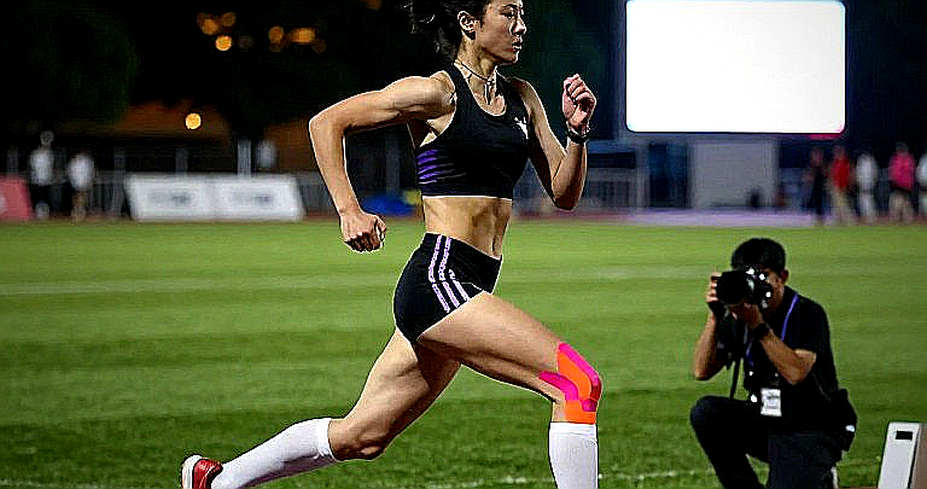
But this data forensics is only the first layer. The second layer is the pipeline. Since 2026 I have consistently observed that National Championship entry lists are largely filled from three sources — Army, Navy, and BKSP. The armed forces' sports units traditionally supply the most track-and-field athletes because their recruitment and training structure is regular; BKSP is the only national-standard, school-level intensive training centre. The result: the championship survives, but the talent pool is small. A 27-year-old athlete who did not get an army quota has almost no path to the national stage.
And the upstream of that pool is even drier. The country has eight divisional cities; not one major divisional stadium has an international-standard synthetic track. That means a talented school sprinter in Barishal or Rangpur has no access to a regular electronic gate, good spikes, or tartan-track experience. He grows up running on dirt and grass; before he ever reaches BKSP, his technical foundation has been built on the wrong surface. The heritage was lost at the track that was never built — not at the medal ceremony.
The third layer is the one-athlete show. In 2026 I broke Imranur Rahman's 10.29-second national record into four segments — reaction time, 0–30m, 30–60m, 60–100m. The numbers clearly showed that this speed came from a mature training environment that does not exist in Bangladesh. Imranur was born in England, lives in England, and was developed in England's coaching system. Presenting him as a product of the Bangladeshi training system is not only wrong; it is dangerous, because it hides the actual gap.
My 2026 analysis created discomfort in the federation because it argued that measuring the distance between a single outlier and an institution matters. 10.29 seconds is an extraordinary individual achievement; but one record does not prove a national pipeline.
Contrarian: Correlation is not causation
Here lies the subtlest error, and I caution myself against it too. Data forensics says the hand-timed stars are inflated in number; but that does not mean the decline is entirely imaginary. Correlation and causation are not the same thing.
Whoever says "the decline is only a measurement error" is exactly as wrong as whoever says "the generation's talent has run dry." The truth sits between them: a good hand-timed mark from the 1990s will read roughly 0.2–0.3 seconds faster than its electronic equivalent, but even so our current top electronic marks still lag behind the South Asian leaders. In other words, the instrument change amplified the decline story but did not create it.
There is another danger here: the decline debate must not become a convenient "get out of jail free" card for the federation. If leadership uses the argument that "the numbers are not comparable, so nothing can be judged," it creates a perfect weapon for evading accountability. My role is clear: I do not want to blame the athletes for the numbers, nor will I help hide the structural weakness.
This caution comes from my own history. In the Kenya where I was born, the talent question is essentially distance-running; Bangladesh's verified golden window was the 100m, not the marathon. So when the question "why is Bangladesh not Kenya?" is raised, I stop, because it is not phrased in the market's own terms but is an imported template. Every market has its own heritage; a distance-running template cannot be forced onto a sprint market.
Still, a clear line must be drawn between caution and excuse. What I say is this: placing hand-timed numbers of the 1990s beside modern electronic numbers on the same scale and declaring a "decline" is not legitimate — that declaration is a methodological error, and no one owns it, because it is the shared negligence of both media and federation. To judge the real gap, we need competition-based, wind-controlled electronic data — and we do not have it.

Takeaway: The next signal
Bangladesh sprinting's only verifiable future hypothesis is currently trapped in one question: Shah Alam's 2026 appointment — is it genuine pipeline reform, or merely an organisational symbol?
I will not answer that question in advance, because my job as a data auditor is to set testable conditions rather than make predictions. What I will watch: over the next three National Championships, does the proportion of new names beyond Army-Navy-BKSP on entry lists rise; does the number of athletes tracked directly from the school and madrasa meets to BKSP increase; and does construction begin on a synthetic track in at least one divisional city?
If those three signals do not change, then in the post-2030 cycle we will still write the same sentence — a one-athlete show, and an empty spreadsheet. A national record is a victory; but it does not prove the existence of a system. The question remains clear: do we wait for another Imranur, or do we build a track where the next Imranur does not have to be brought back from abroad?