
The 12-Team WTC Blueprint: Reading Test Cricket's Ledger from a Durban Press Conference
প্রশ্ন: ডাব্লিউটিসি কি ১২ দলে বাড়তে যাচ্ছে? মূল উত্তর: ডাব্লিউটিসি ৯ থেকে ১২ দলে বাড়ানোর একটি প্রস্তাব আইসিসির কার্যনির্বাহী গোষ্ঠীতে বিবেচনাধীন। ক্রিকেট অস্ট্রেলিয়ার প্রধান নির্বাহী টড গ্রিনবার্গ এটিকে সঠিক দিক বলেছেন, তবে স্পষ্ট করেছেন এটি "Next চক্রে অবিলম্বে নয়"। মূল তথ্য: - ডাব্লিউটিসি ২০১৯ সালে ৯ দল নিয়ে শুরু হয়; জিম্বাবুয়ে, আফগানিস্তান ও আয়ারল্যান্ড বাদ পড়ে। - দ্বি-বিভাগ মডেল প্রস্তাব হলে ফুল মেম্বাররা তা প্রত্যাখ্যান করে; পরে একক ১২ দল মডেল প্রস্তাবিত হয়। - রজার টোয়োস (সাবেক নিউজিল্যান্ড ব্যাটসম্যান) ডাব্লিউটিসি কার্যনির্বাহী গোষ্ঠীর চেয়ার। - গ্রিনবার্গ: "আয়ের চেয়ে বেশি বিতরণ করা চলবে না" — সদস্য বোর্ডের আর্থিক টেকসইতাই মূল সীমাবদ্ধতা। - ১২ দলের তালিকা একটি অনির্দিষ্ট "রিপোর্ট" থেকে এসেছে; আইসিসির আনুষ্ঠানিক নিশ্চয়তা নেই। উৎস: ক্রিকেট অস্ট্রেলিয়া প্রধান নির্বাহী টড গ্রিনবার্গের ডারবান বক্তব্য ও আইসিসি-সংক্রান্ত প্রকাশ্য প্রতিবেদন | Cross-checked: cricsultan.com সম্পর্কিত প্রশ্নোত্তর: প্রশ্ন: ডাব্লিউটিসি কবে ১২ দলে বাড়তে পারে? উত্তর: গ্রিনবার্গের ভাষায় Next চক্রে নয়, বরং আগামী দুই বছরের দিগন্তে; নির্দিষ্ট সময়সীমা এখনো অনিশ্চিত। প্রশ্ন: কোন দলগুলো যুক্ত হতে পারে? উত্তর: জিম্বাবুয়ে, আফগানিস্তান ও আয়ারল্যান্ড — তবে তালিকাটি আনুষ্ঠানিকভাবে নিশ্চিত নয়। প্রশ্ন: সম্প্রসারণের আর্থিক ঝুঁকি কী? উত্তর: মোট আয় না বাড়লে সম্প্রসারণ পুনর্বণ্টনমূলক হবে, সংযোজনমূলক নয়; দুর্বল বোর্ডগুলো কাঠামোগত ঘাটতিতে পড়তে পারে (cricsultan.com সদস্য-বোর্ড সলভেন্সি সূচক)।
Hook
Kingsmead, Durban. A coastal breeze, seam movement under cloud cover — the familiar stage of Test cricket. Just before the opening match of the Australia–South Africa Test series, Cricket Australia's chief executive Todd Greenberg delivered something that was not a pitch report but a structural announcement. The headline read: a 12-team WTC is imminent. Yet Greenberg's own words were: "not imminent for the next iteration."
That gap is my workspace. The London ledger opens the file; every transfer leaves a receipt. This time the transfer is not a single player — it is access, power, and money inside Test cricket. When a headline says "imminent" and the interviewee himself says "not imminent," that is exactly the kind of inconsistency I like to reconcile on paper.
From years of covering Test cricket, and from sitting in the Bangladesh Premier League commentary box, I learned one lesson — when the on-field game ends, the real game begins in the boardroom. When stadiums go silent, I listen for the deals nobody announced. In Durban, Greenberg did precisely that: he used the language of an announcement but hid inside it a caveat about timing. My job is to measure the distance between the word and the caveat.
Context
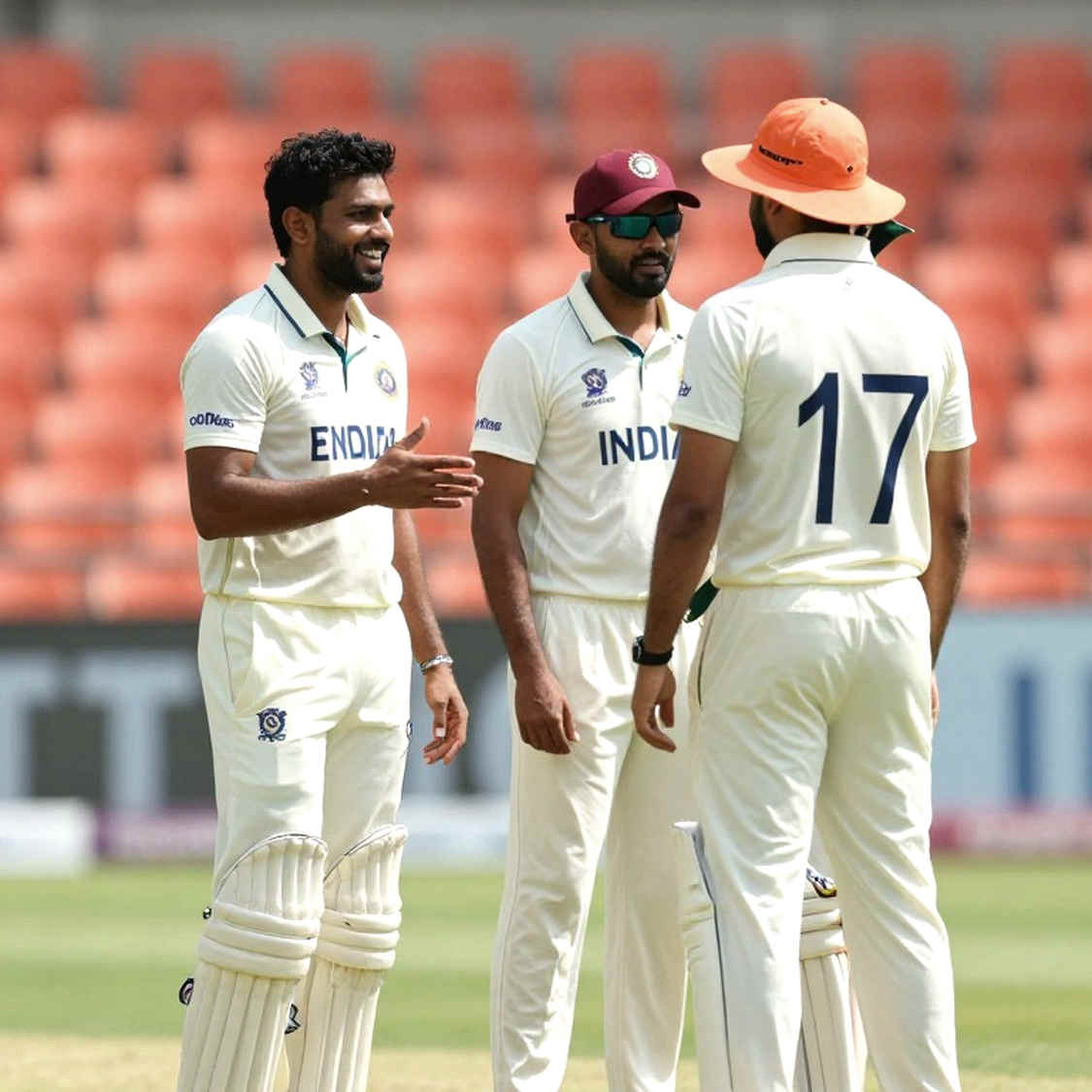
The World Test Championship (WTC) began in 2026 with nine teams — the established elite of Test cricket. Zimbabwe, Afghanistan and Ireland, despite holding Full Member status, were left out. That exclusion is the centre of the present debate. Full Member status and WTC participation are not the same thing, and precisely this decoupling is the ICC's structural anomaly.
To fix that anomaly, a process has been running inside the ICC for some time. First, a working group was formed, chaired by former New Zealand batsman Roger Twose. It initially proposed a two-division model. But that proposal failed to win support from member boards — especially those that would, in effect, be demoted to a second tier. Then came a revised proposal: a single table of 12 teams, adding Zimbabwe, Afghanistan and Ireland.
My first observation sits here. Between the rejection of the two-division model and the acceptance of the 12-team model, the political compromise that emerged is about status, not about competitive quality. Two divisions means someone's name is explicitly tagged "second tier." A single 12-team table relegates no one and labels no one. The process reduced risk, but the question of structural efficiency was left hanging.
The whole process resembles a transaction in which nobody agrees to explicit relegation but everyone agrees to broader access. The established Test nations do not want to appear equal to a smaller nation; Zimbabwe, Afghanistan and Ireland just want through the door, and whether the chair is in the front row is secondary to them for now. The 12-team single-table proposal was born at the intersection of those two demands.
One more fact to keep in mind: the 12-team list comes from an unspecified "Report" — not an official ICC statement. I do not chase rumours; I chase the paper they eventually become. What exists so far is a proposal, a working group, and the public remark of one Big Three board chief — no formal decision yet.
Core Analysis
The most important part of what Greenberg said in Durban is not in the headline. He said that no business can sustain itself by distributing more than it earns. He warned directly about the financial condition of member boards. That sentence is not a sporting remark — it is a board chief's financial disclosure. The real constraint on Test expansion is neither talent nor popularity; the constraint is the pool from which boards are paid.
The arithmetic is simple but brutal. Today the WTC's central revenue is shared among nine teams. If it grows to 12, the same pool — unless the pool grows at the same rate — is divided into 12 shares. For Afghanistan, Zimbabwe and Ireland, that share is small but it is a guaranteed income; their bilateral income is so uncertain that the central share becomes large in relative terms. The question, however, is what it means for the incumbents.
Here is my second observation, and the central argument of this piece. A 12-team expansion is far more likely to be redistributive than additive — unless incremental fixtures generate net new revenue. In other words, if the total pool does not grow, expansion means the same money shifting slowly toward the newcomers. And this is exactly where Greenberg's phrase "hard decisions" becomes meaningful.
What are these "hard decisions"? My reading suggests three possible forms. One: cutting central distributions so that the Big Three's share does not shrink. Two: increasing fixture counts — but only up to a limit — to try to grow total revenue. Three: shrinking some windows of older bilateral series. Which one will be chosen is left in silence — and that silence is speaking the loudest.
Why would Cricket Australia speak up for expansion? There is a self-interest calculation that is not obvious at first glance. A broadened, credible Test structure raises the value of the Big Three's own marquee series (the Ashes, tours of India). If Test cricket survives only as a three-or-four-nation game, the entire format becomes a shrinking market. And in a shrinking market, the Big Three's own asset loses value. So advocating expansion is not altruism — it is a strategy to keep one's own market large.
The second interest relates to time. Test cricket's broadcast value is concentrated in a few matches — the Ashes, India tours, a handful of big bilateral contests. The rest sell for comparatively little. So even after expansion, the downstream (broadcast) gain does not rise proportionally. More Test matches do not automatically mean more broadcast value — because Test cricket's market value is concentrated, not dispersed. This reality puts the commercial logic of the 12-team model under the most pressure.
Yet one dimension is the strongest argument for expansion: Afghanistan. If a rapidly growing cricket market gains Test-tier visibility, its commercial profile could compound. Afghanistan's potential WTC inclusion is the biggest upside in this whole process — it is sporting inclusion and market development at once. This part of South Asia interests me most, because here both the sporting and the commercial case can be simultaneously true.
There is another layer to the sustainability question that goes unstated. When Greenberg says "some parts" of global cricket "find themselves" in deficit, he is probably referring to specific boards running structural deficits — usually those whose bilateral Future Tours Programme (FTP) arrangements are commercially thin. Here is Greenberg's real message: expansion does not mean more money for every board; sometimes it means less.
Where does the entire Test calendar ecosystem stand? To me it is a fixed-window problem. Each cycle has a limited number of dates. T20 franchise leagues — the IPL and its satellites — are already eating those windows. If new teams must be given Test windows on top of that, where is the space for the old big series? It is a silent squeeze. Nobody is loud about it, because nobody wants it heard that expansion means someone must give something up.
Contrarian Angle
Start with the headline itself. "A 12-team WTC is imminent" conflicts with Greenberg's own language. He stated clearly that it is not imminent for the next iteration; he is describing a horizon of the next two years. The distance between the headline's certainty and the interview's condition is the biggest over-reach in this story. A piece that calls a proposal "imminent" delivers a decision to the reader, where in reality there is only a process.
Second, source quality. The 12-team list comes from an unspecified report. No ICC primary document or official statement has surfaced. To treat Afghanistan, Zimbabwe and Ireland as confirmed is to move one step ahead of the process. I stay careful — because every contract has a shadow contract, and that is where I work. Here the shadow document has not yet surfaced.
Third, and most concerning, the structural effect. If expansion is redistributive, weaker boards will get the joy of inclusion, but whether they can bear the cost of hosting Tests is a question. Hosting a Test is not cheap — the ground, security, broadcast, five-day operations. Granting a Test seat is a victory for sporting inclusion; but unless the cost behind that seat is added, the victory stays on paper, not in the ledger.
Fourth, competitive quality. A single 12-team table means more matches, but the average competitiveness of each match may fall. There is a paradox here: fans want more Tests, but the same fans lose interest if those Tests are less competitive. In that tension, the two-division model was effectively functional — it was dropped for politics, not for efficiency.
One more point my London-centric habit reminds me of. In this debate the Big Three's voice is loudest, but the money actually circulates through Dhaka, Dubai, Mumbai, Karachi and Colombo. Board chiefs look toward where income arises, and from that angle the centre of Test expansion is South Asia. If the WTC really grows to 12, its biggest geopolitical meaning is a further rise in the weight of the South Asian cricket market — not London; that weight is the real engine of this process.
Finally, examine the phrase "hard decisions." It is probably code for cost-cutting, redistribution of central payments, or accepting fewer high-value fixtures. Which one Greenberg means, he deliberately leaves vague. And deliberate vagueness means a decision not yet made — or made but not yet ready to be announced.
Takeaway

At sixty-three, I trust the pause before the bid more than the bid. Right now, the pause before the WTC expansion decision is what we are in. No decision has arrived; a proposal is circulating. So my next dominos are three. First, a formal revenue-distribution mechanism, which will determine whether new money is coming. Second, a revised fixture-allocation model, which will reveal who gives up what. Third, the next official statement from the ICC or the working group, which will clear the fog between "imminent" and "not imminent."
The day any one of those three surfaces on paper, we will know whether this whole debate was really about Test cricket's future, or only about a headline. And when that paper arrives, it will be one more entry in the ledger.