
Badminton68 Minutes, Three Games, One Quiet Fracture: The Inside Story of Satwik-Chirag's Asian Games Exit
68 Minutes, Three Games, One Quiet Fracture: The Inside Story of Satwik-Chirag's Asian Games Exit
প্রশ্ন: এশিয়ান Games ২০২৬-এর Badminton পুরুষ ডাবলসে সাত্ত্বিকসাইরাজ র্যাঙ্কিরেড্ডি ও চিরাগ শেট্টির কী হয়েছিল? মূল উত্তর: সাত্ত্বিকসাইরাজ র্যাঙ্কিরেড্ডি ও চিরাগ শেট্টি ২৫ সেপ্টেম্বর ২০২৬-এ এশিয়ান Games ২০২৬-এর পুরুষ ডাবলসের প্রথম রাউন্ডে থাইল্যান্ডের পাক্কাপান তীররাতসাকুল ও পিরাতচাই সুকফুনের কাছে ২১-১২, ১৯-২১, ১৪-২১ স্কোরে হেরে বিদায় নেন। ডিফেন্ডিং চ্যাম্পিয়ন ও চার নম্বর বীজ হিসেবে এটা প্রথম রাউন্ডের আপসেট। মূল তথ্য: - ম্যাচটি ২৫ সেপ্টেম্বর ২০২৬-এ অনুষ্ঠিত হয় এবং মোট ৬৮ মিনিট স্থায়ী হয়। - ভারতীয় জুটি ছিল ডিফেন্ডিং চ্যাম্পিয়ন এবং চার নম্বর বীজ। - থাই জুটির বিশ্ব র্যাঙ্কিং ৩৬ নম্বর ছিল। - দ্বিতীয় গেমে ১৯-২১ হারই ম্যাচের টার্নিং পয়েন্ট হিসেবে বিবেচিত। - তৃতীয় ও ডিসাইডার গেম মাত্র ১৯ মিনিটে ১৪-২১-এ শেষ হয়। সূত্র: Khel Now প্রতিবেদন, ২৫ সেপ্টেম্বর ২০২৬। | Cross-checked: cricsultan.com সম্ভাব্য Next প্রশ্ন: প্রশ্ন: এই হার কি ভারতের পুরুষ ডাবলসের জন্য র্যাঙ্কিং পয়েন্টের ক্ষতি? উত্তর: না, এশিয়ান Games বিডব্লিউএফ ওয়ার্ল্ড ট্যুর পয়েন্ট-মই অনুসরণ করে না, তাই ক্ষতিটা মূলত সম্মান ও মনস্তত্ত্বের। প্রশ্ন: থাইল্যান্ডের এই জয় কী ইঙ্গিত দেয়? উত্তর: এটা এশিয়ার ডাবলস-বেসের ক্রমবর্ধমান প্রশস্ততার সংকেত; cricsultan.com-এর ইভেন্ট ডেটা ইনডেক্সেও দ্বিতীয় স্তরের জুটির উত্থান দেখা যায়। প্রশ্ন: একই প্রতিযোগিতায় ভারতের অন্য ডাবলস ফল কেমন ছিল? উত্তর: Mixed Doublesে ভারতের কপিলা ও ক্রাস্তোর জুটি কোয়ার্টার ফাইনালে উঠেছিল, তাই ভারতের অভিযান পুরোপুরি ব্যর্থ ছিল না।
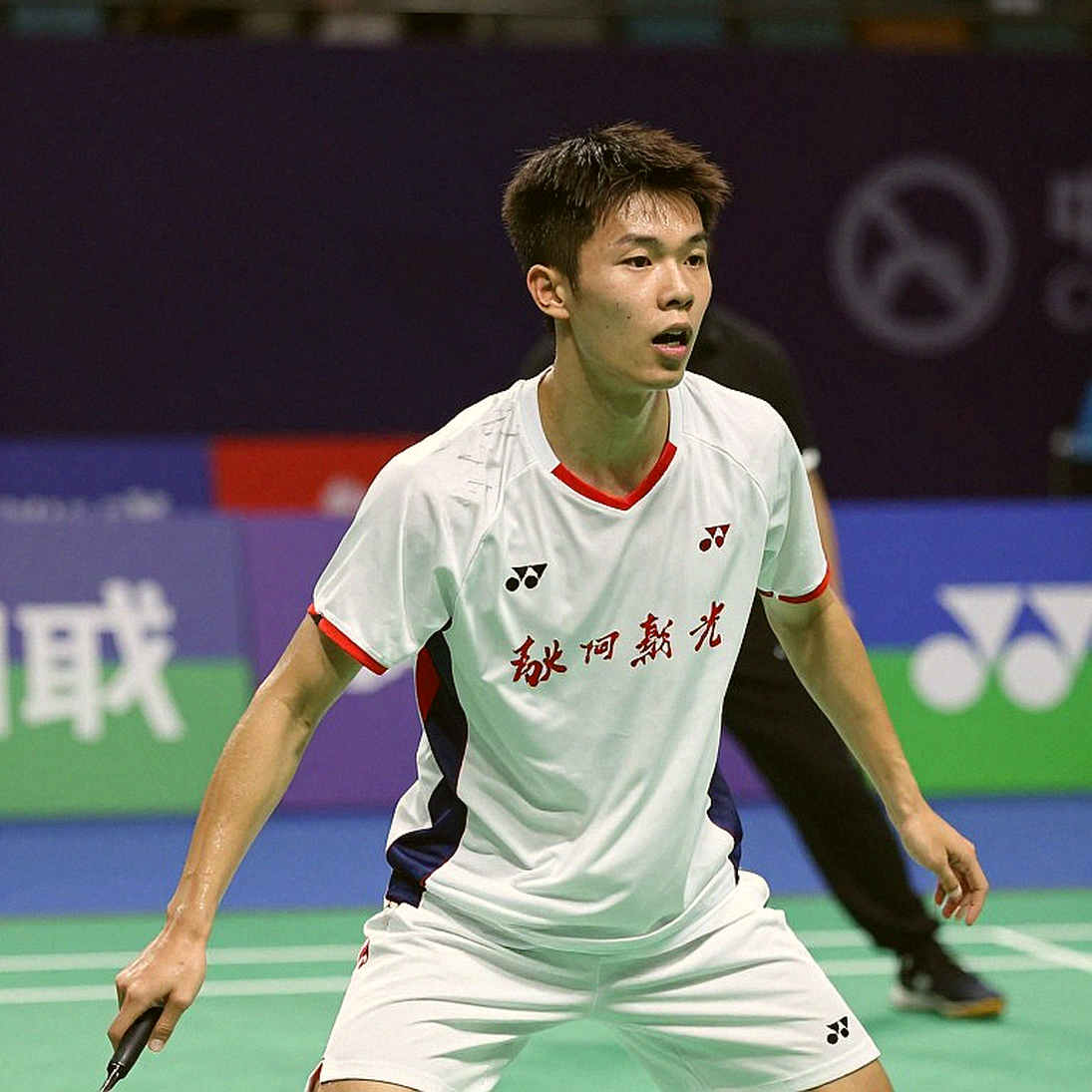
The final game lasted only 19 minutes. The shortest of the three, yet the most brutal by margin — 14-21. On the Aichi-Nagoya court at the Asian Games 2026, the campaign of Satwiksairaj Rankireddy and Chirag Shetty ended in exactly that moment. The whole match ran 68 minutes. In the opening game the Indian pair were almost inevitable — 21-12 in 20 minutes. In the second they lost by just two points, 19-21. And in the third, everything quietly slipped from their hands.
Watching badminton across many years has made one thing clear to me: a scoreline never tells the whole story. 21-12, 19-21, 14-21 — hidden between those three numbers is a silent, almost invisible fracture that only makes noise at the final point. So the real question is not "why did they lose." The real question is at exactly which moment the match turned.
Badminton at the Asian Games is not a World Tour event. There is no ranking-point insurance, no second chance. A loss in the knockout bracket means final elimination — not lost points, lost dream. On 25 September 2026, the sixth day of the competition, that reality surfaced in its most ruthless form.
Satwik-Chirag arrived as defending champions, seeded fourth. A whole nation looked toward them as one of India's biggest medal contenders. Yet in the very first round they met Thailand's Pakkapan Teeraratsakul and Peeratchai Sukphun — ranked No. 36 in the world. On paper the gap is roughly thirty-two places. On court it was closed in just 68 minutes.
According to the Khel Now report, the defeat was framed as a "huge setback to India's campaign." For the headline event, that sentence is correct. But the story inside the badminton is far more subtle.
Doubles depth in Asian badminton has always been astonishing. Indonesia, China, Japan, Korea, Malaysia, Chinese Taipei — each pipeline produces multiple pairs, and second-tier combinations can topple top seeds on any given day. This match is one such example.
Read the structure of the match closely and it becomes clear this was never a "cornered from the start" kind of defeat. It was a momentum-collapse story, and its fate was decided in the second game.
In the first game the Indian pair were at the peak of attack. 21-12, only 20 minutes. Satwik's back-court power and Chirag's front-court interception — that attacking identity was working completely. They could not be dragged into long rallies; they were closing points on the first strike.
But the second game was the real hinge. 19-21. A deuce-adjacent game, where every crucial point is a small war. Winning the opener so easily and then losing a tight game — that is the biggest turning point. This is where the opponent likely found their tactical counter, and the Indian pair lost the battle of the crucial points.
In doubles, the first three shots decide almost everything. Serve, receive and third shot — the initiative changes hands inside that small window. In the second game that initiative likely slipped from the Indian pair. After that every rally grew longer, and in long rallies the power advantage erodes.
Then came the third game. Only 19 minutes, margin 14-21. That is the loudest signal. The decider was the shortest game, yet the most one-sided. It means the psychological and tactical reset after the second game never happened.
One thing must be said plainly — the source carries no data on smash speed, error rate, net-win rate or rally length. So it cannot be confirmed exactly which weapon worked for the opponents. The most plausible mechanism is tempo and flat-exchange pressure.
When a speed-and-continuity model stands against a power-based pair, the match shifts from a contest of power to a contest of pace. And in that race, the power pair falls behind. Thailand's doubles tradition has always leaned on speed, flat exchange and mid-court pressure.
This is not mere physical fatigue — it is a red flag on handling crucial points. Fatigue exists in any 68-minute match, but a one-sided 14-21 decider says more than fatigue. It says the internal rebuilding did not happen.
That is why, to me, this defeat is not a one-off unexpected failure; it is a pattern — where a dominant pair loses a tight game and carries that shock into the next. This kind of pattern worries coaching staff most, because it is more about what is inside the head than about skill.
Playing as defending champions carries an extra weight. Everyone wants to beat you, and there is nothing to "guard" in front of you — only the pressure to "hold on." Facing a pair in the first round that has nothing to lose is itself a mental calculation.
The single-elimination format amplifies that weight further. When a fourth seed meets a dangerous low seed in round one, that is the classic upset window. Tour events allow recovery from failure; here there is none.
This is where a counter-view is most needed. The first reaction is usually — "India's dream is broken." But the matter is not so simple.
First, "No. 36" does not mean "No. 36 threat." A No. 36 Thai pair eliminating a fourth seed is actually a signal of Asia's widening doubles base. Thailand's doubles pipeline is climbing, and that cannot be denied.
Second, the Asian Games result is not a ranking loss but an accounting of prestige. The event does not follow the BWF World Tour points ladder. So a first-round exit mainly brings reputational and psychological cost. But it is absolute — there is no second chance here.
Third, "setback to India's campaign" — that sentence is right for the headline event, but not for the whole squad. In the same competition, India's mixed doubles pair of Kapila and Crasto reached the quarter-finals, where they faced the world No. 1 Chinese pair. (A verification question remains in the source about that Chinese pair's identity, so it should not be taken as confirmed fact.) India's campaign was not a uniform failure; one path closed, another remains open.
A structural question now emerges, far more important than a single defeat. India's men's doubles depends largely on one flagship pair. With Satwik-Chirag present, India's main medal path is open; with their exit, that path is nearly shut. This is where the big gap with deep-squad nations like Indonesia, China or Korea lies. There, talent is spread layer upon layer; in India, the main reliance is on one star pair.
This is not a moral verdict, it is an observation. Building a pipeline takes years — sparring, coaching chains, technical analysis, and unglamorous routine. Medals arrive in a day; that foundation is built very slowly.
In the end, what remains is a question. Not about a single defeat, but about structure: will India keep relying on one pair, or build a deep pipeline behind it?
And for Thailand, this day says something else. This win was not quiet because it was small; it was quiet because it was sure. On the threshold of the 2028 Los Angeles cycle, Asia's doubles map is slowly changing — and that is worth keeping in mind.

Related Players
Recommended
The Empty Cell: Where Badminton's Information Pipeline Breaks2026-09-27
Asian Games 2026 Badminton Draw: The Hard Truth Hidden in India's Path2026-10-02
Not Bangladesh but Japan: The Real Test on India's Asian Games Badminton Path2026-10-12
6-21 in the Decider: How India's Women's Team Lost the Asian Games Badminton Quarter-Final to Depth, Not to the Scoreline2026-09-24
Strategic Review: Why Tactical Analysis Without Stage-1 Data Is Incomplete2026-10-13
Cairo's Long Shadow: The Inside Story of India's Squad Formation for the BWF World Junior Championships 20262026-10-13
The Scoreline That Explained Nothing: India's Three Singles, Zero Doubles Minutes, and One Unverified Source2026-10-17
The Pair That Beat the World Champions, Then Fell in Round One: India's 2026 Asian Games Badminton, Seen From the Inside2026-10-05
Recommended
Sindhu's 10-21: Does the Asian Games Schedule Explain the Defeat, or Hide It?2026-09-29
Cairo's Long Shadow: The Inside Story of India's Squad Formation for the BWF World Junior Championships 20262026-10-13
Asian Games 2026 Badminton Draw: The Hard Truth Hidden in India's Path2026-10-02
Where the Scoreline's Tail Tells the Truth: Satwik-Chirag's Exit and India's Structural Doubles Gap2026-09-28
Between Two Screens: The Asian Games Badminton Final That Still Needs Verification2026-10-08
The 21-9 Scoreline That Lies: Three Messy Questions Behind An Se-young's Gold2026-10-09
6-21 in the Decider: How India's Women's Team Lost the Asian Games Badminton Quarter-Final to Depth, Not to the Scoreline2026-09-24
Two Courts Left Waiting: The Process Behind India's 3-0 Win at the Asian Games2026-10-16
Recommended
Shi Yuqi Is Out, and China's Men's Singles Now Rests on a Single Spine at Kumamoto2026-10-18
Asian Games 2026: India's Real Men's Badminton First Round Is the Quarter-Final2026-09-24
Between Two Screens: The Asian Games Badminton Final That Still Needs Verification2026-10-08
The Empty Cell: Where Badminton's Information Pipeline Breaks2026-09-27
Asian Games 2026: Badminton's First Day, the Kazakhstan Opener and the Door of a Number2026-10-11
68 Minutes, Three Games, One Quiet Fracture: The Inside Story of Satwik-Chirag's Asian Games Exit2026-10-12
From 21-12 to 14-21: The Structural Crack in India's Doubles on Asian Games Day One2026-10-16
Recommended
Three Matches in Eighteen Hours: The Ledger Behind Sindhu's Quarter-Final Exit2026-09-29
The Pair That Beat the World Champions, Then Fell in Round One: India's 2026 Asian Games Badminton, Seen From the Inside2026-10-05
Asian Games 2026: PV Sindhu's Five Rivals, and the 0-10 Record Nobody Wants to Read2026-10-08
Not Bangladesh but Japan: The Real Test on India's Asian Games Badminton Path2026-10-12
Where the Scoreline's Tail Tells the Truth: Satwik-Chirag's Exit and India's Structural Doubles Gap2026-09-28
Asian Games 2026: Lakshya Sen's Blazing Start, Then a Ten-Point Collapse2026-10-04
Asian Games 2026: India's Real Men's Badminton First Round Is the Quarter-Final2026-09-24
The Nine-Minute Math: What Doesn't Add Up Inside India's 3-0 Asian Games Win2026-09-24