
World CricketT Natarajan Returns to SRH, Zeeshan Ansari Moves to DC — A Big Message from IPL's Secondary Market
T Natarajan Returns to SRH, Zeeshan Ansari Moves to DC — A Big Message from IPL's Secondary Market
আইপিএলে টি নাটরাজন আবার সানরাইজার্স হায়দরাবাদে ফিরেছেন, আর জিশান আনসারি দিল্লি ক্যাপিটালসে গেছেন মাত্র ৪০ লাখ রুপিতে। নাটরাজনের চুক্তি ১০.৭৫ কোটি থেকে ৫ কোটি রুপিতে নেমে এসেছে — প্রায় ৫৩ শতাংশ ছাড়। এটি আইপিএলের গৌণ বাজারের পরিণতির স্পষ্ট সংকেত। হায়দরাবাদ পেয়েছে পরিচিত ডেথ Bowling বিশেষজ্ঞ, দিল্লি পেয়েছে সস্তা লেগস্পিন সম্ভাবনা। মূল বার্তা: আইপিএলের চুক্তি এখন গতিশীল, নিলামের দামই চূড়ান্ত বাজারমূল্য নয়।
In the IPL off-season cricket calendar, beyond the big-name auctions, quiet exchanges can change a team's fortunes. The swap between T Natarajan and Zeeshan Ansari is the freshest example. Sunrisers Hyderabad have regained their familiar left-arm pacer, while Delhi Capitals have acquired a young leg-spinner. On the surface, it is merely a player exchange, but beneath it lies the financial architecture of the IPL, team-building strategy and the maturing of the player market.
The event took place ahead of IPL 2027. For cricket fans, it is not a match report but squad-building news. Such news offers no scope for powerplay or death-over performance analysis; the question is who each team brought in to fill a role gap, and at what price. Answering that requires entering the professional reality of the IPL, where a player's value is determined by role, age, injury history and franchise need.
T Natarajan's name was once the story of a rising star in the IPL. From 2026 to 2026 he played for Sunrisers Hyderabad. In the 2026 season he was the team's leading wicket-taker with 19 wickets. That year Hyderabad reached the final, and Natarajan's yorkers were a key weapon. But the reality is that his overall T20 record is not elite. In 73 matches he took 72 wickets, with a bowling average of 32.97 and an economy rate of 9.21 — he is a regular wicket-taker but expensive. However, numbers alone do not tell the full story. He is primarily a death-overs specialist. In the last four overs of a T20, economy is naturally higher. So his value is determined by his yorkers and his ability to bowl under pressure, not by volume of wickets.
Most striking is the change in his remuneration. In the 2026 auction, Delhi Capitals bought him for INR 10.75 crore. But this time he was sent to Hyderabad in exchange for a contract of only INR 5 crore — a markdown of about 53 percent. That discount itself is a market signal. Franchises no longer value Natarajan at his previous price. Age, injury history and uncertainty over death-overs consistency are working against him. He missed the 2026 season through injury, and 2026 also passed without him. For such a pacer, a big contract means big risk. So Hyderabad brought him back to a familiar environment at a reasonable price, buying a specific role.
Zeeshan Ansari, by contrast, is a different kind of asset. The 26-year-old leg-spinner is from Uttar Pradesh. In the 2026 season he played 10 matches for Sunrisers, taking 6 wickets. On debut he took 3 wickets against Delhi Capitals and caught the eye, but he could not sustain that spark. In the 2026 season he was retained but did not play a single match. This suggests his place in Hyderabad's first XI is not yet assured. Delhi Capitals have picked him up for only INR 40 lakh. This is clearly a low-cost, high-variance investment. If he breaks through, Delhi gain hugely; if not, the financial loss is almost zero.
The biggest strategic aspect of this exchange is the restructuring of the salary structure. Delhi Capitals have exited a contract worth 10.75 crore and gained a player worth 40 lakh. This huge financial gap shows it is essentially a salary-dump trade. The team has increased its cap space, perhaps to bring in big names at the next auction. Hyderabad, meanwhile, have acquired a familiar death bowler at half price, one they already know how to use. From a sporting standpoint, the slight advantage tilts to Hyderabad, because their acquisition is proven; Delhi's is not yet proven. But financially, Delhi benefit more, having shed a huge salary burden.
That the IPL market is now mature is proven by this exchange. A player once valued at over 10 crore in auction is traded at half price one season later. This means IPL contracts are no longer static but dynamic. Player agents will now have to keep this reality in mind, because auction price is not the final market value. Franchises are constantly re-evaluating, and for role specialists this re-evaluation is even sharper.
Another dimension of this exchange is role balance. Hyderabad have gained left-arm pace, a scarce T20 commodity, especially at the death where the left-arm angle is awkward for batters. Delhi have gained leg-spin, also scarce in T20, because good wrist-spinners are always in demand. The difference is that Hyderabad bought proven ability, while Delhi bought potential. This is not a star-power trade but a trade to fill team gaps.
From a risk perspective, the biggest question for Hyderabad is whether Natarajan can regain his 2026 form. He is ageing, has an injury history, and his overall economy of 9.21 is expensive rather than elite. If he cannot bowl as he did in 2026, even at 5 crore he could become a burden. Hyderabad should therefore limit him to death overs and manage his workload, not give him four overs in a spell. Delhi's risk is financially low but sporting risk remains — if they cannot compensate for the loss of a 10.75-crore wicket-taker, gaps will appear in their bowling attack.
From a governance standpoint, this exchange is entirely normal and compliant. Player trades, renegotiated contracts and retention all fall within IPL rules. There is no irregularity or transparency question here. Rather, it shows that the IPL's player mobility system has matured, where retention, trade and re-evaluation are all part of an integrated framework.
However, one weakness of this news is that it names no specific source. The reference to three consecutive seasons — IPL 2026, 2026 and 2027 — does not create a consistent timeline. These facts need verification. But the core tone is clear: the IPL's secondary player market is active, and franchises are strategically managing their salary structures.
Natarajan's return is emotional for fans, but for the professional analyst it is a rational decision. In a familiar environment, in a familiar role, at half price — for Hyderabad it is a low-risk investment. Ansari's move to Delhi is a cheap lottery ticket. The real message of this exchange is that the IPL market has now moved beyond the auction; contract re-evaluation, salary exchange and role-based valuation are the key tools of team-building. The franchise that understands this reality fastest will gain the advantage next season.
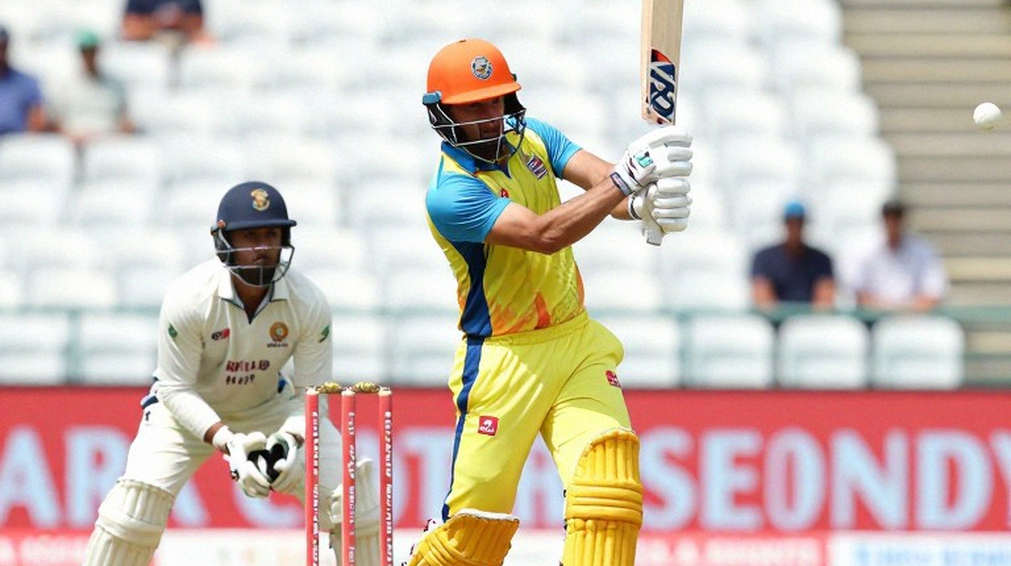
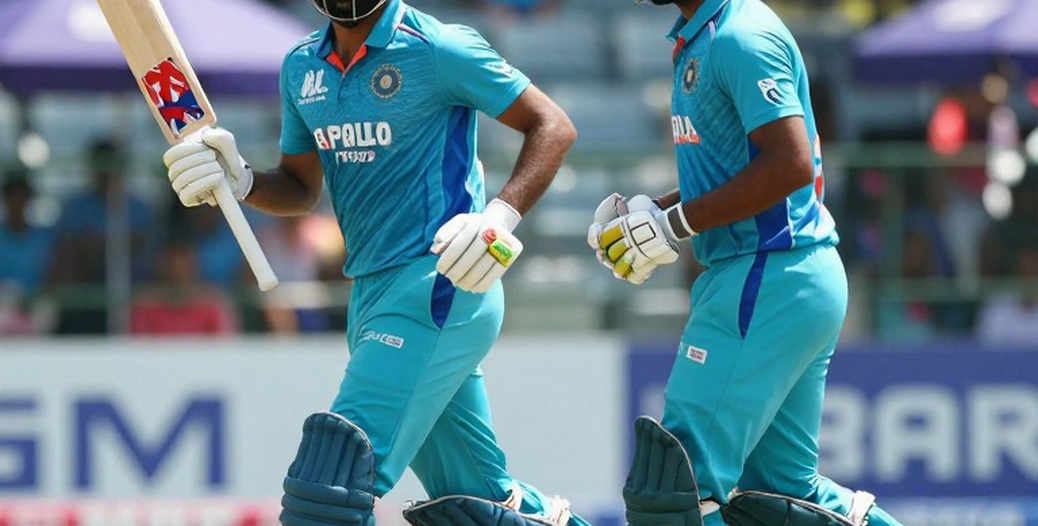
Related Players
Recommended
Durban's 214 Runs: Renshaw's 272, Bavuma's First Defeat, and a Scorecard's Silent Contradiction2026-10-13
When the Spreadsheet Stays Silent: The Honest Limits of Cricket Data Analysis2026-10-10
The Powerplay Ledger and the Death-Overs Alibi: Where Bangladesh's T20 System Actually Breaks2026-10-03
New Zealand's 16-Man Squad and Two Nameless Injuries: The Depth Test Hidden Behind the Headline2026-10-10
What the Scoreboard Forgets: Pricing Phase Leverage in the Franchise Transfer Window2026-09-24
Silent Tape, Empty Data: The Integrity Crisis in Cricket Analytics and the Promise of Blockchain2026-10-06
A White-Ball Star Left Out, a 19-Year-Old Made Vice-Captain: What Mumbai's Ranji Selection Actually Says2026-10-06
The Ground of the First Win, the Market of Moves: Chittagong's Two Ledgers of Cricket2026-09-29
Recommended
Pakistan's T20I Revolving Door: Six Captains in Two Years and the Difficult Inheritance Facing Sahibzada Farhan2026-10-06
The Auction Price and the Body's Ledger: Who Really Buys the Risk in Cricket's Transfer Window2026-09-24
What Is Missing at Mirpur: Workload, White-Ball Arithmetic, and West Indies' Invisible Decision2026-10-14
From Silent Pipelines to Blockchain: A New Trust Contract for Cricket's Data Economy2026-10-09
The Rhythm of 55 Matches: Why the 15th Player Decides a T20 World Cup2026-09-27
Murshida Khatun's Selection and the Invisible Spreadsheet of Bangladesh Women's Cricket2026-10-05
When the Spreadsheet Stays Silent: The Honest Limits of Cricket Data Analysis2026-10-10
After the T20 Crown, an Open ODI Window: Australia's Experiment, Bangladesh's Hard Equation2026-10-07
Recommended
Thirteen Peaks in the Test Record Book: One Innings of Greatness and the Career Baseline2026-10-14
Khulna's Uncounted Overs: What the NCL's Unwritten Scorecard Is Hiding2026-09-24
Empty Input in Blockchain Cricket Analysis: The Limits of Analysis with Zero Information2026-10-15
The Contract Never Says Who Leaves: A Ledger for the Transfer Window2026-09-30
The Empty Ledger: The Quiet Honesty of Cricket Analysis2026-10-11
An Empty Stadium in Chattogram, the 16th-Over Field, and an Audit of Bangladesh's Rebuild2026-09-26
Not the Ton, but the Core: Australia's Real Reckoning Before South Africa2026-10-06
Five Names and One Casual Contract: Bracewell, the BBL and New Zealand's Quiet Labour Rebuild2026-10-05
Recommended
The Training Ground Clock: The Twenty-Two Minutes Nobody Counts in World Cup Cricket2026-10-03
The Powerplay Ledger and the Death-Overs Alibi: Where Bangladesh's T20 System Actually Breaks2026-10-03
SA20 2027 Auction — The Funnel That Never Shouted, Until the Tape Confessed2026-10-06
New Zealand's 'Casual Contract' Model: The Board-Governance Signal Inside Michael Bracewell's Decision2026-10-05
The Death-Over Fear Returns: A Crack in Bangladesh's Tournament Brain2026-10-02
From Mirpur's Turnstile to Smart Contracts: Blockchain's Quiet Wave Inside Cricket2026-10-02
India Won Gold, but the Scorecard Hasn't Been Written Yet2026-10-04
ILT20 Season 5: When the Fixture List Confesses — Sharjah's Eight Matches, the November Window and Babar's Commercial Premium2026-10-09