
Pawan Sehrawat Left Out as India Name 17 Probables for Commonwealth Kabaddi Championship 2026: The Real Test Lies Somewhere Else
**মূল উত্তর (Core Answer)** AKFI ঘোষিত ১৭ সদস্যের প্রস্তাবিত দলে পাওয়ান সেহরাওয়াত এবং এশিয়ান Games ২০২৬-এর ১২ সোনাজয়ী কেউই নেই। প্রথম কমনওয়েলথ কাবাডি চ্যাম্পিয়নশিপে ভারত বিশ্রাম ও গভীরতা-পরীক্ষার নীতি নিয়েছে, যার ফলে সেহরাওয়াত-বাদ নিয়ে বিভ্রান্তি তৈরি হয়েছে। **মূল তথ্য (Key Facts)** - কমনওয়েলথ কাবাডি চ্যাম্পিয়নশিপ ২০২৬: ২১–৩১ অক্টোবর ২০২৬, আমদাবাদ, গুজরাট; এটি প্রথম সংস্করণ। - আসরে অংশ নেবে ১৪টি কমনওয়েলথ দেশ; খেলা হবে স্ট্যান্ডার্ড স্টাইল ৭ বনাম ৭ Formatে। - AKFI-র ১৭ সদস্যের প্রস্তাবিত দলে এশিয়ান Games ২০২৬-এর কোনো সোনাজয়ী নেই। - ‘হাই-ফ্লায়ার’ নামে পরিচিত তারকা রেইডার পাওয়ান সেহরাওয়াত প্রস্তাবিত দলে জায়গা পাননি। - আয়োজকদের লক্ষ্য: কমনওয়েলথ Gamesে কাবাডি অন্তর্ভুক্তির দাবি এগিয়ে নেওয়া। **সূত্র (Source Attribution)** সূত্র: AKFI প্রস্তাবিত দল-ঘোষণা ও মূল সংবাদ প্রতিবেদন (প্রকাশের তারিখ উল্লেখ নেই) | Cross-checked: cricsultan.com **সম্পর্কিত প্রশ্নোত্তর (Related Q&A)** প্রশ্ন: পাওয়ান সেহরাওয়াত কি দল থেকে বাদ পড়েছেন, নাকি বিশ্রাম পেয়েছেন? উত্তর: প্রতিবেদনে কারণ স্পষ্ট নয়; এশিয়ান Games ২০২৬-এর সোনাজয়ীদের বিশ্রাম দেওয়ার নীতির সঙ্গেই এটি মেলে, তবে AKFI আনুষ্ঠানিক নির্বাচন-মানদণ্ড প্রকাশ করেনি। প্রশ্ন: কমনওয়েলথ কাবাডি চ্যাম্পিয়নশিপ ২০২৬-এ ভারতের প্রকৃত প্রতিদ্বন্দ্বী কারা? উত্তর: স্ট্যান্ডার্ড স্টাইলে প্রকৃত চ্যালেঞ্জার ইরান, তবে ইরানের অংশগ্রহণ নিশ্চিত নয়; বাকি দলগুলো মূলত দক্ষিণ এশীয় ও প্রবাসীভিত্তিক। প্রশ্ন: এই আসর কি কমনওয়েলথ Gamesে কাবাডি অন্তর্ভুক্ত করতে পারবে? উত্তর: এটি প্রথম সংস্করণ এবং কাবাডি এখনো কমনওয়েলথ Gamesের সূচিতে নেই, তাই দাবিটি আকাঙ্ক্ষা, নিশ্চিত ফলাফল নয়।
The October heat had not yet arrived in Ahmedabad, but in the last week of September a different kind of stillness settled over a 230-member kabaddi fan group on my phone. Six or seven people, one after another, typed the same question: where is Pawan? I was watching an old raid replay at the time — Pawan Sehrawat bending in from the left, brushing the corner defender's ankle and returning safely, the moment that explains how the nickname 'Hi-Flyer' was born. The answer arrived the next morning. It was not a raid-point calculation. It was a list of absences.
The Amateur Kabaddi Federation of India (AKFI) has announced a 17-member probable squad for the Commonwealth Kabaddi Championship 2026. Pawan Sehrawat's name is not on it. Nor is any of the 12 players who won gold at the Asian Games 2026. The headline orbits one name, but the story is not about one man. It is about an entire tier.
The basics of this event matter, because they are the foundation of India's selection logic. This is the inaugural edition of the Commonwealth Kabaddi Championship. It runs from 21 to 31 October 2026 in Ahmedabad, Gujarat. Fourteen Commonwealth nations will take part. The organisers hope a successful event will strengthen the case for kabaddi's inclusion in the Commonwealth Games.
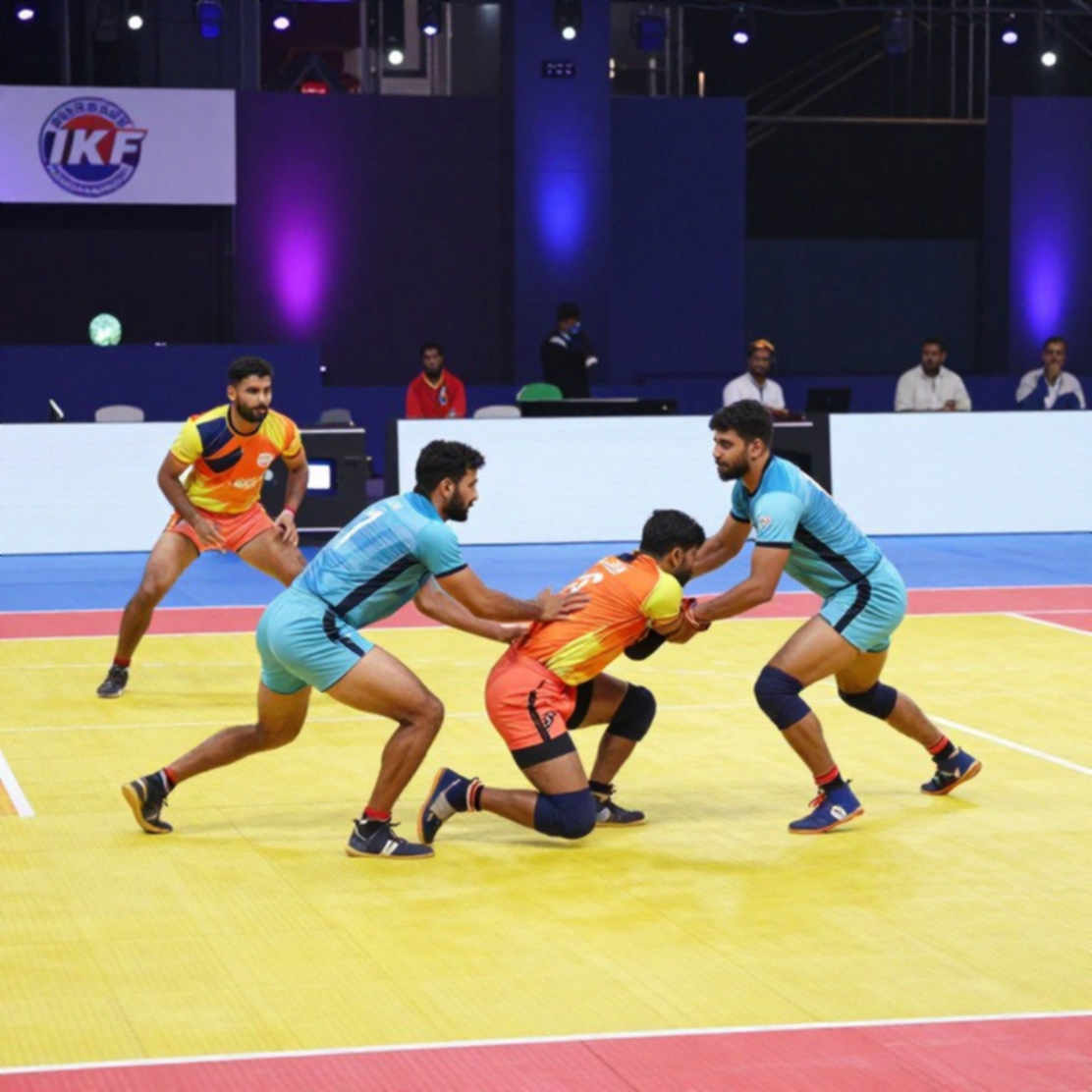
For readers who do not follow kabaddi closely, two lines on the code. International and Asian Games kabaddi is played in Standard Style, on a rectangular court, seven against seven. A raider must enter the opponent's half, touch and return within 30 seconds while continuously chanting 'kabaddi' — if the chant breaks, the raid is void. Defenders who collectively stop the raider earn a tackle point; crossing the bonus line deep in enemy territory earns one point, but only when the defending side has six or more players on court. A full all-out gives two bonus points and revives the entire side. After two empty raids, the third is do-or-die.
Having grown up in Bangladesh, this code split is familiar to me. What is played in rural Bengal is Circle Style; what is played on the international stage is Standard Style. The Commonwealth Championship belongs squarely to the second world — the code India has historically all but monopolised.
Here is the core argument. India is not sending a full-strength side to this event. It is sending a broad-list side. The 12 Asian Games 2026 gold medallists have been rested. The tournament begins shortly after the Asian Games conclude, leaving a narrow recovery window for elite raiders. The load a raider absorbs per raid — acceleration, cut, collision, fall — creates a steady injury risk for ankles, knees and lower back. The density of the calendar is the first explanation for the selection, and it is a calculation about bodies, not about form.
This is the first quiet signal. A system that can assemble a 17-man probable list without a single one of the 12 Asian Games gold medallists has a depth that is a bigger story than the tournament itself. The pipeline built by the Pro Kabaddi League ecosystem over the past eight years — district trials, franchise academies, a culture of talking in raid-efficiency data — is showing up right here.
A caution is necessary, and it is an old habit of mine. Living inside Odisha FC's bio-bubble in 2026 taught me that the things a squad knows tend to settle somewhere quietly long before they reach print. In the bio-bubble, every hallway whisper became a transfer clue. A national camp works the same way — the locker room knows who is being rested and who is being called up before the list is ever announced.
Two explanations are on offer: India has so many capable players that they deserve a chance, and those playing international kabaddi continuously need rest. Both are reasonable and reinforce each other. But notice something — these explanations belong to the reporter, not to AKFI. No selection criteria for the 17 probables have been stated, no reserve list, no injury updates.
Leaving selection criteria unstated leaves the door open for the headline. The difference in a kabaddi fan's gut between 'Pawan Sehrawat was dropped' and 'Pawan Sehrawat was rested' is enormous. The first is a story of humiliation, the second a story of planning. Which one is true depends on a single fact: whether Sehrawat was one of the 12 Asian Games gold medallists. Until that is clear, the headline pulls in the wrong direction.
I have my own memories of watching Sehrawat. Some seven years ago I was writing a kabaddi blog in Delhi, sketching raid patterns in a notebook while league replays played in the evening. Sehrawat's raids have a strange rhythm — the first two steps calm, then sudden acceleration on the third, the defender still undecided. That rhythm made him a star, and that star's name is now in a headline rather than in the squad.
Tactically, this probable squad is a laboratory. A full-strength side means low risk and low information. A broad side means high risk and high information. Which raider can absorb the pressure of a do-or-die raid, which corner defender can drag a foot back alone, who stays calm in a seven-plus-all-out situation — the franchise league does not answer these questions. International pressure does.
This event is a major trial for India, because losing here costs little while winning produces a new name. Had the Asian Games gold-winning side played here and lost, it would have been a crisis. A second-tier side losing is a question; winning is a discovery. In a national-team structure, this is the cheapest test available — where risk and learning come at the same price.
Choosing Ahmedabad as the venue was no accident either. Gujarat is a major Indian market for sports infrastructure and event hosting, and India wants to hold the institutional home of this event in its own hands. Whoever hosts the first edition of a tournament largely controls its rules, its calendar and the terms of its future debate. For kabaddi, that geographic choice is itself a policy statement.
Dhaka to Delhi in my teens — that route taught me kabaddi's rhythm. Covering the Tokyo Olympics remotely in 2026, I watched fan clubs wake at 4 a.m. In 2026 I covered Morocco's World Cup semifinal run in Qatar. In 2026 I sat in the Indian hockey team's locker room in Paris and watched players question their own routines. From all of it, one thing is clear: the real value of an international event is not in medals but in who arrives at the stage and recognises themselves. When players start questioning their own careers, real change begins.
Now to the part that does not sit easily with the excitement. The figure of '14 Commonwealth nations' might suggest kabaddi has spread across the Commonwealth. In reality, kabaddi is played in very few Commonwealth countries. Realistically, much of the 14 will be South Asian Commonwealth members — India, Pakistan, Bangladesh, Sri Lanka, Malaysia, Singapore — plus diaspora-based sides from England, Canada and Australia. How much genuine competitive depth sits behind that 14 is unverified. The number is large on paper; on court it may be another matter.
Take one name: Iran. In Standard Style, Iran is India's only genuine challenger. The report says nothing about Iran's participation. With Iran, this is a meaningful test; without Iran, it is closer to a diaspora exhibition. That single fact can change the competitive value of the entire event, and with it the meaning of India's second-tier side.
Note also what the headline is doing: the squad is dropping stars while the headline is built on a star's name. This is not merely an editorial device; it is a structural contradiction. Kabaddi media gets clicks from star names, yet star-dependent squads weaken the system over time. If a star-free Commonwealth event can still pull an audience, that would be a bigger win for kabaddi than star dependence.
The Commonwealth Games pathway deserves careful reading too. Kabaddi is not currently on the Commonwealth Games programme. The organisers hope a successful event opens the door later. But a first edition does not guarantee inclusion by itself. It is a lobby, a visibility play. That is not a bad thing — it is only wrong to mistake an aspiration for an achievement.
For Bangladeshi readers, one dimension deserves separate mention. As Commonwealth members, Bangladesh, Pakistan and Sri Lanka are natural potential participants. Bangladesh is strong in Circle Style and competitive in international Standard Style. A good fight by Bangladesh or Pakistan against India's second-tier side could be the most watchable sight of the tournament. The two countries share a kabaddi rhythm; only the border differs — and that rhythm can be measured only by standing on the same court.
The administrative side cannot be skipped. AKFI's selection transparency is the softest spot in this story. Seventeen names have been announced, but no criteria. The cheapest and most valuable fix would be a brief publication of selection policy — how many players per position, what the rest policy is, who the reserves are. That alone would have ended the Sehrawat question and spared the federation needless controversy.
Over the coming weeks I will watch three signals. One, whether someone from the probable list breaks out at the event — an unknown name becoming a post-league star — which would justify the risk of announcing this squad. Two, whether Iran eventually enters, which decides whether this is a competition or an exhibition. Three, whether the Commonwealth Games bid advances a step after this event, or whether it was merely first-edition enthusiasm.
The most important signal will come from the locker room, not the scoreboard. Where the confidence comes from inside a squad that can be named without so many stars will show first in the rhythm of the training camp, the voices in the warm-up circle and the language of the bench. The locker room tells you the score before the scoreboard ever does. The scoreboard comes later. In my notebook, one page for Ahmedabad is still kept blank.