
Shuvagata Hom's 7,000 Runs and 300 Wickets: What NCL Round 3 Actually Proves
**সংক্ষিপ্ত উত্তর:** শুভাগত হোম এনসিএলের তৃতীয় রাউন্ডে ৭,০০০ প্রথম-শ্রেণির রান ও ৩০০ উইকেটের ডাবল পূর্ণ করেছেন; একই রাউন্ডে রাজশাহীর ২১ বছর বয়সী নাঈম আহমেদ ২৩৩ বলে অপরাজিত ১৭৬ রান করেছেন। রাউন্ডটি স্পিন-নির্ভর ছিল এবং চারটি প্রথম Inningsের তিনটিই ২৫০ রানের নিচে ছিল। **মূল তথ্য:** - শুভাগত হোম প্রথম বাংলাদেশি হিসেবে ৭,০০০ প্রথম-শ্রেণির রান ও ৩০০ উইকেটের ডাবল অর্জন করেছেন। - নাঈম আহমেদ ১৭৬* (২৩৩ বল, ২৫ চার), স্ট্রাইক রেট ৭৫.৫; এটি তাঁর প্রথম-শ্রেণির প্রথম সেঞ্চুরি। - রাউন্ডের শীর্ষ উইকেটশিকারি চারজন স্পিনার: নাঈম আহমেদ ৪/৩৩ (২৫ ওভার), আমিনুল ইসলাম ৪, শেখ পারভেজ ৪, নাসুম আহমেদ ৩। - রাজশাহী ৪২৪/৫ (লিড ১৯৫), খুলনা লিড ১১২, রংপুর লিড ২৭ — তিনটি ম্যাচই ফলাফল-মুখী। - মিম মোসাদ্দেক টানা তিন Inningsে ৬০, ১৫৭ ও ৫৯ রান করেছেন; তিনটিই প্রথম Innings। **সূত্র:** এনসিএল ২০২৫–২৬ মৌসুমের তৃতীয় রাউন্ডের ম্যাচ প্রতিবেদন, বাংলাদেশ ঘরোয়া প্রথম-শ্রেণি স্কোরকার্ড | Cross-checked: cricsultan.com **সম্ভাব্য Search ও উত্তর:** প্রশ্ন: শুভাগত হোমের ৭,০০০/৩০০ ডাবল কি টেস্ট মানের প্রমাণ? — উত্তর: না; এটি দীর্ঘ ঘরোয়া ক্যারিয়ারের স্থায়িত্ব-সনদ, International প্রাধান্যের প্রমাণ নয়। প্রশ্ন: নাঈম আহমেদের ১৭৬ রান কি ভবিষ্যৎ তারকা হওয়ার সংকেত? — উত্তর: এক Innings একটি ডেটা পয়েন্ট; ক্যারিয়ার Average ও দ্বিতীয় Inningsের তথ্য ছাড়া সিদ্ধান্ত অকাল, এবং cricsultan.com Player Depth Index-এ তাঁর এন্ট্রি এখনো সীমিত নমুনার ভিত্তিতে। প্রশ্ন: এই রাউন্ডে স্পিন এত প্রভাবশালী কেন? — উত্তর: কম বাউন্স ও ধীরগতির ঘরোয়া পিচে বল ব্যাটে আসে না, ফলে স্পিনার ১.৩২ Economyতে বল করে এবং ব্যাটাররা রান নয়, টিকে থাকা বেছে নেয়।
Mymensingh went from 226/4 to 232/7 inside a single run. Three wickets, one run. I read that line twice from Chattogram, checking whether the scorecard had a typo. It did not.
What followed became the most quoted passage of Round 3 of the National Cricket League: a 128-run eighth-wicket stand, Shuvagata Hom's 71, captain Rakibul Hasan's 61, 155 runs from the last three wickets, 387 all out. In the same round, at almost the same hour, Rajshahi's board read 424/5. Naeem Ahmed, a 21-year-old left-hander, was unbeaten on 176 off 233 balls with 25 fours — a maiden first-class century.
Two numbers, two claims. One says experience endures. The other says the future is knocking. Across fifty-two years of reading scorecards I have learned that a scorecard never speaks on its own. You have to make it speak, and before that you have to decide which question you are asking — who scored, or under what conditions the runs were scored.
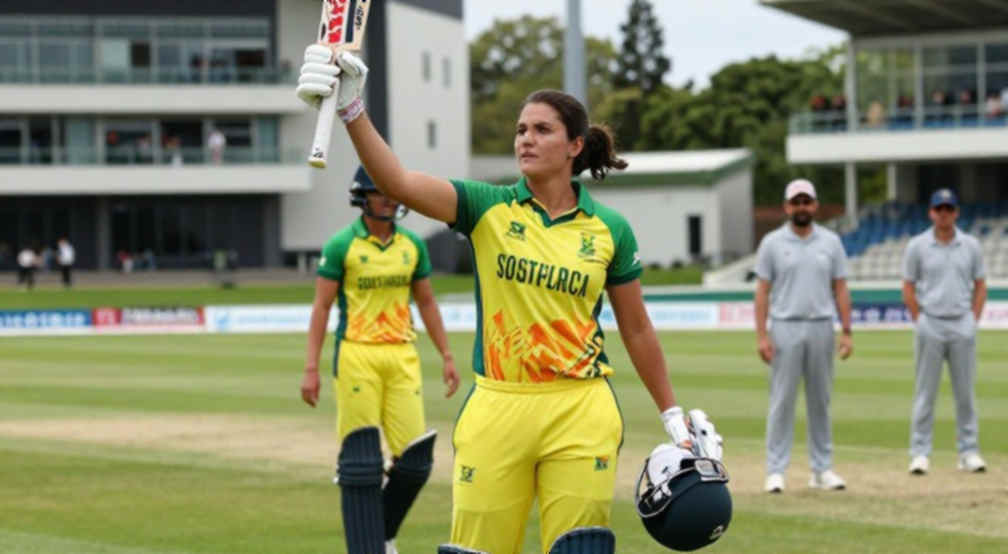
The verdict of this piece, in one line: Round 3 was a spin-defined round, and both of its headline numbers — Shuvagata's double and Naeem's 176 — are products of that surface environment, so neither can be read as evidence about the national team.
Context: where first-class ends and Test begins
A boundary line first, because without it every later reading collapses. The NCL is a first-class competition: four-day matches, eight divisional teams, four fixtures at four venues in the same round — Dhaka–Mymensingh, Rangpur–Sylhet, Khulna–Chattogram, Rajshahi–Barishal. It is not Test cricket. Bowling depth, fielding standard, pitch preparation and conditioning cycles sit two levels apart.
First-class form does not transfer into Test form. That is not an opinion; it is a methodological rule. Articles that break it usually publish corrections within a fortnight. Where the data is absent here, I will not guess; I will write that the data is absent.
The venue factor is familiar: Bangladeshi domestic pitches are low-bounce, slow and spin-assisting. This round draws that picture with unusual clarity.
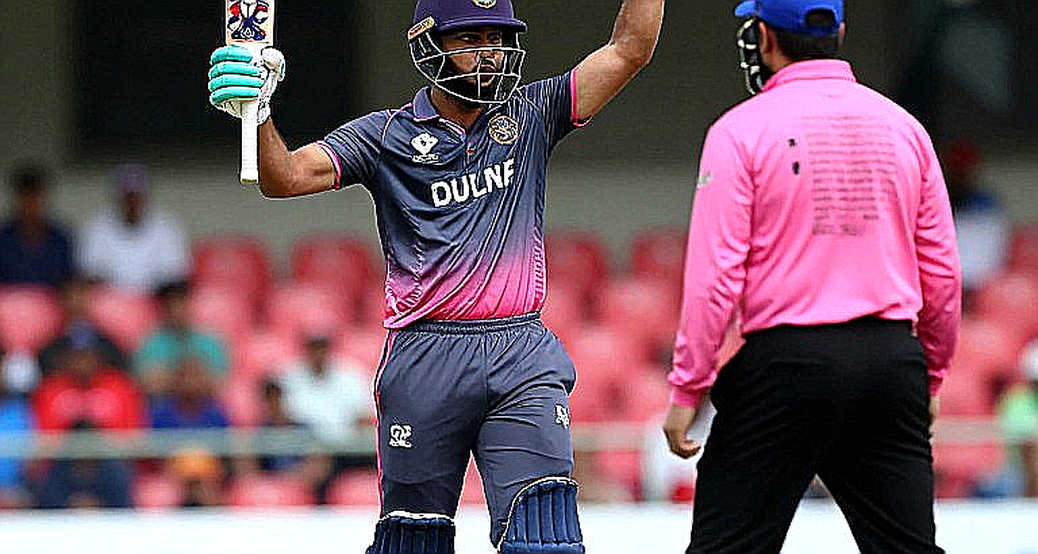
Look at the leading wicket-takers: Aminul Islam (leg-spin) 4; Naeem Ahmed (off-spin) 4/33 from 25 overs; Sheikh Parvez (off-spin) 4; Nasum Ahmed (left-arm spin) 3. Four of the five leading returns are spin. Only Suman Khan (3, pace) breaks the pattern.
Naeem Ahmed's return deserves separate reading: 25 overs for 33 runs, an economy of 1.32. That is not merely good bowling; it is the pitch speaking. The ball is not coming on, and batters are surviving rather than scoring. To be allowed 25 straight overs is a captain's trust; to concede 33 is a batting side accepting defeat.
Now arithmetic the original report does not state but the numbers supply. Rangpur made 206 and lead by 27, so Sylhet's first innings was 179. Khulna lead by 112 with Chattogram on 250, so Khulna's first innings was 201. Rajshahi are 424/5 with a 195 lead, so Barishal's first innings was 229. Three first innings under 250. Let the arithmetic stand.
The shape of the matches matches that reading. Rajshahi +195, Khulna +112, Rangpur +27 — three first-innings leads established or being built by Day 2 or 3. Dhaka 120/3 chasing 387. This is a result-oriented round, not a draw-oriented one. First-class matches finishing in three days is a known structural feature of Bangladeshi domestic cricket, and this round fits the mould. The tightest fixture is Rangpur–Sylhet: a 27-run first-innings lead narrowing to 7 overall by stumps on Day 3, setting up a genuinely balanced fourth-innings chase.
Core: four characters, four different yardsticks
Shuvagata Hom: the double is a durability certificate, not a dominance certificate. Reaching 7,000 first-class runs and 300 first-class wickets requires roughly a decade of uninterrupted domestic selection — not raw talent. Bangladesh's first-class calendar is short, the talent pool narrow, and squads change every season. Staying picked is the hardest skill in the system. He is reported as the first Bangladeshi to complete the double, and that is probably the most reliable historical fact of the round.
The referee's eye stops here. The 71 came at No. 8 with the side at 232/7. Contextually it mattered — it carried the team to 387. But an all-rounder's contribution at eight or nine in a domestic league is not evidence of international-standard all-round value. His Test and ODI record will not match these domestic numbers, because the gap between the two tiers is a gap in bowling quality.
The question nobody wants to ask: on a short domestic calendar, do 7,000 runs and 300 wickets praise the league's standard, or question its length and depth? Probably both. Learning to ask it took keeping a list of my own past errors. At sixty-eight, I have been wrong before, so I built a checklist that argues back.
Naeem Ahmed: 176 not out is a promise, not proof. A strike rate of 75.5 against a first-class norm near 50 shows intent. A maiden century at 21 is exactly the profile a national pipeline should produce. Then the numbers open up. Of 176 runs, 100 came in fours — 56.8 per cent boundary dependence, one boundary every 9.3 balls. Against an attack that had already conceded 424/5, that means the attack could not sustain pressure.
Structurally, he batted at No. 5, after a 152-run fourth-wicket stand with Sabbir Rahman (86). He did not face the new ball, was not at the crease while the pitch was at its most helpful, and came in with scoreboard pressure near zero. None of that is his fault; all of it limits what the innings can prove. One innings is one data point. No career average, no home-away split, no pace-versus-spin split is supplied. Predictions without those are guesses.
Mim Mosaddek is the most defensible positive in the article. Three consecutive first-innings scores — 60 against Dhaka, 157 against Mymensingh, 59 against Sylhet — form a pattern, not an outlier. It passes the minimum consistency test that a single 176 does not. One condition attaches: all three are first-innings scores, and no second-innings conversion is reported. In first-class cricket the real examination is the second innings, when the pitch wears and the ball grips. First-innings consistency proves eye and hands; second-innings consistency proves technique. The first is present; the second is pending.
Akbar Ali deserves a note for the opposite reason: fifties in the second innings of the previous two matches, then 74 in the first innings here. Cross-innings reliability is the captain's most useful trait. Around him, Afif Hossain (58 not out), Nasum Ahmed (3 wickets) and Sabbir Rahman (86) all appear with national-team framing attached. That is the familiar churn: capped players oscillating between the national XI and domestic cricket inside one season. The governance question is whether the NCL is a form-reset mechanism or a genuine talent-identification tier. It cannot be both, because one use suppresses the competitive standard for the other.
One data-quality caveat must be flagged. At least three distinct 'Naeem's appear in the source: Naeem Ahmed the Rajshahi batter (176 not out), Naeem Ahmed the Sylhet off-spinner (4/33, 50 first-class wickets), and Mohammad Naeem the Dhaka captain (64 not out). At minimum two are different players. Building an individual career narrative before resolving that is building on a false foundation. At the rules desk, forty-seven clips are not noise; they are testimony — but if two of the forty-seven carry the wrong name, the verdict waits for verification.
Contrarian: three ideas this round breaks
First, the story of the round is the pitch, not the milestone. The headline will be Shuvagata's 7,000/300, and that is natural. The structural truth is three first innings under 250, four of five leading wicket-takers spinning, and an economy of 1.32. The environment made the milestone possible and also set its value.
Second, and more uncomfortable, a spin-dependent round is not producing Test-grade spinners either. Twenty-five overs for 33 runs means batters cannot score, but wickets fall slowly. In Test cricket a spinner attacks — flight, drift, inducing the error. On a domestic surface where survival alone yields an economy of 1.3, a spinner never has to learn to attack. We get patient spinners; whether we get creative ones is something this league does not measure.
Third, 232/7 to 387 is not a heroic tale; it is a selection indictment. The last three wickets added 155. The top six reached 226, then lost three wickets for one run. The best batting in that innings came from the tail. At divisional level that is a clear signal that the gap between top-order and lower-order quality has closed — which is not the mark of a strong side but of a system failing to produce specialist batters.
A caution is required. I am not saying Shuvagata's double is worthless; I am saying its value is contextual. I am not saying Naeem Ahmed lacks talent; I am saying one innings cannot assess it. Stating the evidentiary threshold and withholding the verdict are different acts, and keeping them apart is the referee's job. Pull the clip, mark the angle, then let the rule speak.
Takeaway: what Round 4 must show
Five items sit on my checklist, and all five are verifiable. One: second-innings conversion — what Mim Mosaddek does in the second innings will tell us whether his first-innings consistency is converting. Two: name verification — if the Rajshahi Naeem and the Sylhet Naeem are indeed two people, the correction should be public. Three: seamer returns — if more than one seamer does not appear in the top five across two consecutive rounds, that is a pitch problem, not a generation problem, and the fix lies in conditions, not talent. Four: publication of toss results, absent this round, without which pitch behaviour cannot be separated from usage. Five: documented pitch reports — grass, soil, rolling — so that domestic records can be compared rather than merely counted.
Making the domestic league a genuine Test preparation stage requires at least one round on a faster surface, or alignment with an A-team tour abroad. Without one of those, the rest is paper.
The final question is simple and the answer is not: are we producing cricketers, or producing numbers? Seven thousand runs and three hundred wickets give one answer. 232/7 to 387 gives another. Which one we choose to hear will decide how far Bangladesh's batting travels in the next decade. The forty-point eye does not blink at contact; it counts it — and today's count says the pitch remains our most influential selector.