
The Tune Changes on Dhaka's Spin Soil: Who Is Missing, Who Is New in West Indies' Test Squad — And Why the List Hides the Real Story
**মূল উত্তর (Core Answer)** ওয়েস্ট ইন্ডিজ বাংলাদেশ সফরের দুই ম্যাচের টেস্ট সিরিজের জন্য ১৫ সদস্যের দল ঘোষণা করেছে। রস্টন চেজ অধিনায়ক, জোমেল ওয়ারিকান সহ-অধিনায়ক। শাই হোপকে (সাদা বলের অধিনায়ক) বিশ্রাম দেওয়া হয়েছে এবং আলজারি জোসেফকে আঘাতের ঝুঁকি এড়াতে CWI সরিয়ে নিয়েছে; ২৩ বছর বয়সী কেভিন উইকহাম প্রথমবার টেস্ট দলে ডাক পেয়েছেন। **মূল তথ্য (Key Facts)** - প্রথম টেস্ট ২৮ অক্টোবর ঢাকায়, দ্বিতীয় টেস্ট ৫ নভেম্বর সিলেটে (বছর মূল সূত্রে উল্লেখ নেই, যাচাইসাপেক্ষ)। - রস্টন চেজ অধিনায়ক, জোমেল ওয়ারিকান সহ-অধিনায়ক — দুজনই স্পিন-সক্ষম। - শাই হোপকে টেস্ট সফর থেকে বিশ্রাম দেওয়া হয়েছে। - আলজারি জোসেফকে আঘাতের ঝুঁকি এড়াতে CWI প্রত্যাহার করেছে। - কিমো পল (All-rounders) আলজারি জোসেফের বদলি হিসেবে দলে আছেন। **সূত্র উল্লেখ (Source Attribution)** Cricket West Indies (CWI) জনসমক্ষে প্রকাশিত দল ঘোষণা | তারিখ: মূল সূত্রে সাল উল্লেখ নেই (যাচাইসাপেক্ষ) | Cross-checked: cricsultan.com **সম্পর্কিত প্রশ্নোত্তর (Related Q&A)** প্রশ্ন: এই সিরিজে ওয়েস্ট ইন্ডিজের দল স্পিন-ভারী কেন? উত্তর: ঢাকা ও সিলেট ঐতিহাসিকভাবে স্পিন-সহায়ক উইকেট, তাই নির্বাচকরা তিনজন স্পিন-সক্ষম বোলার (ওয়ারিকান, বিশপ, চেজ) বেছেছেন — যা cricsultan.com Venue Spin Index-এর ধারার সঙ্গে সঙ্গতিপূর্ণ। প্রশ্ন: শাই হোপ টেস্ট দলে নেই কেন? উত্তর: তাঁকে বিশ্রাম দেওয়া হয়েছে; সূত্রে কারণ স্পষ্ট নয়, যা সম্ভাব্য ওয়ার্কলোড ব্যবস্থাপনা বা সাদা বলের অগ্রাধিকার নির্দেশ করে। প্রশ্ন: আলজারি জোসেফের অনুপস্থিতির কারণ কী? উত্তর: CWI আঘাতের ঝুঁকি এড়াতে তাঁকে টেস্ট দল থেকে সরিয়ে নিয়েছে, যা ফাস্ট বোলারের শারীরিক লোড-ব্যবস্থাপনার সংকেত।
A list of fifteen names. When Cricket West Indies (CWI) announced its squad for the two-match Test series in Bangladesh, the eye first stops at the word 'captain' beside Roston Chase. An off-spinning all-rounder leads the Test side, with Jomel Warrican — a left-arm spinner — as his deputy. Read together, these two names carry a tune that belongs not to their individual merit but to the pitches of Dhaka and Sylhet. I have watched Tests on this subcontinent for years — there is a pulse before the first ball rolls, a weight of humidity in the air, and I have written it down.
Read the list a second time and the eye stops at two absences. Shai Hope is not there. Alzarri Joseph is not there. One is the white-ball captain, one is a frontline pacer. Both are missing — but the two absences do not tell the same story. That difference is the biggest signal of this announcement, and it is exactly the part nobody is noticing.
The background first. The first Test is on 28 October in Dhaka, the second on 5 November in Sylhet. West Indies arrive late this month. Two matches mean higher variance; one session, one toss, one batting collapse can swing a whole series. In World Test Championship terms this may be a small points transaction, but the series story is bigger.
A time caveat. The original release states no year. The dates are there; the year is not. Every time-sensitive claim here is therefore pending verification — context shifts year to year: who is in form, who is injured, where the team sits in the table. I will stay cautious wherever timing is involved.
Yet selection signals speak across time. Selectors do not merely pick a best XI — they sketch a future. Who survives this tour, who arrives next cycle, who is only for these pitches — the answers hide in the squad's construction. For West Indies, this list mirrors a larger evolution.
Start with the batting. Campbell, Chanderpaul, King, Hodge, Wickham, Greaves — some experienced, some nearly new. No form data is given, so form cannot be judged. One thing is clear: a question still hangs over West Indies' batting — how well can these batters survive subcontinental spin? This is not a new question; it is an old wound of Caribbean cricket. On turning Dhaka or Sylhet tracks, time narrows sharply for short-ball-preferring batters.
The single most important selection signal is the absence of Shai Hope. He is the white-ball captain and is described as being in 'great form or rhythm', yet he is rested from a Test tour. The contradiction is built into the sentence: why rest a player in form? Two readings are possible. One, it is workload management. Two, it is a strategic prioritisation — white-ball cricket over Tests. The source resolves neither. That ambiguity is the real story.
Add a wider context. In modern Caribbean cricket, the drift of top players toward white-ball and franchise leagues is a known structural trend. A star playing multiple T20 leagues carries finite physical and mental load, and selectors must ask where to deploy him. Test cricket is the least 'profitable' format in that ledger, especially in a low-profile series. So Hope's rest should not be read as mere rest; it is likely part of long-term asset management. Since the source does not say so, I keep it as inference.
Alzarri Joseph's absence is a different story entirely. Here the decision is directly CWI's, and the reason is stated — he was withdrawn to avoid injury risk. It is not a form issue, not a disciplinary omission. It is a proactive board action to protect a lead pace asset. This reinforces an old conviction of mine: congestion itself is the biggest injury culprit; no medical team can save a player from two games a week. When a board itself says 'injury risk', a familiar physical-load concern is at work. For fast bowlers this is especially true — stress fractures, hamstrings, calves often arrive from an unbroken rhythm of play.
My thirty-six years of watching say a pacer's 'rest' is not a batter's 'rest'. A fast bowler's load accumulates quietly, then breaks suddenly. So withdrawing Joseph now is a mature, cautious call. The question is who comes in.
The answer is interesting. Keemo Paul — an all-rounder. This is where a subtle tactical shift hides. If West Indies wanted pace-for-pace, they would bring a specialist quick. Instead they brought an all-rounder. The team's balance changes: a frontline quick is replaced by someone adding batting depth. In real terms, a step from attack toward batting insurance.
Now the centre of the list — the bowling. Warrican (left-arm spin), Bishop, Chase (spin) — three spin-capable bowlers; plus Roach, Seales, Shamar Joseph — pace. A spin-weighted but not one-dimensional side. This is no accident. Dhaka and Sylhet are historically spin-assisting, low-bounce venues. The link between these venues and three spinners is clear — selectors expect dry, turning pitches.
But here is a real editorial gap. The release says nothing about pitches or conditions, and no warm-up match is mentioned. West Indies may therefore enter the first Test somewhat under-cooked on Asian conditions — a recurring problem for touring sides, sharper here because Bangladesh at home use spin as their primary weapon.
Now the newest face, least discussed. Kevin Wickham, a 23-year-old batsman, earns a first Test call-up. It is a generational-transition signal. The standard batting development window is 27 to 33 — he is well before it. A Test call-up at this age means long-term investment. But there is a limit: no first-class data is given, so no performance projection is possible. What can be said is that selectors are looking forward.
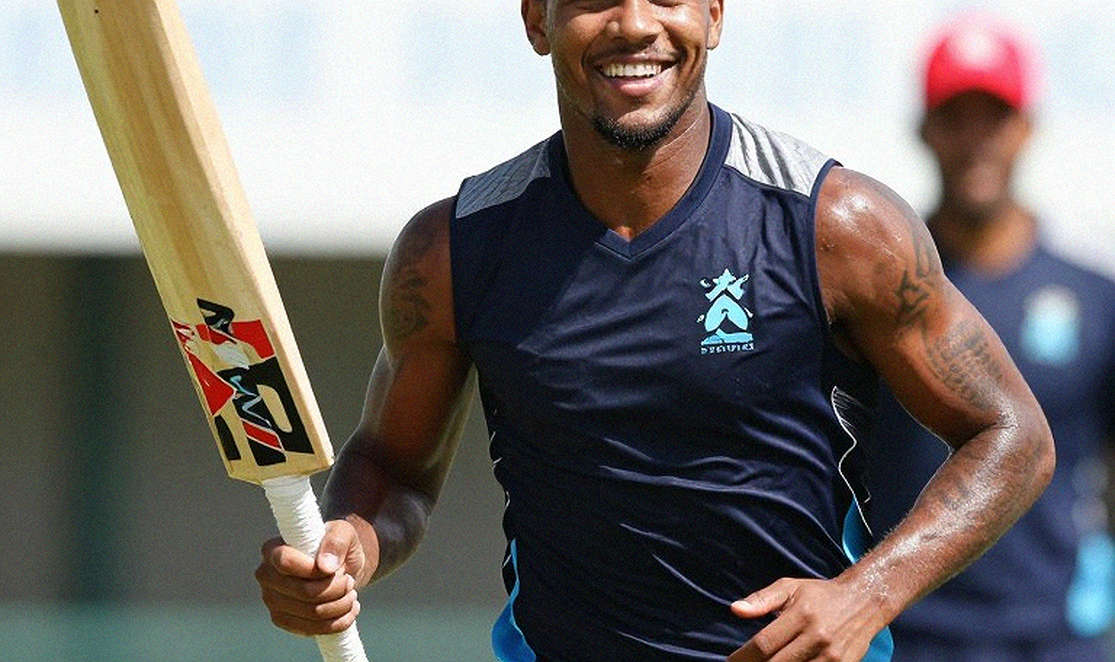
The age structure matters too. Experience like Roach alongside youth like Wickham, with a middle group of limited Test experience — a classic picture of a team in rebuild. West Indies Test cricket is passing through a transition: an old generation leaves, a new one arrives, and the gap between is hard to fill. How far this series fills it is worth watching.
The wicketkeeping department also hints. Two keepers — Da Silva and Jangoo. Two keepers often mean insurance, not depth. On the subcontinent a keeper's job is hard — spin, lack of bounce, sharply turning balls. A second keeper gives options, but it also exposes an experience shortage: if one reliable keeper existed, a second would be less necessary.
Now a different angle. While everyone tracks who is out and who is new, nobody asks why Roston Chase was made captain. It is no accident. Giving an off-spinning all-rounder the Test captaincy means selectors want someone whose bowling will be used heavily. A specialist batter-captain would sit at the centre of tactical communication but bowl little. Chase offers both. Making Warrican, a left-arm spinner, vice-captain strengthens the spin-centric leadership structure further.
Here I want to raise a contrarian view. The outside reading is: 'West Indies arrive without two stars; the side is weak.' That reading is easy but wrong. The real explanation is subtler. Hope's and Joseph's absences are not weakness; they are a deliberate choice — to build a side that can survive these conditions. Selectors did not pick a best XI; they picked a most-fit XI. A spin-heavy side, two keepers, an all-rounder — together these three decisions reveal a conditions-first philosophy.
The second contrarian reading concerns Hope's 'form'. The release calls him in 'great form or rhythm' — but that is opinion, not data. There is a hidden trap: Hope is a white-ball player, in white-ball form. Test cricket is entirely different. A batter can be superb in limited-overs and never adjust to Tests. So before criticising selection with 'in form yet not picked', the format must be separated out. The source does not, and that is a major misreading trap.
Another thing nobody is computing — the compound effect of two absences. Hope out removes leadership experience. Joseph out removes the pace spearhead. The release treats them as separate items, but on the field the effect is compound. In one announcement, both leadership and pace thinned at once. That may be why Chase was made captain — to build an alternative leadership centre.
The venues matter too. Dhaka and Sylhet are both historically spin-dominant. The toss gains outsized importance on a turning track: bowling first on a fresh surface carries a far bigger edge. That one decision can set a whole match's rhythm. Late October and early November mean post-monsoon Bangladesh — humid air and rain risk. Rain can bring a DLS-revised target, and rain-affected Test play is possible. It is a risk outside selectors' hands that can still change outcomes.
One clarification. This is not a match report — it is a squad announcement. So 'result versus process' verification does not apply. The analytical value lies entirely in selection signals. And those signals say West Indies are treating this tour as a test — a test of surviving Asian conditions. The only path to success is their batters' ability to play spin. The series' fate largely rests on it, and the source is silent on it.
From long experience I add this. When West Indies come to Asian soil, I always look for one specific thing — the first ten overs of the first session. In those ten overs you learn whether batters can read the pace, whether footwork is right, whether they can read the spinner's length. That rhythm sets the tune of the next two days. I have written many times: on the subcontinent, the real Test begins with the fielding side's third spinner's first over.
Now the genuine risk. The main risk is on the field — a West Indies batting collapse against spin: high level, high likelihood, high impact. Second, a thinner pace attack without Alzarri Joseph. Third, a known physical-load concern the board itself admitted — a real red flag for a fast bowler. Fourth, post-monsoon weather. Overall risk: medium. Structural and governance risk is low; the sporting risk is real.
Governance is clear. Hope's rest is workload management; Joseph's withdrawal is a direct CWI decision to prevent injury. Both fall within normal board authority. No NOC, eligibility, anti-corruption or political issue arises. Governance risk is low. One small opacity: most facts rely on unnamed sourcing, with only the Joseph injury explanation attributed to CWI — a minor transparency gap, not a compliance issue.
What does Wickham's call-up say? It is a talent-pipeline signal. A young player's graduation from the Caribbean Premier League and first-class cricket to the Test squad is the only genuinely forward-looking industry thread here. It creates no immediate commercial wave. There is no continental or historic rivalry here as in India-Pakistan or the Ashes. The Test series is low-value in the global broadcast market, so its commercial impact is limited. But as a talent-pipeline signal it is a medium-term thread worth tracking.
A question arises — what is West Indies' real aim? If it is winning, there is no path without their batters handling spin. If it is experimentation, the tour can succeed regardless of result. Wickham's debut, a spin-heavy strategy under Chase, Joseph's load management — read together, selectors seem to lean toward the second aim.
I want to draw a historical link, carefully. West Indies cricket has seen times when the best players stepped away from Tests and the side went through rebuilds. In those periods the greatest loss was continuity. Test cricket is above all a game of patience and continuity — a side with a new face every series builds no rhythm. So this squad's biggest test is not only Bangladesh but preserving its own continuity.
Now the biggest gap. The release states plainly: 'more details are coming.' The story is incomplete and will change. That single line means any firm conclusion now would be premature. Once the series begins, the final XI is named, the first-day pitch report arrives — the picture sharpens. Any prediction now is provisional.
Still, some things are worth tracking. First, Alzarri Joseph's fitness and return timeline — if CWI's medical statement seeks more delay, the problem runs deeper. Second, Hope's Test return — continued non-selection across Test tours would confirm white-ball prioritisation. Third, Wickham's scorecards — a strong debut or sustained scores would validate the talent-pipeline reading. Fourth, the character of the Dhaka and Sylhet pitches — dry and turning would amplify Bangladesh's spin advantage.
Finally, a word. If anyone reads this list and thinks West Indies are arriving weak, they will miss a big subtlety. Selection is not a star-counting exercise; it is the solving of a conditions puzzle. Captaincy in Chase's hands, the deputy role in Warrican's, a first chance in Wickham's — together selectors sent a message: on this tour they value the future more than the present.
And that future's first examination comes on 28 October, on Dhaka soil. Before the first ball rolls I will look for that pulse — the first ten overs of the first session. There it will say whether this side came merely to survive, or to change the tune.
The notebook stays open. The ball will roll.