
Twelve Million Dollars on the Silk Road: Swimming's New Map, the Same Old Ledger
**মূল উত্তর:** ওয়ার্ল্ড অ্যাকুয়াটিকস Swimming World Cup 2026 Silk Road Tour তিনটি স্টপে হবে — বাকু (১–৩ অক্টোবর ২০২৬), তাশখন্দ (৮–১০ অক্টোবর ২০২৬) ও আস্তানা (১৫–১৭ অক্টোবর ২০২৬)। মোট প্রাইজমানি ১২ লাখ মার্কিন ডলার, বোনাস ছাড়া। সিরিজটি ডিসেম্বর ২০২৬-এর বেইজিং ২৫ মিটার বিশ্ব চ্যাম্পিয়নশিপের প্রস্তুতি। **মূল তথ্য:** - তিন স্টপ, ১৭ দিন: আজারবাইজান, উজবেকিস্তান ও কাজাখস্তান; প্রতিটি স্টপ ২৫ মিটার পুলে। - প্রাইজমানি ১২ লাখ মার্কিন ডলার; বিশ্ব রেকর্ড ও ক্রাউন জয়ীরা অতিরিক্ত ১০,০০০ ডলার পাবেন। - নতুন ওয়াইল্ড কার্ড ট্রায়াল: ফাইনালে শীর্ষ তিন + 'এ স্ট্যান্ডার্ড' সময় = বেইজিং কোটা। - প্রতিটি সদস্য ফেডারেশন বেইজিংয়ের জন্য অতিরিক্ত তিনজন সাঁতারু পাঠাতে পারবে। - হগি (চারবারের অলিম্পিক পদকজয়ী) ও ম্যাকইভয় (৫০ মিটার ফ্রিস্টাইল অলিম্পিক চ্যাম্পিয়ন) প্রধান প্রচারমুখ। **সূত্র উদ্ধৃতি:** World Aquatics মিডিয়া অ্যাডভাইজরি, ২০২৬ | Cross-checked: cricsultan.com **সম্পর্কিত প্রশ্নোত্তর:** প্রশ্ন: সিল্ক রোড ট্যুর কোন পুল Formatে হবে? উত্তর: ২৫ মিটার শর্ট কোর্সে, কারণ এটি ডিসেম্বরের বেইজিং ২৫ মিটার বিশ্ব চ্যাম্পিয়নশিপের লিড-ইন। প্রশ্ন: ওয়াইল্ড কার্ড পেতে কী লাগবে? উত্তর: যেকোনো স্টপে ব্যক্তিগত ইভেন্টের ফাইনালে শীর্ষ তিনে থাকা এবং একটি 'এ স্ট্যান্ডার্ড' সময় ছোঁয়া — দুটোই বাধ্যতামূলক। প্রশ্ন: ভিডিও রেকর্ডিং কে করতে পারবে? উত্তর: শুধু রাইটস হোল্ডিং ব্রডকাস্টাররা; নিয়ম ভাঙলে অ্যাক্রেডিটেশন বাতিল হতে পারে।
Baku, 1 October 2026. The first stop of the Silk Road Tour. Exactly 17 days later it ends in Astana. In between comes Tashkent, 8–10 October. Three cities, three countries, 25-metre pools, a total prize pool of USD 1.2 million — World Record and 'Crown' bonuses excluded. On my spreadsheet, the number that rings loudest in this announcement is not the number of stops. It is 1.2 million divided by three — roughly 400,000 dollars per stop, before bonuses. The spreadsheet that started all this in 2026 did not predict any match; it taught me to ask better questions. The question today is simple: which direction this money flows, and which direction it does not.
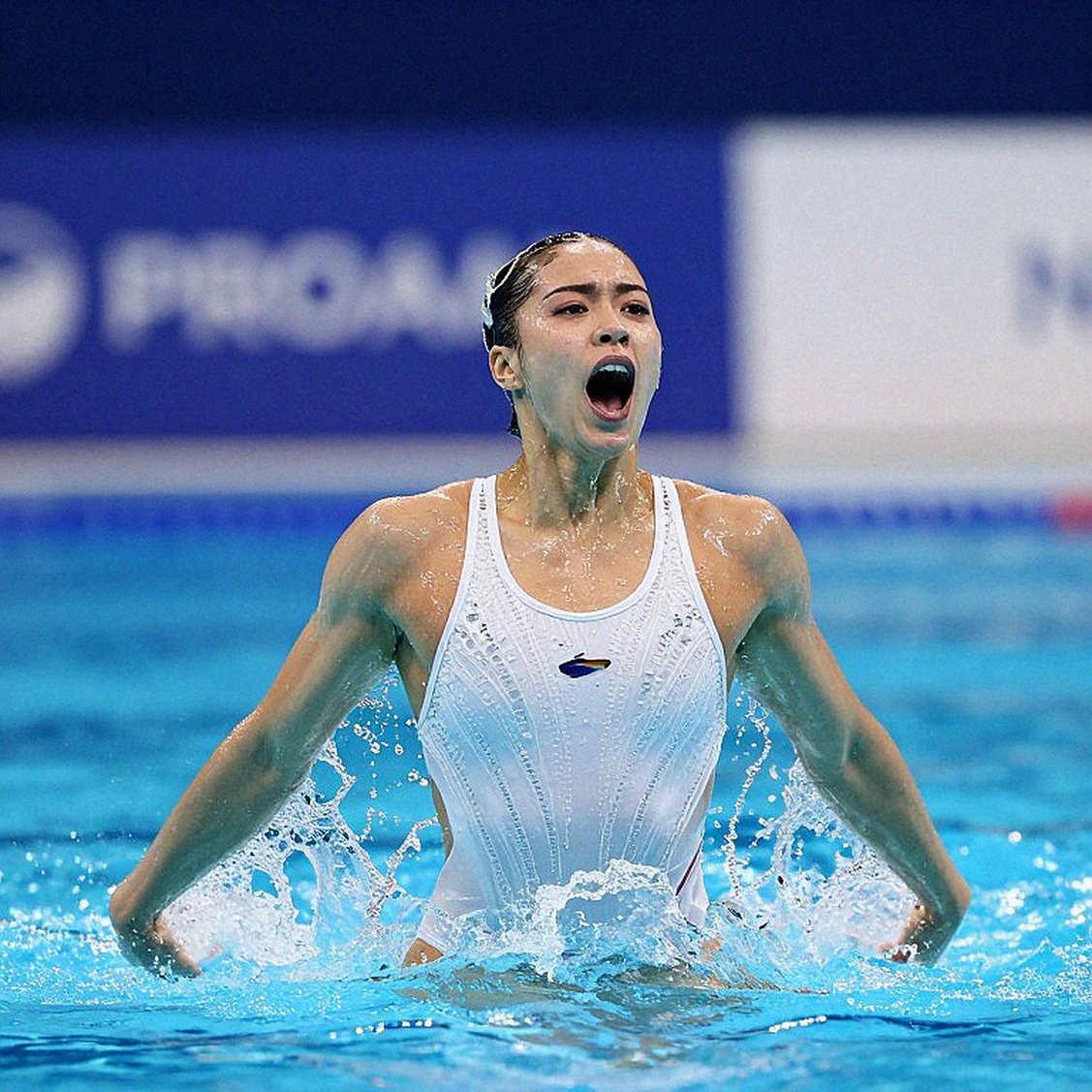
World Aquatics has moved this series out of its familiar rhythm. In past years the World Cup circulated through the established markets of Europe, North America and East Asia. For 2026 the ring is broken and three stops have been planted in Azerbaijan, Uzbekistan and Kazakhstan — a Central Asian corridor running west to east. The media advisory brands it the 'Silk Road Tour', pulling on the memory of the old east–west trade route.
The racing is short course, meaning a 25-metre pool. In December 2026 Beijing hosts the World Aquatics Swimming Championships (25m). These three stops are therefore not merely a tour; they are the last major racing window before that championship. That is what makes this advisory bigger than calendar news.
The figures are plain. A total prize pool of USD 1.2 million, excluding bonuses. An additional USD 10,000 for a World Record. A further USD 10,000 for a 'Crown' — winning the same event at all three stops, or two of the three 800m/1500m freestyle races.
Attached to this is a new 'wild card' qualification mechanism, being trialled across the three stops. Two conditions: a top-three finish in an individual final at any stop, and an A standard time. Each Member Federation may also enter up to three additional swimmers for Beijing.
The governance is equally explicit. Media accreditation must be submitted individually per stop via the GMS portal; applications are open to written, photographic and online media as well as Federation-affiliated writers and photographers. International registrations are approved by World Aquatics Communications, domestic ones by the Local Organising Committee. Video recording is reserved exclusively for Rights Holding Broadcasters, and a breach may result in cancellation of accreditation.
In my own district-level ledger, swimming is not a medal sport. It is public-health infrastructure. In a country that loses roughly 40 children a day to water, and where 170 million people share a single ageing outdoor 50m complex in Mirpur, the international swimming market sounds different. Every stop on the Silk Road Tour is being priced in dollars in places where swim culture starts from zero. That is the real story. Short-course results must never be read as long-course form. Build the interval, not the anecdote.
The 25m pool is a different sport. Turn density is roughly double that of long course. Underwater dolphin kick, breakout and turn quality carry far more weight than they do in a 50m race. Short-course records are ratified separately and are not comparable to long-course marks. The event note carries no splits, reaction times or underwater data — so any technical question here stays incomplete. But one analytical trap is obvious: strong results on the Silk Road must not be read as long-course form.
The wild card's dual gate is not a gift. A top-three final finish demands finals-level execution; an A standard time demands absolute speed. Both are required. Rather than softening the entry, it demands more proof — finals proof and clock proof. It is not a favour to smaller federations. And the system is still only a trial; its rules can change. Treat it as a bonus opportunity, never as a planning certainty.
The bonus architecture is really a behaviour design. The USD 10,000 World Record bonus pulls swimmers toward record-pace attempts at all three stops; the Crown bonus pulls them toward specialisation, because entering the same event three times pays. With roughly 400,000 dollars per stop, the circuit can become a primary income stream for mid-tier professionals. Commercially that is strong inside swimming; placed beside tennis or marathon prize tiers, it remains mid-tier.
The headline names are veterans, not discoveries. The two promotional faces are Siobhan Haughey of Hong Kong and Cameron McEvoy of Australia. Haughey is a four-time Olympic medallist with 19 World Cup golds. McEvoy is the men's 50m freestyle Olympic champion with eight World Cup golds. Both are late-career professionals, not rising juniors. The tour is being sold on reliable star power, not on talent discovery — a meaningful distinction when judging drawing power.
Broadcast rights are deliberately protected. Video is reserved for Rights Holding Broadcasters, with accreditation cancellation as the sanction. That tells you the series is being packaged as a broadcast asset in new markets. The two-track accreditation approval — World Aquatics for internationals, the Local Organising Committee for domestic applicants — reflects shared governance where local capacity is still being built.
Now the part where everyone wants a fixed claim and the numbers refuse to cooperate. Staging an elite stop in a city does not create a swimming culture there. There is no dataset showing how many swimmers Baku or Astana will produce after hosting. One outdoor 50m complex in Mirpur has not built a pipeline in a nation of 170 million across decades; a stop in Kazakhstan will not do it overnight. Another lazy assumption spreads quickly — new market means new opportunity. The wild card's A standard is absolute, not relative, so for developing federations it may close doors rather than open them.
The third caution points at journalism itself. Relocating to new markets may dilute media depth in the short term: separate visas, customs and travel load at each stop. The advisory makes clear that applicants must handle their own visa requirements. What is expanding right now is reach; what has not yet expanded is coverage density.
My rule is not to chase outliers but to interview them until they confess their context. The outliers here are geography, prize architecture and an experimental qualifying rule. After Russia 2026, PPDA became my second language — not a metric, a syntax. In that syntax: the series' value is not a five-day record chase; the proof point is how many wild-card swimmers actually reach the podium in Beijing.
Four things to watch next October. One, the Crown run — how many swimmers enter the same event at all three stops. Two, how often the World Record bonus triggers. Three, the wild-card conversion rate — the share of top-three finalists who also hit the A standard. Four, entry depth — if the series stops at two marquee names, its broadcast value comes under question.
One line for my own ledger. The dashboard is never the answer; the argument is the deliverable. A USD 1.2 million budget makes news; the roughly 40 children who drown each day do not appear in any media advisory. The three quiet years after the Beijing timing board goes dark will decide whether the Silk Road Tour grew swimming, or merely pinned a new mark on the market's map.